

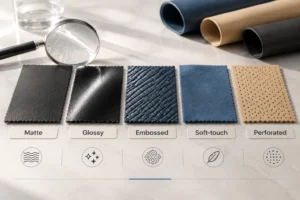
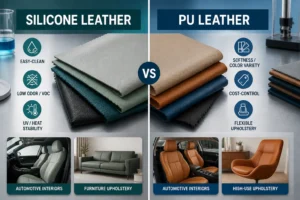
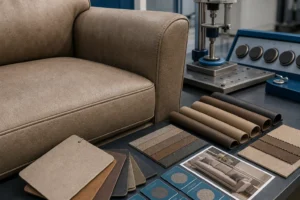
Synthetic leather surface finish is the final texture, gloss, touch, and protective feel on top of PU, microfiber, silicone, PVC, or other synthetic leather structures. It affects how the material looks, feels, cleans, resists visible scratches, hides stains, supports branding, and fits different products. Matte finishes can look premium and reduce glare, glossy finishes create a polished appearance but may show marks more easily, embossed finishes add texture and grip, and soft-touch finishes improve hand feel but must be tested for cleaning and long-term stability.
For buyers, surface finish is not just an aesthetic choice. It can influence the user’s first impression, the way a product feels in the hand, how visible light scratches become, how easily stains are removed, and whether the final product fits a premium, sporty, medical, automotive, fashion, or furniture direction. The same base material can feel completely different after a matte, glossy, embossed, textured, soft-touch, or perforated finish is applied.
A good finish should be selected together with coating chemistry, backing structure, thickness, color, grain, and application requirements. A beautiful surface that is hard to clean, too slippery, too sticky, too glossy, or too fragile can create problems after the product reaches end users. A practical finish supports both design and performance.
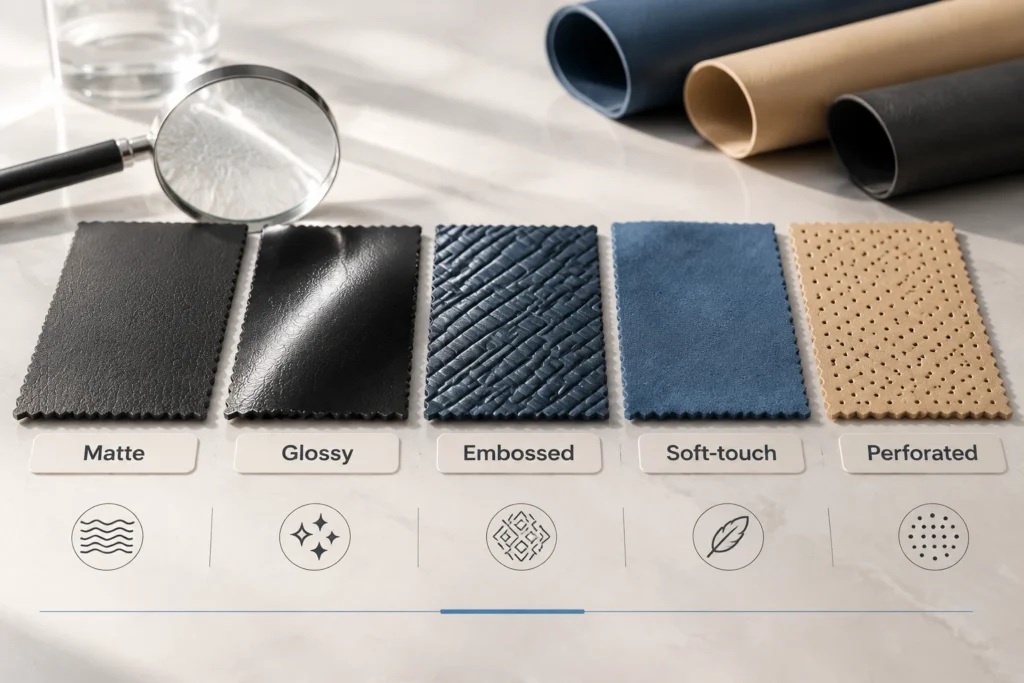
What Is Synthetic Leather Surface Finish?
A surface finish is the final visible and tactile layer of synthetic leather. It may include gloss control, embossing, topcoat, texture, soft-touch treatment, anti-fingerprint direction, perforation, or other surface effects. This layer influences how the material reflects light, how it feels during touch, how much grain is visible, and how the product communicates quality.
Surface finish does not replace material structure. The finish sits on top of a coating and backing system. If the coating is weak, the backing is unstable, or the thickness is unsuitable, a good-looking finish cannot solve all performance issues. Buyers should treat finish as one part of the total material specification, not as a separate decoration decision.
Why Surface Finish Matters for Buyers
It changes product appearance
Appearance is often the first reason buyers discuss surface finish. A matte surface can look calm, modern, and premium. A glossy surface can look bright, polished, and more decorative. An embossed or textured surface can add depth, grain, and a more leather-like impression. These differences can affect how a sofa, car seat, bag, shoe upper, electronic case, or medical pad is positioned in the market.
It changes touch and user comfort
Surface finish also changes hand feel. A soft-touch finish may feel warmer and more comfortable, while a highly glossy surface may feel smoother or more slippery. A fine-grain texture may feel natural, while a deep embossed pattern may feel more structured. Product photos cannot fully show this difference, so buyers should always touch samples before approving a finish.
It changes scratch and stain visibility
A finish does not automatically make a material more scratch-resistant, but it can change how visible scratches become. A glossy surface may show fine marks, fingerprints, or cleaning streaks more clearly. A lightly textured surface may hide minor wear better, while a deep texture may need more careful cleaning. When scratch visibility matters, buyers should combine visual inspection with synthetic leather scratch resistance testing instead of relying on appearance alone.
Common Surface Finish Options for Synthetic Leather
Matte finish
A matte finish has lower reflection and a more understated look. It is often used in furniture, automotive interiors, shoes, bags, and products where buyers want a modern or premium appearance without a strong shine. Matte finishes can reduce glare and may make the material look more refined under natural light.
The limitation is that matte finishes can show oil polishing, rubbing shine, or cleaning marks if the topcoat is not stable enough. A matte sample should be tested after repeated touch, wiping, bending, and light abrasion. Buyers should check whether the surface becomes glossy in high-contact areas.
Glossy finish
A glossy finish creates a brighter, more polished appearance. It can work for fashion accessories, decorative panels, special designs, display items, or products where a shiny surface is part of the visual identity. Gloss can make colors appear more vivid and make a surface stand out in product photos.
Glossy does not mean low quality. It simply means the finish has a different design goal. However, glossy finishes may show fingerprints, small scratches, bending marks, or dust more clearly than matte or textured surfaces. Buyers should evaluate visibility under real lighting, not only under studio lights.
Embossed finish
An embossed finish creates a raised or pressed texture on the surface. Common patterns include litchi grain, pebble grain, nappa-like grain, saffiano texture, carbon fiber pattern, woven pattern, and custom decorative grains. Embossing can make synthetic leather look more dimensional and can improve the perceived grip or structure of the surface.
The depth and shape of embossing matter. A very shallow grain may look clean and be easy to wipe. A deep grain may hide small marks but collect dirt in grooves if cleaning is not considered. Deep embossing can also influence bending behavior, seam appearance, and product shaping. Buyers should approve the exact grain on the final color and base material.
Soft-touch finish
A soft-touch finish is used when comfort and hand feel are important. It can make the surface feel smoother, warmer, or more pleasant during contact. Seating surfaces, armrests, bags, wearable accessories, and consumer products may use soft-touch treatments to improve user experience.
Soft touch must be balanced with stability. Some soft surfaces can become easier to stain, show oil marks, feel tacky after aging, or react poorly to harsh cleaners. Buyers should test cleaning response, stain resistance, abrasion, and long-term touch stability before approving this finish for high-use products.
Perforated finish
A perforated finish uses small holes or patterns on the surface. It is common in seating, automotive interiors, office chairs, and design projects that want a lighter or more breathable appearance. Perforation can support air movement direction, but real comfort also depends on backing, foam, seat construction, and use environment.
Perforation should not be chosen by appearance alone. Hole size, hole spacing, backing strength, cutting method, and product construction can affect tear resistance, cleaning, and durability. Buyers should check whether dirt or moisture can remain around the holes and whether the perforated area meets the product’s strength requirements.
Matte vs Glossy vs Embossed vs Soft-Touch: Quick Comparison
| Finish type | Main advantage | Possible limitation | Best-fit applications |
|---|---|---|---|
| Matte | Premium, low glare, modern look | May show oil polishing or cleaning marks | Furniture, automotive, shoes, bags |
| Glossy | Bright, polished, eye-catching | May show fingerprints or scratches | Fashion goods, decorative panels, special designs |
| Embossed | Texture, grip, visual depth | Deep texture may need cleaning tests | Bags, sofas, car interiors, footwear |
| Soft-touch | Comfortable hand feel | Needs stability and stain tests | Seating, armrests, bags, consumer products |
| Perforated | Ventilation look, seating comfort direction | Hole pattern affects strength and cleaning | Automotive, office chairs, seating surfaces |
This comparison should not be read as a strict ranking. The best synthetic leather surface finish depends on product use, touch requirement, cleaning method, expected wear, and brand positioning. A finish that works well for a fashion bag may not be the best choice for medical upholstery or car seating.
How Surface Finish Affects Cleaning and Stain Resistance
Cleaning and stain resistance depend on both surface finish and coating quality. A smooth finish may be easy to wipe, but it may show fingerprints, streaks, or fine scratches. A textured finish may hide minor marks, but dirt can stay in grooves if the texture is too deep. A soft-touch finish can feel premium but may need stronger testing against oils, dyes, and cleaners.
Stain testing should be done on the real finish, color, and coating. A black textured finish and a light beige soft-touch finish may behave differently even if both use the same base material family. For high-contact products, synthetic leather stain resistance testing helps buyers compare cleaning response before approving bulk production.
How Surface Finish Works with Backing, Coating, and Thickness
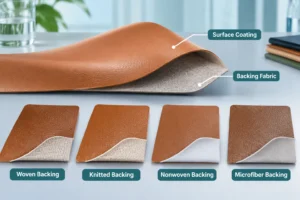
Surface finish is only the top layer of the material decision. The coating controls surface stability, touch, and protection. The backing controls support, stretch, tear direction, and dimensional behavior. Thickness influences hand feel, stiffness, sewing, bending, and product construction. A finish that looks excellent on one base may not perform the same way on another base.
For example, a deep embossed surface on a stiff material may look structured but reduce flexibility. A soft-touch finish on a weak coating may feel good at first but become unstable after repeated cleaning. A perforated surface needs a backing and construction that can support the hole pattern. The guide to synthetic leather backing fabric is useful when buyers need to understand how the base layer affects surface behavior.
Choosing Surface Finish by Application
Furniture and sofas
Furniture surfaces need comfort, cleaning, abrasion direction, stain response, and appearance stability. Matte, textured, and soft-touch finishes are common because they can balance visual quality and user comfort. For commercial or family-use seating, buyers should test how the finish reacts to rubbing, body oils, food stains, and cleaning cloths.
Automotive and transportation interiors
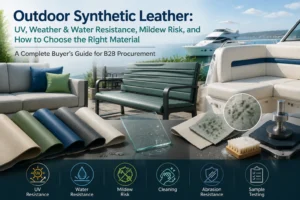
Automotive and transportation interiors often prefer controlled gloss, fine grain, stable touch, and low glare. Perforated or fine textured finishes may be used for seating surfaces. Buyers should also consider heat, cleaning, color stability, fogging direction, and glare under sunlight without assuming that one finish fits every interior part.
Bags and accessories
Bags and accessories often use finish as part of brand identity. Saffiano, pebble, glossy, matte, or soft-touch surfaces can change how a product looks in retail and how it feels during handling. For edge areas, handles, and corners, buyers should consider scratch visibility, rubbing, flexing, and cleaning.
When a bag or accessory needs a more premium leather-like surface, both PU leather material and microfiber leather material can be developed with different surface finish options depending on cost, hand feel, durability direction, and brand positioning.
Shoes and apparel
Shoes and apparel need flexibility, comfort, touch, and repeated bending performance. A finish that looks attractive on a flat sample may crease, crack, or change gloss when flexed. Buyers should bend samples, test color transfer, check texture stability, and confirm whether the surface can handle the production process.
Medical, public, and easy-clean surfaces
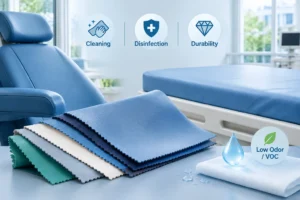
Medical, public, and easy-clean surfaces need more than a clean look. Buyers should consider stain response, alcohol or cleaner exposure, low odor, surface tackiness, and whether the finish hides dirt or traps residues. A smooth surface may be easier to wipe, while a textured surface may require more careful cleaning validation.
Buyer Checklist Before Approving a Surface Finish
- What product will the material be used for?
- Should the finish look matte, glossy, textured, soft, or perforated?
- Does the finish match the brand positioning?
- Does the sample feel comfortable after repeated touch?
- Does the surface show fingerprints, oil marks, or scratches easily?
- How does it clean after common stains?
- Does embossing affect flexibility or sewing?
- Does the finish change after abrasion or wiping?
- Is the finish approved on the same color, backing, and thickness as bulk production?
- Can the supplier keep finish consistency across batches?
FAQ
What is synthetic leather surface finish?
It is the final surface texture, gloss level, touch, and protective feel applied to synthetic leather. It affects appearance, cleaning, scratch visibility, and application fit.
Is matte synthetic leather better than glossy synthetic leather?
Not always. Matte finishes reduce glare and can look premium, while glossy finishes create a polished look. The better option depends on product design, cleaning needs, and expected wear.
Does embossed synthetic leather resist scratches better?
Embossed texture may hide light marks better, but it does not automatically mean higher scratch resistance. Buyers should test the final surface, color, coating, and backing.
What is soft-touch synthetic leather used for?
Soft-touch synthetic leather is often used where hand feel and comfort matter, such as seating, bags, armrests, and consumer products. It should still be tested for stain resistance, cleaning, and long-term surface stability.
Does perforated synthetic leather improve breathability?
Perforation can improve air movement and seating comfort direction, but real performance depends on hole pattern, backing, foam, product design, and use environment.
What should buyers check before approving a surface finish?
Buyers should check appearance, hand feel, cleaning response, scratch visibility, stain resistance, flexibility, backing, coating adhesion, color consistency, and bulk sample matching.
Final Buyer Takeaway
Synthetic leather surface finish should be chosen as part of the full material system. Appearance matters, but buyers also need to consider touch, cleaning, scratch visibility, stain response, flexibility, backing, coating, and application fit. The best finish is not always the most glossy, the deepest embossed, or the softest. It is the finish that supports the finished product’s design, use environment, and performance expectation.
For buyers developing PU, microfiber, silicone, or other synthetic leather products, Taite can help compare surface finish samples, grain direction, hand feel, backing, coating stability, and application requirements before bulk approval.