

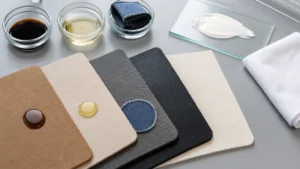
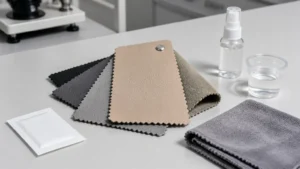
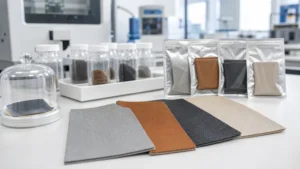
A synthetic leather stain resistance test evaluates how well a coated leather-like material resists common contaminants such as coffee, oil, sweat, denim dye, sunscreen, ink, and cleaning chemicals. The test also checks whether those stains can be removed without discoloration, gloss change, sticky residue, coating swelling, cracking, or surface damage. For upholstery, automotive, medical, sport, and bag applications, stain resistance is not only a cleaning issue; it is a material approval and long-term appearance issue.
Buyers often hear phrases such as easy-clean PU leather, stain-resistant synthetic leather, or wipe-clean upholstery. A clear synthetic leather stain resistance test makes these claims useful only when the test condition is clear. What stain was used? How long did it stay on the surface? Which cleaner was allowed? How many wiping cycles were used? Was the material evaluated before or after heat, humidity, abrasion, or chemical exposure? Without these details, an easy-clean claim may sound strong but provide little technical value.
What Is a Synthetic Leather Stain Resistance Test?
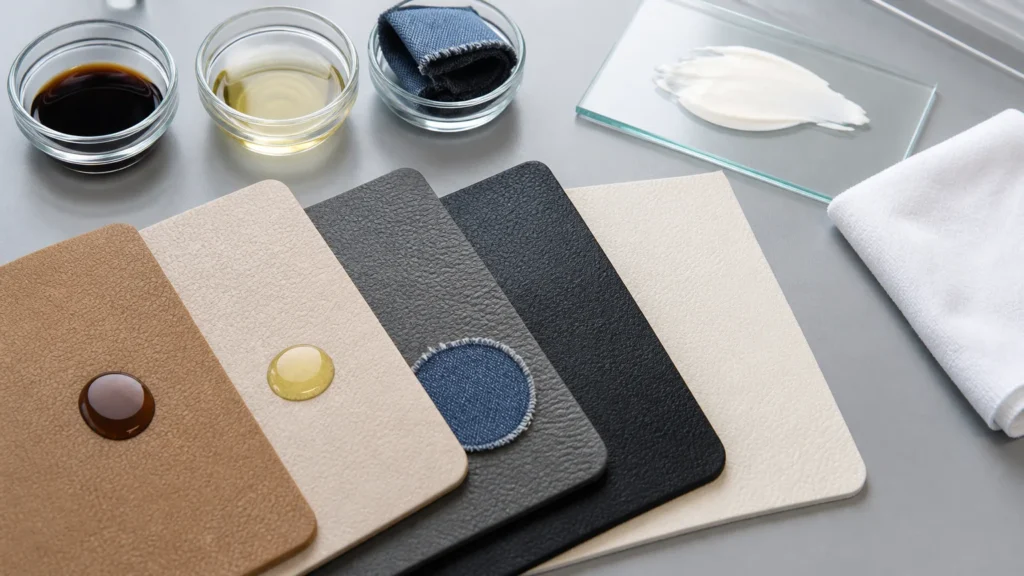
A synthetic leather stain resistance test is a controlled evaluation of how a synthetic leather surface reacts after contact with selected staining substances. The result may be judged by visible staining, color change, gloss change, residue, surface softening, swelling, tackiness, cracking, or coating damage after cleaning.
The purpose is not simply to prove that a material can be wiped with a damp cloth. In real applications, a material may contact coffee, tea, food oil, human sweat, sunscreen, hand cream, denim dye, marker ink, disinfectant, or household cleaner. A suitable test should reflect the end-use environment instead of using a single generic stain.
For example, car upholstery leather may face denim transfer, sunscreen, sweat, and beverage spills. furniture leather fabric may face coffee, skin oil, food residue, and repeated household cleaning. medical product leather fabrics may require stronger chemical and disinfectant compatibility. Each application needs a different stain resistance plan.
Stain Resistance, Cleanability, Chemical Resistance, and Color Fastness
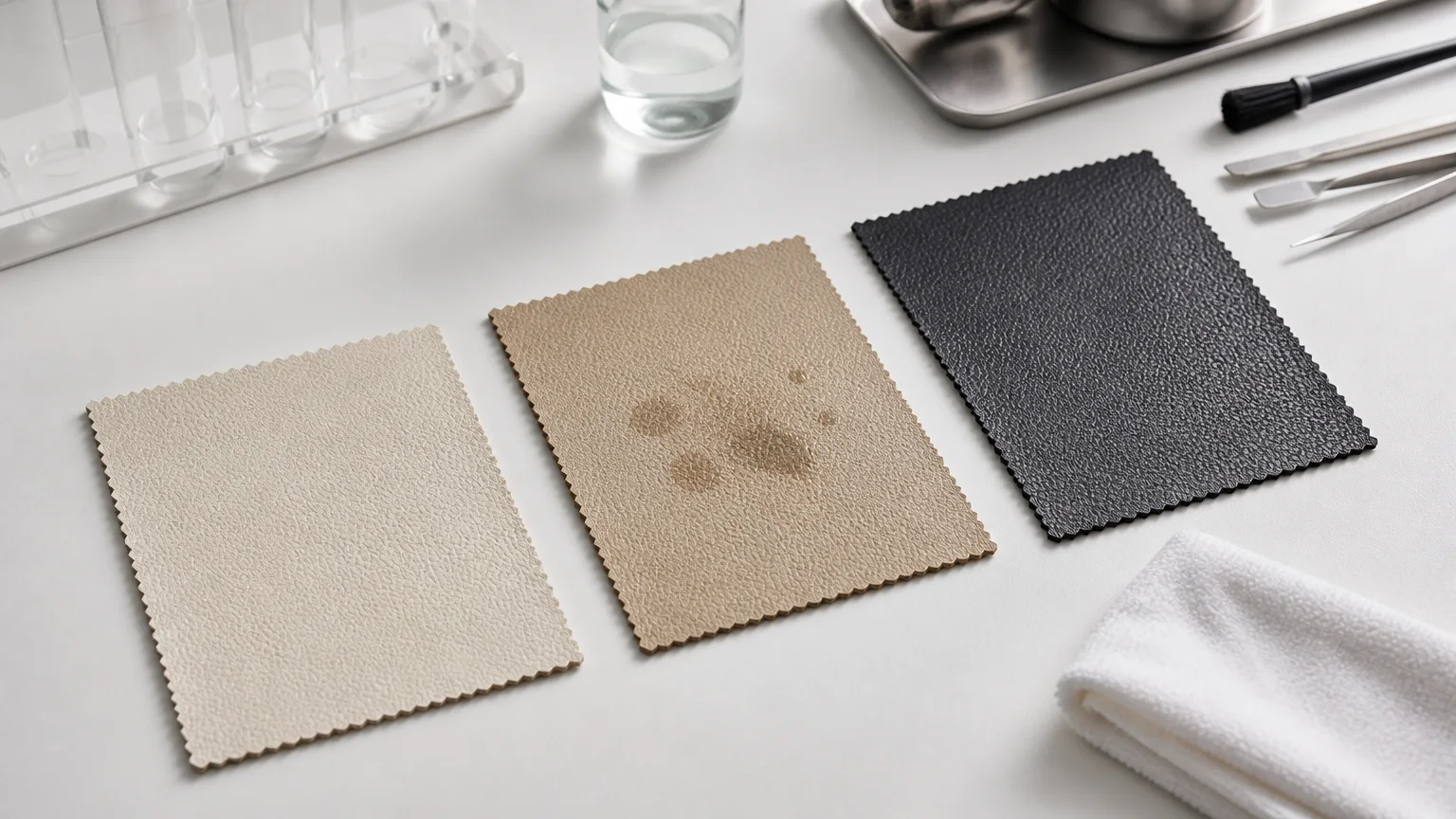
Before approving a material, buyers should separate several related performance terms. They sound similar, but they answer different questions, and a synthetic leather stain resistance test should not be confused with every other surface-performance check.
| Performance Item | Main Question | Buyer Risk if Ignored |
|---|---|---|
| Stain resistance | Does the surface resist external stains? | Permanent marks, customer complaints, poor appearance |
| Cleanability | Can the stain be removed safely? | Cleaning may leave residue, haze, or damage |
| Chemical resistance | Does a cleaner, alcohol, or disinfectant damage the coating? | Surface swelling, softening, tackiness, or cracking |
| Color fastness | Does the material color fade, rub off, or transfer? | Color bleeding, staining on clothing, inconsistent appearance |
| Scratch resistance | Does mechanical damage open the surface to staining? | Scratched areas may collect dirt more easily |
This distinction matters because a material can pass one evaluation and fail another. A surface may resist coffee but still be damaged by strong alcohol. A dark material may hide stains but have poor color transfer resistance. A very soft topcoat may feel premium but become glossy or sticky after repeated cleaning. A useful synthetic leather stain resistance test should therefore be part of a broader performance review, not an isolated marketing statement.
Why Stain Resistance Matters for Buyers
A synthetic leather stain resistance test has direct commercial value because many synthetic leather complaints appear after the product enters daily use. A sample may look clean in the showroom, but real users spill drinks, sit in jeans, apply sunscreen, use hand cream, clean with the wrong detergent, or wipe the surface many times over the product’s life.
Automotive interiors
Automotive seats and interior trim face body contact, heat, sunlight, enclosed cabin air, and frequent cleaning. Light-colored seat materials are especially exposed to denim dye transfer. Sunscreen and hand lotion can also interact with some finishes. For automotive programs, stain resistance should be reviewed together with heat aging, fogging, odor, abrasion, color fastness, and cleaning compatibility. Taite’s automotive PU leather guide gives broader context for vehicle interior material selection.
Furniture and public seating
Furniture materials are touched daily by clothing, skin oil, food, drinks, pets, and cleaning agents. Sofas, hotel seating, office chairs, and waiting-area chairs need materials that can be cleaned without losing gloss, color, or surface integrity. A surface that stains easily may create warranty issues even if its tensile strength or abrasion result looks acceptable.
Medical and healthcare products
Medical upholstery may be wiped frequently with disinfectants or alcohol-based cleaners, depending on the facility’s procedure. A material that looks clean at first may fail after repeated wiping if the topcoat is not compatible with the approved cleaner. In this field, cleanability and chemical resistance should be considered together.
Sports grips and gloves
Sports materials encounter sweat, hand oil, friction, and cleaning. Sport glove materials and grip fabric may require a balance between stain resistance, grip stability, abrasion resistance, and comfort. A surface that becomes slippery, sticky, or dirty-looking after sweat exposure may not be suitable even if it feels good in a new sample.
Bags and fashion accessories
For bag fabric, denim transfer, cosmetics, rain stains, and hand oil are common concerns. Light-colored bags are visually attractive but often need stronger topcoat protection and clearer care instructions.
Common Stains Used in Synthetic Leather Testing
A buyer should not ask only for a general easy-clean claim. The stain list in a synthetic leather stain resistance test should be connected to the product’s real use environment.
| Stain Type | Why It Matters | Typical Application Risk |
|---|---|---|
| Coffee / tea | Common beverage spill | Sofa, car seat, office chair, hospitality seating |
| Oil / sebum | Food oil and skin contact | Furniture, automotive, medical, bags |
| Sweat | Salt and body chemistry | Sports gloves, grip fabric, seats, medical upholstery |
| Denim dye | Color transfer from clothing | Light-colored car seats, sofas, and bags |
| Sunscreen / lotion | Chemical staining and possible softening | Automotive, outdoor-adjacent, marine-adjacent seating |
| Ink / marker | Severe contamination risk | Office, school, public seating, hospitality |
| Alcohol / cleaner | Cleaning compatibility | Medical, automotive, public seating, high-touch surfaces |
The key is to define what matters before testing. A hospital chair may care more about disinfectant compatibility than coffee. A light beige vehicle seat may care more about denim transfer and sunscreen. A commercial gym product may care more about sweat, hand oil, and repeated wiping.
How a Synthetic Leather Stain Resistance Test Works
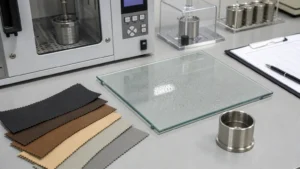
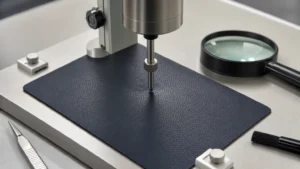
A synthetic leather stain resistance test should be repeatable and clearly reported. Even when different customers use different internal methods, the basic logic is similar: apply a stain, allow contact under defined conditions, clean the surface using an approved method, and evaluate the result.
Prepare production-representative samples
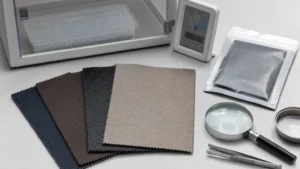
The sample should match the real material construction as closely as possible. Color, grain, thickness, topcoat, backing, adhesive, and finish can all affect stain response. If the final product uses lamination, foam, or a special backing, testing only a flat development swatch may not be enough.
Apply the selected stain
The selected stain should match the use case. Common examples include coffee, oil, artificial sweat, denim dye, sunscreen, ink, lotion, and approved cleaning chemicals. The applied amount, contact area, and contact time should be recorded. Without this information, results are difficult to compare.
Control dwell time and environment
Stains may behave differently after one minute, one hour, or one day. Heat and humidity may also change the result. For automotive, medical, hospitality, and outdoor-adjacent products, buyers may choose to combine aging and staining to simulate real service conditions more closely.
Clean with the approved method
The cleaning method must be defined. Some programs allow only water and a soft cloth. Others may allow mild soap, a specified cleaner, or disinfectant. Using a stronger cleaner in the lab than the end user is allowed to use can create misleading results.
Evaluate after cleaning
Evaluation should look beyond whether the stain is still visible. Buyers should check color change, gloss change, haze, residue, swelling, tackiness, texture change, edge damage, and surface cracking. Before/after photography, gray scale assessment, color difference measurement, and visual grading may all be useful depending on the project.
What Causes Poor Stain Resistance?
When a synthetic leather stain resistance test gives a weak result, the cause usually comes from the surface structure and finish system, not from one simple material name. PU leather, microfiber leather, silicone leather, water-based PU, and solvent-free PU can all perform differently depending on topcoat design and manufacturing control.
Porous or weak topcoat
If the topcoat is too porous or weak, stains can enter the surface more easily. This can leave dark marks, uneven gloss, or residue after cleaning. A smoother or better-sealed finish may improve cleanability, but it must still meet hand-feel and durability requirements.
Incompatible finish chemistry
Some stains and cleaners interact with specific coating chemistries. Sunscreen, hand cream, alcohol, oil, and disinfectants can affect certain finishes. A material that performs well with water may not perform well with alcohol or lotion. This is why cleaning compatibility should be tested using the cleaner actually approved for the product.
Light-colored surfaces without enough protection
White, beige, cream, and light gray synthetic leather may show denim dye, ink, oil, or pigment transfer more visibly than dark colors. A light-colored seat material is not automatically low quality, but it needs more careful topcoat design, cleaning instructions, and stain resistance verification.
Poor curing or weak coating adhesion
If the coating is not fully cured or the bonding system is weak, wiping may cause gloss change, peeling, swelling, or surface damage. Stain resistance should therefore be considered together with coating adhesion, abrasion, and aging performance.
Wrong material for the application
A soft fashion material may not be suitable for public seating. A high-grip sports material may collect dirt more easily than a smooth furniture material. A premium-touch automotive material may require extra testing against sunscreen and denim transfer. Matching the material to the application is more important than using a single easy-clean claim for every project.
How Buyers Should Define Easy-Clean Requirements
When buyers request easy-clean synthetic leather, they should define the actual cleaning scenario before running a synthetic leather stain resistance test. A useful specification should answer the following questions:
- What stains are most likely in real use?
- How long will stains remain before cleaning?
- What cleaner is allowed for the end user?
- How many wiping cycles should be tested?
- Should the sample be tested after heat, humidity, light, or abrasion aging?
- Is color change evaluated visually or instrumentally?
- What level of gloss change, residue, or surface mark is acceptable?
- Is the test performed on a flat swatch or finished product part?
- Should the material also meet alcohol or disinfectant compatibility requirements?
For automotive and commercial upholstery, it may be useful to review industry performance guideline concepts for seating textiles and upholstery. The ACT voluntary performance guideline overview is one public reference for understanding how upholstery performance can be discussed across properties such as lightfastness, physical durability, and maintenance context: ACT performance guideline overview. Buyers should still define their own project-specific stain list and acceptance criteria.
Application-Specific Recommendations
A synthetic leather stain resistance test should be selected according to the end product. The same material may be acceptable for one application and risky for another.
| Application | Key Stain Risks | Recommended Focus |
|---|---|---|
| Automotive upholstery | Denim dye, sunscreen, sweat, drinks | Stain resistance, heat aging, fogging, color fastness |
| Furniture leather fabric | Coffee, oil, body contact, household cleaners | Easy-clean performance, abrasion, coating durability |
| Medical product leather fabrics | Alcohol, disinfectants, sweat, repeated wiping | Chemical resistance, cleanability, surface integrity |
| Sports grip materials | Sweat, hand oil, friction, cleaning | Grip stability, sweat resistance, abrasion |
| Bag fabric | Denim transfer, cosmetics, rain stains | Light-color stain resistance, color fastness, surface protection |
Material selection should also consider resin system and surface finish. PU leather can be engineered for different softness and topcoat properties. Water based PU leather and solvent free PU leather may be considered when projects also involve lower odor or lower emission goals. Silicone leather may be relevant when high cleanability and surface resistance are important.
How to Read a Stain Resistance Report
A strong synthetic leather stain resistance test report should make the test condition visible. Buyers should avoid approving a material based only on a phrase such as easy-clean, anti-stain, or stain resistant. Instead, ask for specific details.
- Sample identity: color, grain, thickness, backing, batch, and final construction.
- Stain list: coffee, oil, sweat, denim, sunscreen, ink, cleaner, or other substances.
- Contact condition: amount, dwell time, pressure, temperature, and humidity if controlled.
- Cleaning method: water, mild soap, specified cleaner, disinfectant, wiping cycles, cloth type, and force.
- Evaluation method: visual grade, color difference, gloss change, residue, or surface damage.
- Acceptance criteria: what result is considered acceptable for the application.
- Timing: whether the sample was tested fresh, aged, or after abrasion/flex exposure.
If the test condition is vague, the result cannot guide sourcing decisions. A material that passes a mild water-wipe test may still fail after sunscreen exposure, denim rubbing, or repeated disinfectant cleaning.
FAQ
What is a synthetic leather stain resistance test?
A synthetic leather stain resistance test checks whether synthetic leather resists common stains and whether those stains can be cleaned without surface damage, color change, gloss loss, swelling, tackiness, or cracking.
Is easy-clean synthetic leather always stain-proof?
No. Easy-clean means stains are easier to remove under defined conditions. It does not mean every stain can be removed in every situation or after unlimited contact time.
What stains should be tested on synthetic leather?
Common stains may include coffee, oil, sweat, denim dye, sunscreen, ink, hand cream, alcohol, and approved cleaning chemicals. The correct list depends on the final product application.
Can alcohol damage synthetic leather?
Yes, alcohol can damage some synthetic leather finishes depending on coating chemistry, concentration, contact time, and wiping method. For medical or public seating use, alcohol compatibility should be tested directly instead of assumed.
Why do light-colored synthetic leather seats stain more easily?
Light-colored seats show denim dye, oil, ink, and pigment transfer more clearly. They may need stronger topcoat protection, clearer cleaning instructions, and application-specific stain testing.
Should buyers test stain resistance after aging?
For automotive, medical, hospitality, furniture, and outdoor-adjacent uses, aging plus staining can be more realistic than testing a fresh swatch only. Heat, humidity, light, abrasion, or cleaning cycles may change the surface response.
Final Thoughts
A synthetic leather stain resistance test helps buyers understand whether a material can keep a clean appearance under realistic use. The best test plan should define the stain type, contact time, cleaning method, evaluation criteria, and application environment. It should also be reviewed together with abrasion, color fastness, chemical resistance, fogging, odor, and aging requirements.
If your project requires synthetic leather with specific stain resistance, easy-clean performance, alcohol compatibility, or automotive, furniture, medical, sport, or bag cleanability requirements, Taite can help match the coating, backing, finish, and testing plan to your application. Share your target stains, cleaning method, and end-use environment through Contact Taite, and our team can recommend suitable materials for evaluation.