None
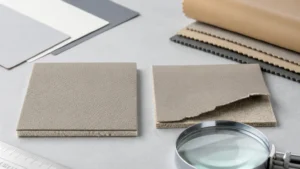
Does PU Leather Peel? Causes, Prevention, and Better Material Choices
Does PU leather peel? Learn why PU leather peels, how coating quality, hydrolysis, friction, cleaning, and heat affect peeling, and how buyers can choose better materials.

Does PU leather peel? Learn why PU leather peels, how coating quality, hydrolysis, friction, cleaning, and heat affect peeling, and how buyers can choose better materials.
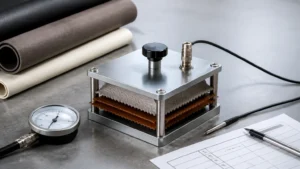
Learn how a synthetic leather blocking resistance test evaluates surface stickiness, coating transfer, pressure marks, and heat-storage risks for automotive, furniture, medical, and bag materials.
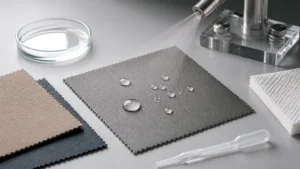
Learn how a synthetic leather water resistance test works, how waterproofing differs from water repellency, and how buyers should define moisture exposure requirements.
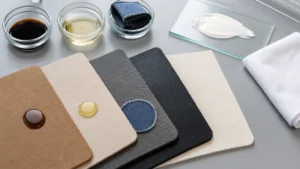
Learn how a synthetic leather stain resistance test works, what stains buyers should evaluate, and how easy-clean performance affects upholstery, automotive, medical, and sports materials.
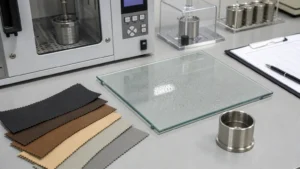
A synthetic leather fogging test evaluates whether volatile substances from synthetic leather can evaporate under heat and condense on a
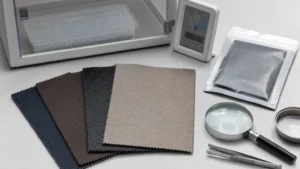
Mold resistant synthetic leather is designed to reduce the risk of fungal growth, mildew marks, odor, and surface contamination when
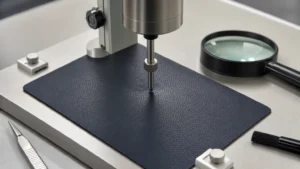
A synthetic leather scratch resistance test evaluates how well the surface coating resists visible scratches, whitening, gloss change, coating breakage,
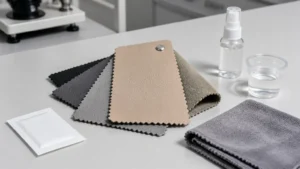
Can you use alcohol on synthetic leather? Learn when alcohol, bleach, and disinfectants may damage PU, PVC, microfiber, or silicone leather and how to clean safely.
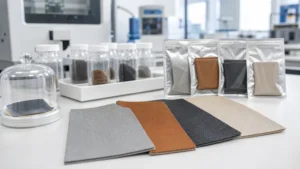
Why does synthetic leather smell? Learn where odors come from, how VOCs relate to synthetic leather, and how buyers can reduce odor risk in finished products.
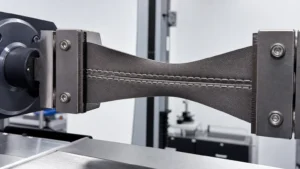
Learn how a synthetic leather seam strength test works, why stitched areas fail, and how buyers can specify seam performance for shoes, bags, furniture, and grips.