

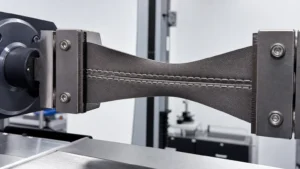

The global automotive PU leather market is undergoing a seismic transformation. As electric vehicle production accelerates and consumers demand cleaner, more ethical interiors, sourcing managers, OEM designers, and Tier-1 suppliers face mounting pressure to secure the right upholstery materials. This is precisely why automotive PU leather has evolved from a cost-effective alternative into a strategically preferred, engineered performance material for premium and mass-market vehicle programs.
According to recent industry data, the global automotive faux leather segment is projected to reach USD 32.5 billion by 2034, growing at a CAGR of over 6%. Behind this remarkable expansion sits a fundamental shift in supply chain priorities — regulatory compliance, animal welfare, cost predictability, and the meteoric rise of electric mobility. As a leading manufacturer with four state-of-the-art facilities, Taite Leather Group is at the forefront of this transformation.
1. Why Automotive PU Leather Is Redefining Vehicle Interior Design
For decades, genuine hide symbolized automotive luxury. But rising material costs, ethical concerns, and the challenges of maintaining consistent quality across global supply chains have driven OEMs to reconsider their material strategy. Modern synthetic upholstery now offers a compelling proposition: the tactile richness of natural hide, engineered performance parameters that exceed leather in critical categories, and a supply chain optimized for scale, sustainability, and cost.
The Electric Vehicle Revolution as a Material Catalyst
The exponential growth of electric vehicle production has accelerated this material transition. EV manufacturers face a unique paradox — while pursuing environmental leadership through zero-emission drivetrains, they must equally ensure interior materials align with their sustainability messaging. Sourcing genuine hide for EV interiors sends a contradictory brand signal, whereas premium automotive PU leather offers a cohesive ethical narrative from powertrain to cabin.
Furthermore, EV cabins present distinct engineering challenges. Prolonged occupancy during charging sessions, higher interior temperatures from battery heat management, and the absence of engine vibrations that traditionally masked material odors — all demand upholstery with superior thermal stability, zero VOC emissions, and long-term dimensional consistency.
Consumer Preference Shifts Toward Vegan Interiors
Recent industry surveys indicate that over 60% of luxury vehicle buyers under 40 actively prefer vegan interior options when given the choice. This demographic shift is not a passing trend — it reflects a fundamental restructuring of what “premium” means in modern automotive design. High-quality synthetic upholstery satisfies this demand while allowing OEMs to maintain — and often improve — profit margins on interior specifications.
2. Technical Advantages of Premium Automotive PU Leather
Not all synthetic upholstery is created equal. For vehicle applications, the material must survive an extraordinarily harsh operating environment — temperature swings from -30°C to +80°C, intense UV exposure through windshields, thousands of ingress/egress cycles, exposure to cleaning agents, and daily abrasion from clothing, keys, and everyday objects. Our premium material portfolio is specifically engineered to withstand these conditions across a full 10-year vehicle service life.
A. Superior Hydrolysis Resistance
Hydrolysis — the chemical breakdown of polymer chains under moisture and heat — is the primary failure mode for lower-grade synthetics in vehicle service. Our engineered material utilizes advanced polycarbonate-based polyurethane resins that comfortably pass the industry-standard 5-year Jungle Test at 70°C/95% relative humidity, ensuring the surface maintains its structural integrity through demanding regional climates from Southeast Asia to the Middle East.
B. Extreme UV Stability
Vehicle interiors experience unfiltered UV radiation transmitted through windshields and side glass. Standard synthetic materials fade, harden, and crack under prolonged UV exposure. Our surface incorporates advanced UV stabilizers throughout the polyurethane matrix, achieving color-fastness ratings of grey scale grade 4-5 after 3,000 hours of accelerated Xenon-arc weathering — matching or exceeding OEM specifications for premium applications.
C. Class-Leading Abrasion Performance
The high-traffic zones of vehicle interiors — seat bolsters, steering wheel wraps, gear shift boots, and door pull cups — endure relentless mechanical abrasion. Our premium fabric comfortably withstands over 100,000 Martindale cycles without visible surface damage. For extreme-wear applications such as commercial fleet vehicles and ride-hailing platforms, we offer reinforced variants capable of exceeding 200,000 cycles.
D. Zero VOC and OEM-Compliant Emissions
Global OEMs enforce increasingly stringent interior air quality standards, including VOC emissions protocols such as VDA 278, Chinese GB/T 27630, and Japan’s JAMA standards. Our water-based and solvent-free portfolio contains zero DMF, meets all major OEM Chemical Substance Lists, and eliminates the “new car smell” complaints that plague lower-tier alternatives.
3. Automotive PU Leather Applications Across Vehicle Interior Zones
Modern vehicle interiors deploy engineered synthetic upholstery across dozens of application zones, each with distinct performance requirements. Understanding these application-specific needs is critical for making the right specification decisions when sourcing an automotive PU leather partner.
A. Seat Upholstery and Bolsters
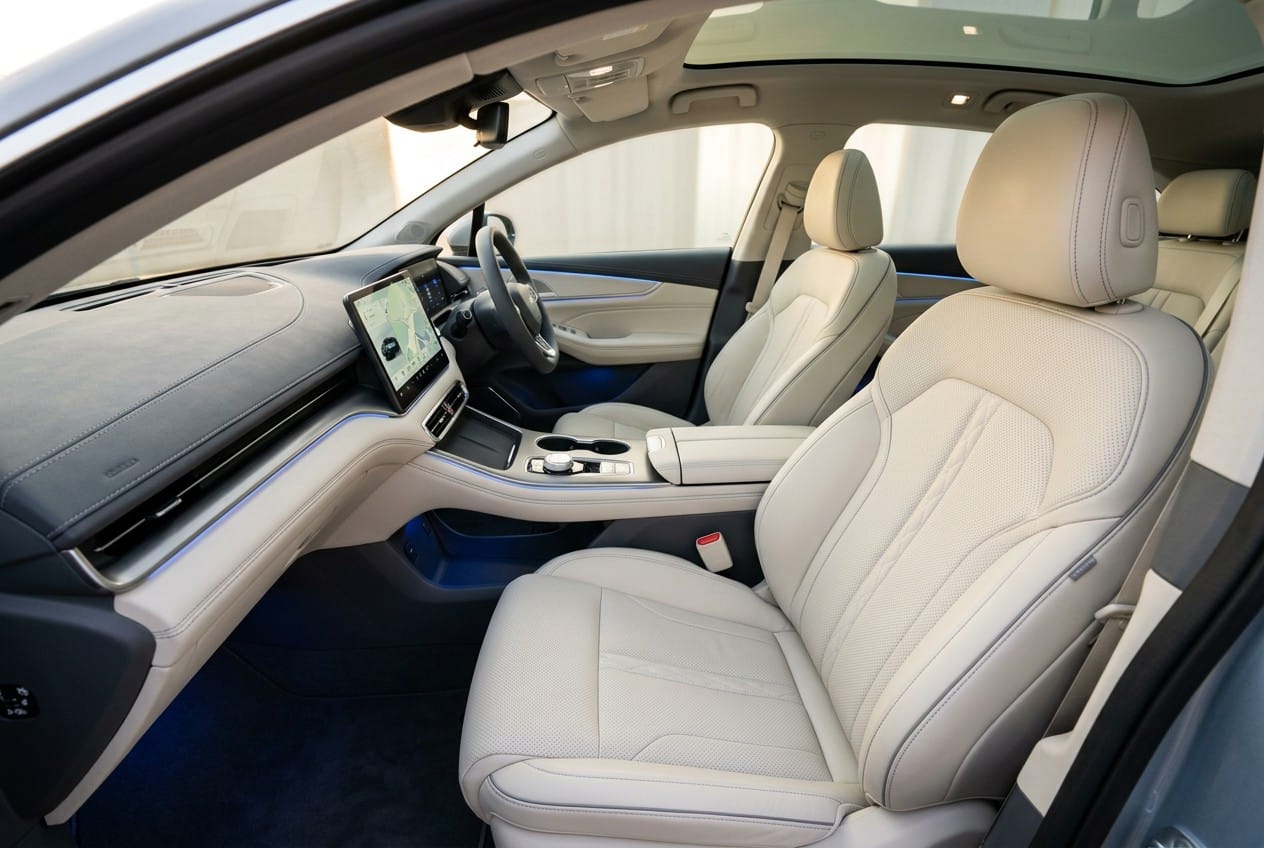
The most visible and heavily-used application, seat surfaces require the highest combination of aesthetics, comfort, and durability. Our automotive-grade upholstery for seating comes in perforated, embossed, and quilted variants with matched thread patterns, typically specified at 1.2-1.4mm thickness with foam-backed construction for optimal cushioning integration.
B. Dashboard, Door Panels, and Console Wrapping
Interior architectural surfaces demand exceptional dimensional stability, low-gloss finish options, and thermal expansion characteristics compatible with underlying rigid substrates. Our wrapping-grade fabric features precision-controlled backing structures that resist bubbling, wrinkling, and adhesive migration across the full temperature range encountered in a vehicle cabin.
C. Steering Wheel and Gear Shift Coverings
High-touch interface zones represent the driver’s most direct interaction with vehicle materials. These applications require enhanced grip characteristics, sweat resistance, and moisture wicking — properties our engineering team achieves through specialized surface treatments and micro-perforation patterns available in the premium series.
D. Headliners, A-Pillars, and Sun Visors
Upper cabin zones prioritize lightweight construction, sound absorption, and consistent color matching with primary interior surfaces. Our thin-gauge variants (0.6-0.8mm) deliver luxury aesthetics with the weight characteristics essential for modern fuel-economy and EV range optimization objectives.
4. Automotive PU Leather vs Genuine Hide vs Standard Synthetics
Procurement teams frequently ask how premium automotive PU leather compares to alternative materials across critical performance and business metrics. The comparison below reflects real-world service data collected from Tier-1 OEM programs.
| Performance Metric | Genuine Hide | Standard Synthetic | Premium Taite Grade |
|---|---|---|---|
| Cost per m² | Highest | Lowest | Moderate premium |
| UV Fade Resistance | Poor | Moderate | Excellent (Grey scale 4-5) |
| Hydrolysis Resistance | N/A | 2-3 years | 5-10 years |
| Cleaning & Maintenance | Complex conditioning | Simple wipe | Simple wipe, disinfectant-safe |
| Weight per m² | Heavy | Light | Light (EV-optimized) |
| Выбросы летучих органических соединений | Variable | Often fails OEM specs | Meets all major OEM standards |
| Batch Consistency | Poor (natural variation) | Good | Excellent (Delta-E < 1.0) |
| Ethical Sourcing | Animal-derived | Vegan | Vegan + GRS certified |
The data makes the strategic case clear — premium synthetic upholstery now delivers equivalent or superior performance across almost every metric that matters to modern automotive manufacturers, while providing significant advantages in supply chain predictability and sustainability positioning.
5. Sustainability Certifications for Automotive PU Leather Programs
Global OEMs increasingly require documented sustainability credentials from every supplier in their materials chain. Selecting an automotive PU leather partner with the right certification portfolio is essential for smooth program qualification and long-term supply security.
- REACH Compliance: All our material is fully compliant with EU REACH regulations, ensuring frictionless export to European vehicle assembly plants.
- GRS Certification: Our recycled-content series carries valid Global Recycled Standard Transaction Certificates for every shipment, supporting OEM Scope 3 emissions reporting.
- ISO 9001 & ISO 14001: Both quality and environmental management systems are third-party audited across our four production facilities.
- OEM CSL Compliance: Our chemical inventory has been validated against Ford CMS, GM GMW17026, Volkswagen TL, and Toyota TSZ 6.55 chemical substance lists.
6. B2B Sourcing Checklist for Automotive PU Leather Suppliers
Selecting the right automotive PU leather manufacturing partner requires far more scrutiny than typical synthetic textile procurement. Program failures caused by material defects can trigger million-dollar recall liabilities. Use this checklist before finalizing any long-term supply agreement:
- Validate PPAP Capability: Confirm the supplier can execute a full Production Part Approval Process documentation package, including material data sheets, IMDS submissions, and process capability studies.
- Request Real-World Fleet Test Data: Ask for accelerated aging data, humidity chamber results, and evidence of the material being deployed in field programs for at least 3 years.
- Verify Multi-Facility Redundancy: Global vehicle programs cannot afford single-source vulnerability. Suppliers with multiple production facilities (Taite operates four) provide superior supply security during disruptions.
- Confirm Color-Matching Precision: Interior specifications typically require Delta-E color deviation below 1.0 across production batches. Verify the supplier’s spectrophotometer-based quality control processes.
- Assess Grain Development Support: Custom grain patterns are often central to OEM interior differentiation. Confirm the manufacturer maintains in-house engraving capabilities and can develop custom grain releases within reasonable timeframes.
7. Partner With Taite for Your Next Automotive PU Leather Program
As vehicle interiors continue evolving toward more sustainable, ethically-sourced materials, selecting the right automotive PU leather manufacturing partner has never been more strategically important. Кожаная группа Taite brings together four specialized production facilities, over 500 skilled staff, a fully certified sustainability chain, and decades of engineering experience to serve premium OEM and Tier-1 programs worldwide.
Our dedicated automotive portfolio spans water-based, solvent-free, and recycled-content variants — each specifically engineered for the demanding realities of modern vehicle production. Whether you are launching a next-generation EV platform, updating an existing model’s interior specification, or diversifying your supplier base for supply chain resilience, our engineering team stands ready to support your sourcing objectives.
Contact our specialists today to request samples, review our OEM qualification portfolio, or discuss custom grain and specification development for your next program.
Часто задаваемые вопросы
Is automotive PU leather suitable for luxury electric vehicles?
Yes. Premium synthetic upholstery is not only suitable but often preferred by leading EV manufacturers because it aligns with the sustainability positioning of electric brands while delivering the durability and low-VOC performance that EV interiors demand.
How long does this material last in real vehicle service?
Premium automotive-grade PU leather from qualified manufacturers like Taite Leather Group is engineered to match or exceed a 10-year vehicle service life without visible degradation, provided the specification is appropriate for the application zone.
Can synthetic upholstery match the tactile feel of genuine hide?
Modern premium fabric — particularly microfiber-backed variants — delivers a hand-feel that is indistinguishable from mid-grade genuine hide to most users, while offering superior consistency across production batches.
What are the minimum order quantities?
Standard MOQ for our automotive-grade material is 500 linear meters per specification, though we accommodate smaller quantities for prototyping and pilot programs. Contact our sales team to discuss specific project requirements.
Does Taite Leather Group support custom color and grain development?
Yes. Our in-house design and engineering teams routinely develop custom colors, grain patterns, and performance specifications for OEM programs. Standard custom development timelines range from 4 to 8 weeks depending on complexity.