

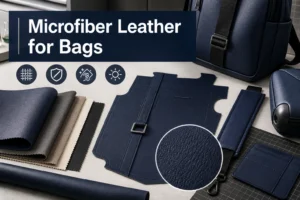
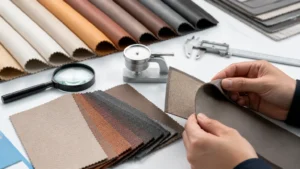
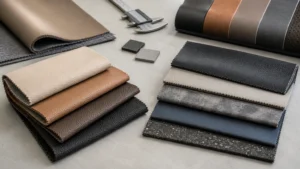
Microfiber leather for bags is a high-performance synthetic leather option used for handbags, backpacks, wallets, luggage, straps, trims, and accessories. It can offer a leather-like texture, stable grain, good abrasion resistance, easier cleaning, and more consistent quality than natural leather in bulk production. For bag buyers, the key is to check thickness, backing strength, surface finish, scratch resistance, colorfastness, flexibility, and sample performance before ordering. The best material depends on the bag type, target price, design style, and expected durability.
Bag material selection is not only about appearance. A handbag needs a refined surface and attractive grain. A backpack may need stronger backing and abrasion resistance. A wallet needs controlled thickness and folding behavior. Luggage panels need impact resistance, easy cleaning, and stable structure. Microfiber leather can be a strong option, but only when the specification matches the actual bag design.
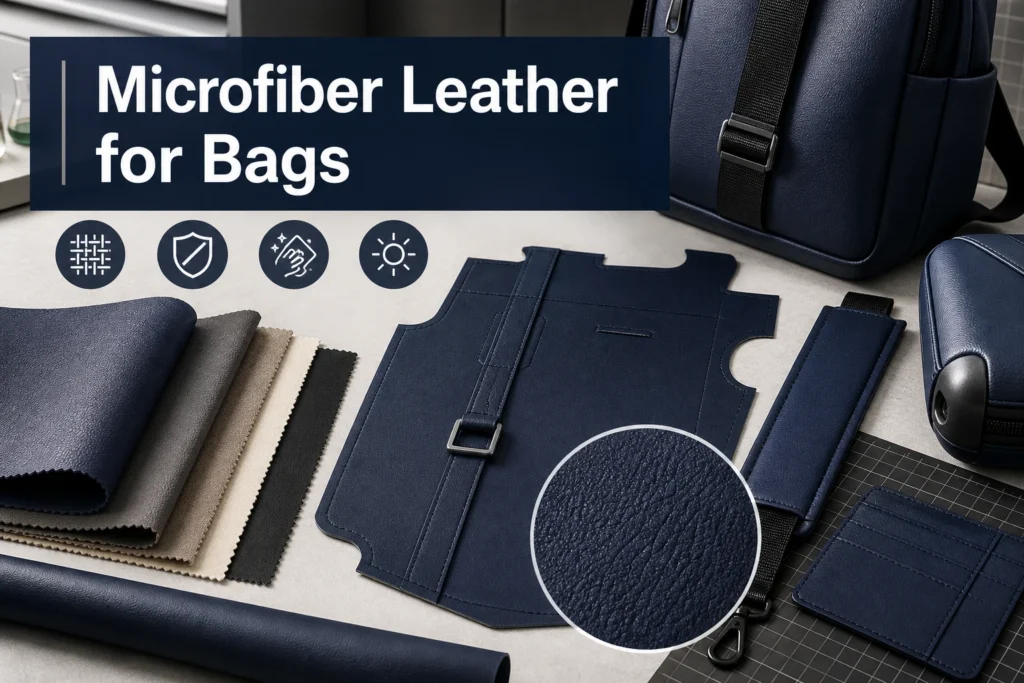
What Is Microfiber Leather for Bags?
Microfiber leather is a synthetic leather made with a microfiber base and a surface coating or finishing system. It is not genuine leather, but it can be engineered to imitate leather-like grain, softness, and surface appearance. In bag production, microfiber leather may be used for exterior panels, straps, trims, wallets, small leather goods, and luggage details.
For buyers who need a deeper material definition, this guide on what microfiber leather is explains the basic structure and differences from ordinary synthetic leather. For bag applications, the most important point is that the material must balance appearance, hand feel, durability, stitch behavior, and cleaning performance.
Why Is Microfiber Leather Used for Bags?
Consistent grain and color
Consistency is important for bags because panels are often placed side by side. If the grain, color, or gloss varies too much, the finished bag may look uneven. Microfiber leather can provide more controlled grain and color than many natural materials, which helps brands keep a stable appearance across batches.
Better cleaning and daily usability
Bags face hand oil, dust, rain splashes, cosmetics, rubbing, and clothing contact. A suitable surface finish can make the material easier to wipe and maintain. Easy cleaning does not mean the material is stain-proof, but it can improve daily usability for handbags, backpacks, wallets, and travel items.
Flexible design options
Microfiber leather can be produced in different colors, textures, grains, thicknesses, gloss levels, and hand feels. This flexibility helps designers match different product positions, from soft fashion bags to structured business backpacks or travel accessories.
Is Microfiber Leather Durable Enough for Bags?
Durability depends on the specification, not only the material name. Buyers should review the coating, microfiber base, thickness, backing strength, abrasion resistance, flex resistance, seam behavior, and surface finish. A strong material for a wallet may not be ideal for a large backpack strap. A soft handbag material may not be strong enough for high-wear luggage corners.
The question of whether microfiber leather is durable should always be answered in relation to the product design. Bag bodies, straps, corners, handles, and trims face different stress. The best choice is a material that passes tests for the exact part and use environment.
| Bag part | Main stress | Buyer check |
|---|---|---|
| Handbag body | Rubbing, scratches, shape retention | Abrasion and surface finish |
| Strap | Pulling, sweat, hand oil | Tensile and backing strength |
| Corners | Scuffing and edge wear | Coating and thickness |
| Wallet panel | Folding and friction | Flex resistance |
| Luggage panel | Impact and cleaning | Thickness and backing |
Microfiber Leather vs PU Leather for Bags
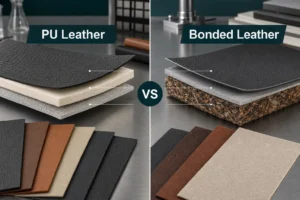
PU leather is widely used for bags because it offers flexible surface effects, colors, textures, and cost control. Microfiber leather is often considered when buyers need stronger structure, improved durability, better backing strength, or a more premium hand feel. However, it would be too simple to say one is always better than the other.
The right choice depends on target price, product level, thickness, coating quality, backing, and performance requirements. For some fashion bags, a well-made PU leather may be suitable. For more durable handbags, backpacks, or long-use accessories, microfiber leather may be considered as an upgrade. A detailed comparison of microfiber leather vs PU leather can help buyers understand the material system before choosing.
Microfiber Leather vs Genuine Leather Bags
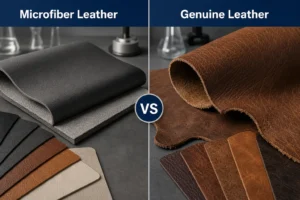
Genuine leather offers natural grain, traditional premium appeal, and a unique aging character. Microfiber leather offers more controlled texture, stable color, easier cleaning, and more predictable bulk production. The better choice depends on brand positioning and product requirements.
For luxury products that value natural grain and patina, genuine leather may be preferred. For brands that need consistent color, vegan positioning, easier maintenance, and stable supply, microfiber leather can be a practical option. Buyers should compare actual samples instead of judging only by material names.
| Factor | Кожа из микрофибры | Genuine leather |
|---|---|---|
| Consistency | More controlled | Natural variation |
| Уход за искусственной кожей PU | Usually easier | Depends on finish |
| Cost control | More predictable | Often higher and variable |
| Texture | Customizable | Natural grain |
| Bulk production | Stable | Needs grading and selection |
How to Choose Microfiber Leather for Different Bag Types
Handbags
Handbags often need attractive grain, suitable stiffness, color stability, and scratch resistance. Buyers should check whether the surface looks refined under normal lighting and whether the material holds shape after cutting, stitching, and assembly.
Backpacks
Backpacks need stronger backing, abrasion resistance, and strap performance. Shoulder straps, bottom panels, and high-friction areas should not rely only on appearance. They need testing for pulling, rubbing, sweat, and repeated use.
Wallets and small goods
Wallets and small accessories need controlled thickness, folding behavior, and edge performance. A material that is too thick may be difficult to fold neatly. A material that is too soft may lose shape. Edge finishing and stitching should be checked carefully.
Luggage and travel bags
Luggage and travel bags face heavier abrasion, impact, cleaning, and environmental changes. Buyers should review thickness, backing, surface durability, and resistance to scuffing. The application page for bag fabric can support further material selection for bag-related projects.
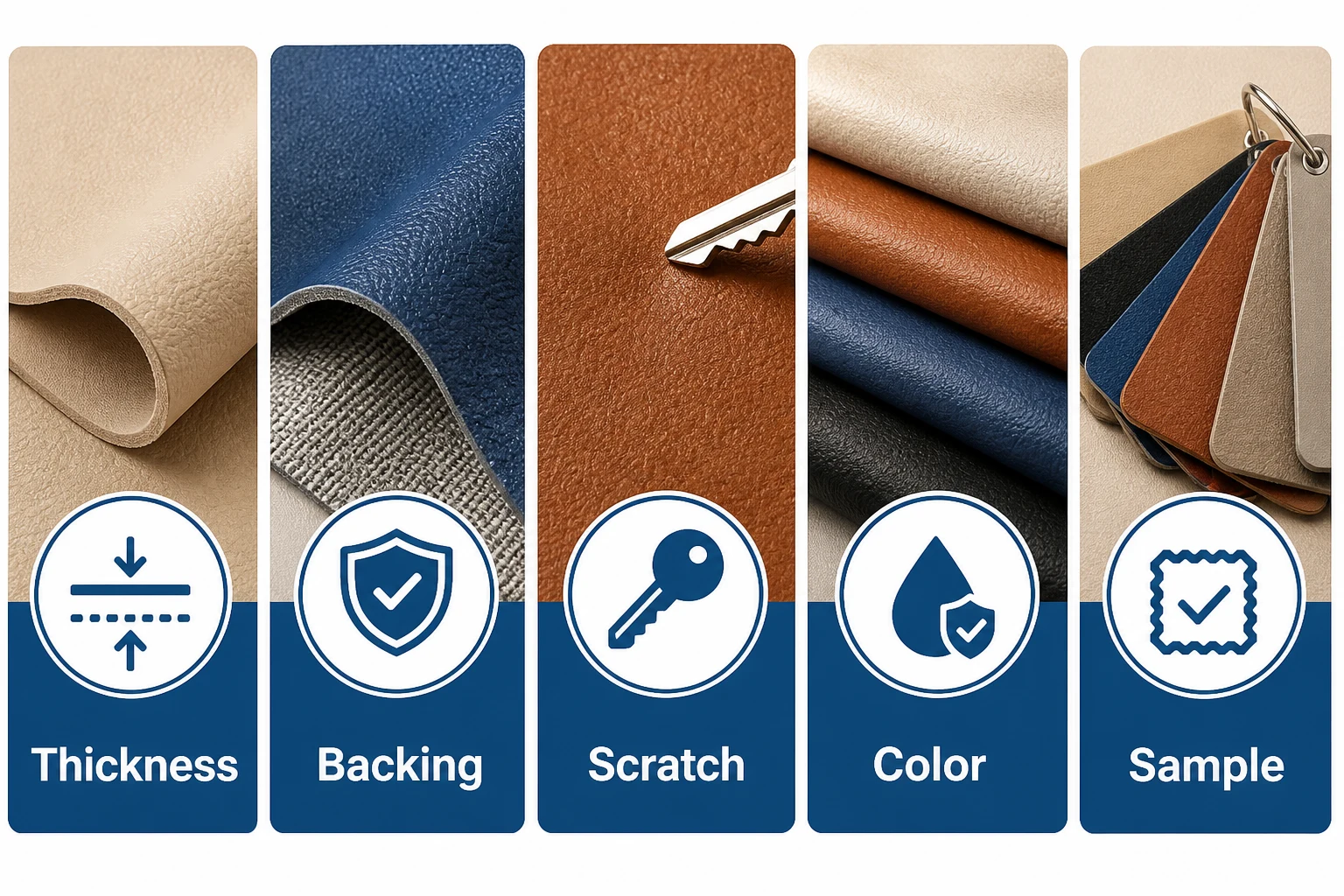
Buyer Checklist Before Ordering Bag Materials
Before ordering bag materials, buyers should confirm the exact application first. A material for a luxury handbag body may not be the same as a material for a backpack bottom panel or luggage corner. The specification should be selected according to the product part, expected use, and target price.
Buyers should also evaluate how the material behaves after actual bag-making processes. Cutting can expose backing weakness. Stitching can show whether the edge tears or puckers. Folding can reveal whether the surface cracks, wrinkles, or loses shape. Edge paint, adhesive, lining, hardware, and reinforcement layers may also affect the final result. This is why microfiber leather for bags should be checked as a complete production material, not only as a small swatch with attractive grain.
For export-oriented bag projects, consistency across rolls is also important. A supplier should help confirm color tolerance, embossing stability, coating feel, backing type, and repeat order consistency. If the first sample looks good but the bulk material changes in stiffness, gloss, or shade, the finished bags may look inconsistent. Buyers should therefore approve physical samples, production color cards, and practical test pieces before placing a larger order.
Buyers should check thickness, backing strength, surface finish, hand feel, scratch resistance, abrasion resistance, colorfastness, cleaning response, seam behavior, and edge performance. They should also compare physical samples before bulk orders because photos and descriptions cannot fully show texture, stiffness, or processing behavior.
If a project needs specific color, grain, backing, thickness, or performance, custom leather solutions can help align the material with the final bag design instead of forcing one standard material into every application.
FAQ
Is microfiber leather good for bags?
Yes. Microfiber leather can be suitable for handbags, backpacks, wallets, luggage, and accessories when the thickness, backing, surface finish, and durability match the application.
Is microfiber leather more durable than PU leather for bags?
It can be more durable in many bag applications, especially when stronger backing and better abrasion resistance are required. However, performance depends on the exact specification.
Does microfiber leather scratch easily on bags?
It depends on the surface finish and coating. Buyers should test scratch resistance and abrasion resistance before bulk production.
Can microfiber leather be used for luxury handbags?
Yes, if the grain, hand feel, color, finish, and structure meet the brand’s design and quality requirements.
How do buyers choose microfiber leather for bags?
Buyers should check thickness, backing strength, grain texture, flexibility, abrasion resistance, cleaning response, colorfastness, and sample performance.
Is microfiber leather easy to clean for bags?
It is often easier to clean than many natural materials, but cleaning performance depends on surface finish, color, coating quality, and stain type.
Conclusion: Match the Material to the Bag Design
Microfiber leather for bags can be a strong choice when buyers need consistent texture, easy cleaning, stable color, controlled thickness, and reliable bulk production. However, the best material depends on the bag type, surface finish, backing strength, hand feel, abrasion resistance, colorfastness, and sample test results. Buyers should compare real samples before choosing microfiber leather for handbags, backpacks, wallets, luggage, or accessories.
If you are choosing microfiber leather for handbags, backpacks, wallets, luggage, or custom bag projects, Taite can help you compare grain texture, thickness, backing strength, scratch resistance, colorfastness, cleaning response, and sample performance before bulk production. Contact us to request samples or discuss a custom leather solution for your bag application.