

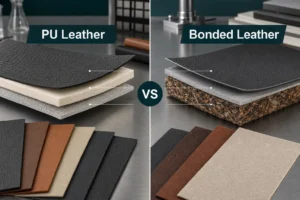
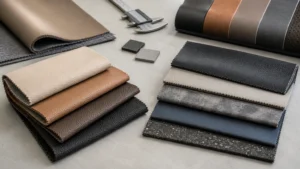
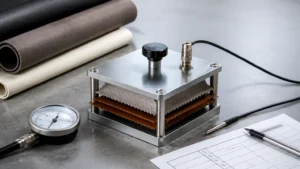
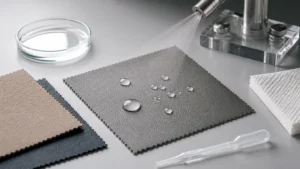
PU leather vs bonded leather is a common comparison because the two materials can look similar on a sofa, bag, or car interior sample, but they are not the same. PU leather is a synthetic material made with a polyurethane coating on a fabric, nonwoven, or microfiber backing. Bonded leather is usually made from leather fibers or scraps bonded with binders and finished with a surface layer. In many applications, a well-made PU leather can offer more predictable surface quality, easier customization, and better control over durability than low-grade bonded leather.
The practical answer is not that one material is always good and the other is always bad. The better question is whether the material structure, coating, backing, thickness, surface finish, and test data match the final product. Sofas need comfort, abrasion resistance, cleaning stability, and long-term surface appearance. Bags need hand feel, scratch resistance, edge stability, and stitching compatibility. Car interiors need heat resistance, odor control, fogging performance, color stability, and long service life. A material name alone cannot prove quality.
PU Leather vs Bonded Leather: Quick Answer
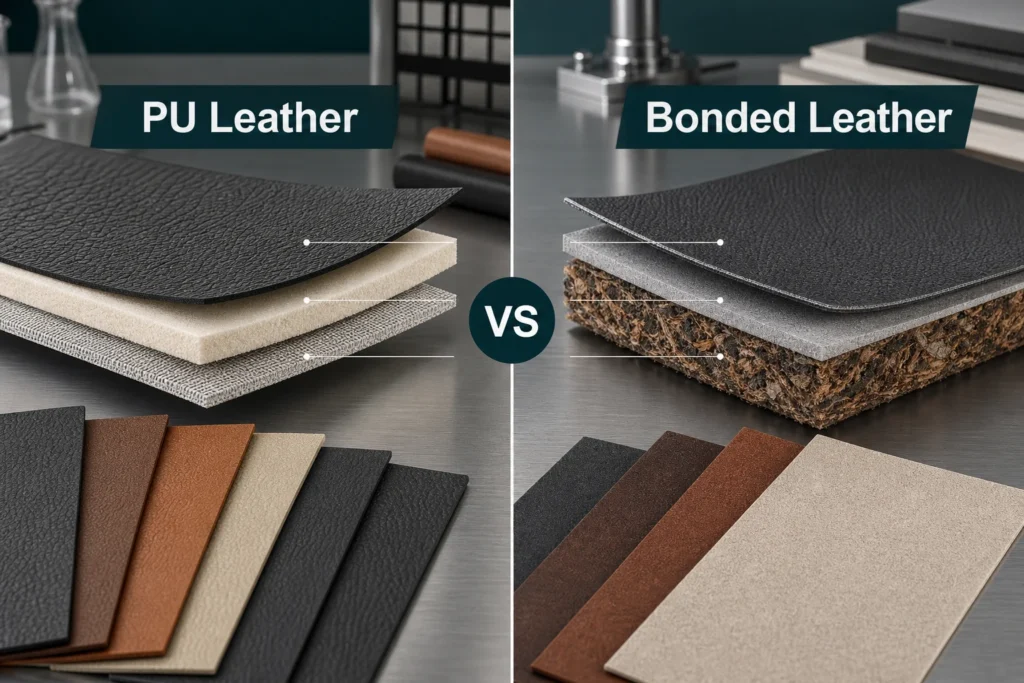
PU leather and bonded leather are different in structure, production control, and buyer expectations. PU leather is a synthetic coated material. Bonded leather usually contains leather fibers or scraps that are bonded together and covered with a finish layer. The surface may be embossed to look like leather, but the inner structure is different.
For B2B buyers, PU leather vs bonded leather should be judged by performance requirements rather than surface appearance alone. A low-cost bonded leather may be acceptable for light decorative use, but it may not be suitable for heavy-use upholstery or automotive interiors. A well-specified PU material can be engineered for thickness, texture, color, backing strength, cleaning stability, and application-specific durability.
| Question | Short answer |
|---|---|
| Are PU leather and bonded leather the same? | No. They differ in material structure and production method. |
| Which is more consistent in mass production? | Well-made PU leather is usually easier to control. |
| Which may contain leather fibers? | Bonded leather usually contains leather fibers or scraps. |
| Which is easier to customize? | PU leather is usually stronger for color, texture, backing, and finish customization. |
| Which should buyers test before ordering? | Both. Test data matters more than the name. |
What Is PU Leather?
PU leather is a synthetic leather material made by applying a polyurethane coating to a backing layer. The backing may be woven fabric, knitted fabric, nonwoven material, or a stronger microfiber base. The surface can be embossed, colored, printed, finished, softened, or engineered for different hand feels and performance levels.
This structure gives buyers many options. A supplier can adjust the coating formulation, surface grain, color, thickness, backing type, gloss level, softness, and durability requirements. For buyers comparing PU leather material options, the key is to define the final use before choosing the material. A sofa material does not need exactly the same structure as a handbag material, shoe upper, sports grip, or automotive seat surface.
PU leather can be made for different price levels. Some grades are designed for short-term decorative use. Others are built for upholstery, bags, footwear, car interiors, or high-contact products. Quality depends on coating stability, backing strength, process control, and application fit, not only on whether the material is called PU leather.
What Is Bonded Leather?
Bonded leather is usually made by combining leather fibers, scraps, or leather-based residues with binders, then applying a surface layer or finish. The finished surface may look like leather because it can be embossed, coated, pigmented, or textured. However, the internal structure is not the same as full-grain leather, split leather, or synthetic PU leather.
The performance of bonded leather varies widely. Some products may contain more leather-based material than others, and some may rely heavily on binder and surface finish. Because construction can vary by supplier, buyers should avoid assuming a fixed leather content or fixed durability level. The safest approach is to request material composition, application suitability, and sample test data before placing a bulk order.
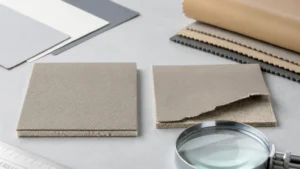
Bonded leather is often chosen when the buyer wants a leather-related appearance at a lower cost. That does not automatically make it unsuitable, but it does mean expectations should be realistic. If the bonding layer is weak or the surface finish is not stable, early peeling, cracking, flaking, or delamination may appear in high-wear areas.
PU Leather and Bonded Leather Difference: Material Structure
The most important difference is structure. PU leather is a designed synthetic coating system on a selected backing. Bonded leather is a bonded fiber-and-binder material with a finished surface. Both can be made in different quality levels, but the way they achieve appearance and strength is different.
| Factor | Кожа PU | Bonded leather |
|---|---|---|
| Main structure | Polyurethane coating plus fabric, nonwoven, or microfiber backing | Leather fibers or scraps plus binder and surface finish |
| Leather content | Usually no real leather | May contain leather fibers or scraps |
| Surface control | Easy to control color, grain, gloss, and hand feel | Can vary depending on fiber base and finishing quality |
| Backing strength | Depends on selected fabric or microfiber base | Depends on bonded structure and binder quality |
| Customization | Strong for texture, thickness, backing, softness, and application design | Usually more limited |
| Common risks | Peeling, hydrolysis, cracking, or stickiness if low quality | Delamination, flaking, cracking, or weak surface integrity if low quality |
This structure difference explains why two materials can look similar in a showroom but perform differently after months of use. The surface grain may look attractive, but the backing and bonding system decide how the material behaves under pressure, bending, friction, cleaning, heat, and humidity.
Which Is More Durable: PU Leather or Bonded Leather?
A high-quality PU leather is often more predictable than low-grade bonded leather because its coating, backing, thickness, and finish can be engineered more directly. This is especially useful when a buyer needs stable color, repeated production consistency, custom grain, specific thickness, or different hand feel for different product lines.
However, PU leather can also fail if the coating is weak, the backing is loose, the formulation is not suitable for humid conditions, or the material is used in the wrong application. Buyers asking how to judge PU leather quality should look at coating stability, backing structure, surface consistency, odor, test data, and sample performance rather than surface appearance only.
Bonded leather can fail early when the fiber-and-binder layer loses integrity or the surface finish separates. This can appear as peeling, flaking, cracking, powdering, or surface breakdown. The risk becomes higher in sofa arms, seat cushions, car seat bolsters, bag corners, folded edges, or other areas that face repeated movement and friction.
The best durability choice depends on application. For light-use decorative panels, bonded leather may meet a cost target. For furniture, bags, car interiors, and other products that face repeated handling, cleaning, bending, or body contact, buyers should request samples and test data before deciding.
Peeling, Cracking, and Delamination: Why Both Materials Can Fail
Poor coating adhesion
When the surface layer does not bond well to the backing or base material, peeling and delamination can appear. This risk affects both PU leather and bonded leather, although the failure path may be different. PU leather may peel when the coating separates from the backing. Bonded leather may delaminate when the bonded fiber layer or finish layer loses strength.
If peeling risk is a major concern, buyers should study why PU leather can peel and compare coating adhesion, hydrolysis resistance, cleaning stability, and backing strength. A material that looks good in a new sample may still fail if the surface system cannot handle the real use environment.
Weak backing or bonded fiber structure
The foundation of the material matters. In PU leather, the backing affects tear strength, sewing stability, stretch, drape, and durability. In bonded leather, the fiber-and-binder layer must remain stable under pressure and movement. If the base structure is weak, the surface can crack or separate even when the grain looks attractive.
Humidity, heat, sweat, and cleaning chemicals
Furniture and automotive materials often face body heat, sweat, humidity, cleaning products, sunlight, and repeated contact. These conditions can expose weaknesses in coating formulation, bonding strength, or finishing quality. For car interiors, high cabin temperature can accelerate odor, fogging, color change, or surface aging if the material is not designed for that environment.
Application mismatch
A material that works for a decorative panel may not work for a sofa, shoe upper, handbag corner, or vehicle seat. Application mismatch is one of the most common reasons a material receives complaints. Buyers should not ask only for the cheapest leather-like surface; they should define the product use, expected lifetime, cleaning method, climate, and performance target.
PU Leather vs Bonded Leather for Sofas
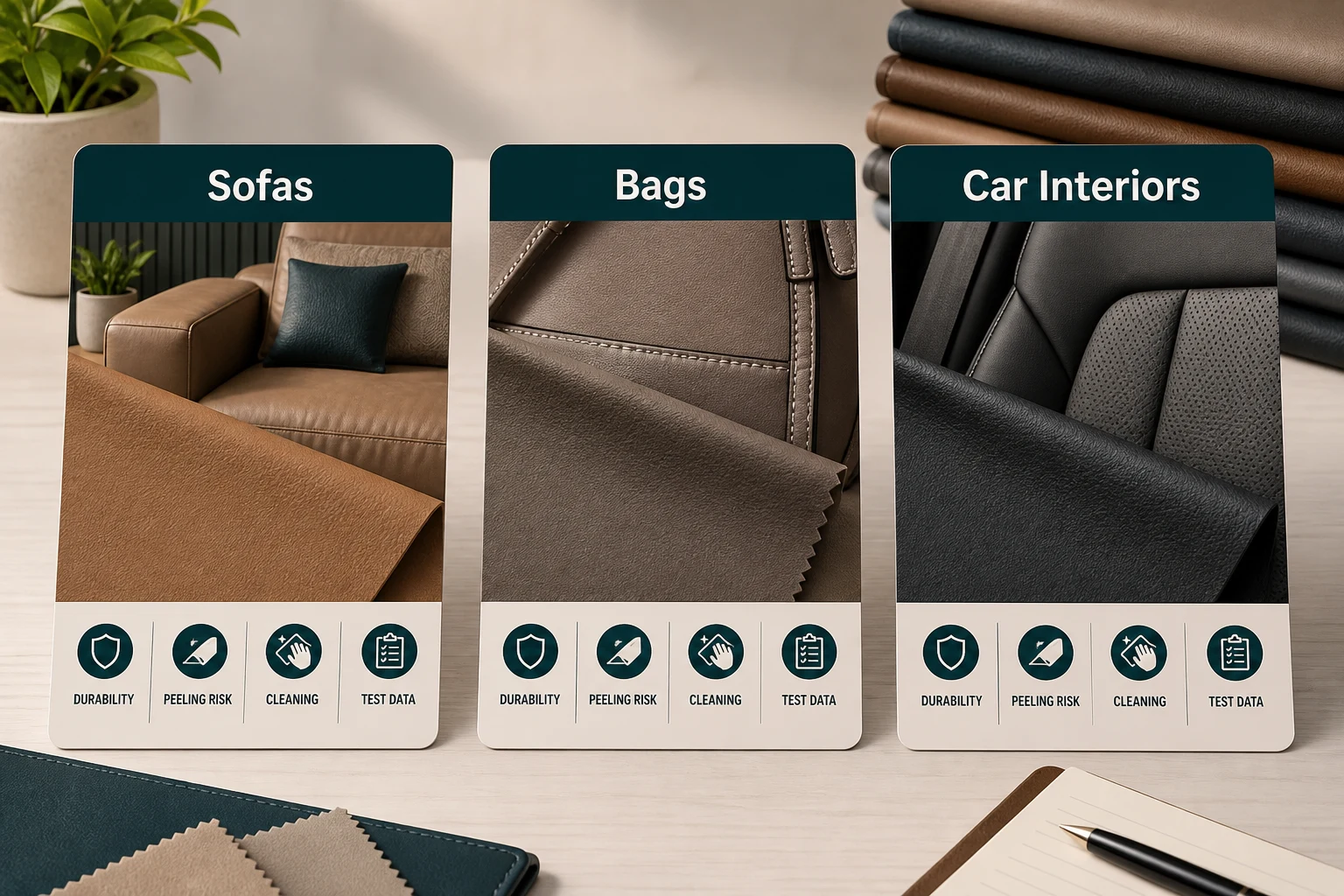
Sofas place strong demands on upholstery materials. The seat surface faces sitting pressure, body movement, sweat, oils, cleaning, sunlight, friction, and long-term compression. Armrests and seat edges often show failure first because they experience more contact and rubbing than decorative panels.
For sofas, low-grade bonded leather may be attractive because it can offer a leather-like appearance at a lower cost. The risk is that weak bonded structures may peel, flake, or crack under repeated use. This is why furniture buyers should compare abrasion resistance, coating adhesion, hydrolysis resistance, cleaning stability, color fastness, and backing strength before making a decision.
Well-specified PU leather can be a practical choice for upholstery when it is designed for comfort, cleaning, surface stability, and repeated contact. For buyers developing sofa or seating products, furniture leather fabric applications should be matched to the actual use environment instead of chosen only by surface look.
PU Leather vs Bonded Leather for Bags and Accessories
Bags and accessories require a different balance. The material must look attractive, feel good in the hand, support stitching, fold cleanly, work with edge finishing, and resist scratches or surface marks. Corners, handles, straps, and flap folds receive repeated stress, so the backing and coating must remain stable during use.
PU leather can be engineered for color, grain, softness, embossing, thickness, and hand feel, which makes it flexible for different bag designs. Bonded leather may be used for some cost-sensitive products, but buyers should pay attention to folded edges, cut edges, stitch lines, and areas around hardware. Weak bonded structures may show cracking or separation when repeatedly bent or pulled.
For premium or heavy-use accessories, buyers may need to compare standard PU, microfiber-based synthetic leather, recycled systems, or other alternatives. The right material depends on whether the product prioritizes cost, softness, shape retention, scratch resistance, or long-term appearance.
PU Leather vs Bonded Leather for Car Interiors
Car interiors are more demanding than many home or fashion products. A seat surface may face heat, sunlight, sweat, jeans friction, cleaning products, long sitting pressure, and repeated entry-and-exit movement. Interior materials may also need low odor, low fogging, color stability, and other automotive-specific requirements.
Bonded leather is usually not the first choice for high-performance automotive seating unless the material has been specifically engineered and validated for that environment. In many cases, PU synthetic leather, microfiber leather, or silicone leather may be considered depending on performance target, cost range, and design requirements.
For automotive use, buyers should not rely on a showroom sample alone. They should request test data related to heat aging, abrasion, color fastness, odor, fogging, cleaning stability, and surface durability. The material should be evaluated under conditions similar to real vehicle use.
How Buyers Should Choose Between PU Leather and Bonded Leather
Ask for material composition
Before discussing price, buyers should ask what the material is made of. For PU leather, this means coating type, backing type, thickness, surface finish, hand feel, and intended application. For bonded leather, buyers should ask about leather fiber content, binder system, finish layer, backing or base construction, and labeling requirements for the target market.
Check durability test data
Useful test categories may include abrasion resistance, flex resistance, hydrolysis resistance, coating adhesion, color fastness, rub resistance, scratch resistance, cleaning stability, and odor or fogging performance when relevant. The exact test list should match the product. A sofa, bag, shoe upper, sports grip, and car interior do not need the same testing package.
Match the material to the application
Material choice should start from the product. A soft sofa surface needs comfort and cleaning stability. A bag material needs edge and fold performance. A car seat material needs heat and long-term durability. A sports grip needs hand feel, friction, sweat resistance, and surface stability. When the application is clear, the material decision becomes more accurate.
Request samples before bulk production
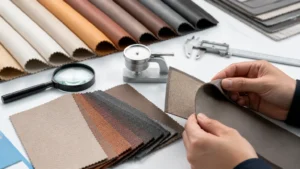
Samples help buyers test hand feel, smell, surface marking, bending, sewing, cleaning, and edge behavior. A supplier’s description is useful, but a physical sample reveals whether the material works with the product design. For large orders, buyers should avoid approving a material based on a photo or catalog name alone.
Avoid choosing only by price
Price matters, but the cheapest material can increase returns, complaints, rework, warranty claims, and brand damage. A slightly better material may reduce long-term cost if it performs more consistently in the final product. The right choice balances cost, performance, appearance, production efficiency, and customer expectations.
Better Alternatives When Bonded Leather Is Not Enough
When bonded leather does not meet the required performance level, buyers can compare several synthetic leather options. Standard PU leather can be cost-effective and highly customizable. Water-based PU leather may be considered where a lower-solvent route is important. Solvent-free PU leather may support specific environmental or process goals depending on construction. Silicone leather can be useful in certain cleanability or weathering applications.
For products that need stronger structure, better flex performance, or higher-end durability, microfiber leather vs PU leather is often worth comparing. Microfiber-based materials can offer a stronger internal structure than many ordinary coated fabrics, although the final decision still depends on budget, hand feel, surface design, and application requirements.
The best material is not always the most expensive option. It is the material that matches the product’s risk profile. A low-contact decorative surface, a hotel lobby sofa, a vehicle seat, and a fashion bag all have different durability needs. Buyers should select the material that fits the expected use, not simply the material name that sounds better.
FAQ
Is bonded leather the same as PU leather?
No. PU leather is a synthetic polyurethane-coated material, while bonded leather usually contains leather fibers or scraps bonded with binders and finished with a surface layer.
Is PU leather better than bonded leather?
It depends on quality and application, but well-made PU leather is often more consistent and easier to customize than low-grade bonded leather.
Does bonded leather peel faster than PU leather?
Low-quality bonded leather can peel or delaminate early if the bonding layer or surface finish is weak. Low-quality PU leather can also peel if coating adhesion or hydrolysis resistance is poor.
Which material is better for sofas?
For sofas, buyers should compare abrasion resistance, coating adhesion, hydrolysis resistance, cleaning performance, and backing strength rather than relying only on the material name.
Which material is better for car interiors?
Automotive interiors usually require stricter heat, abrasion, fogging, cleaning, and long-term durability performance, so buyers should request validated test data before choosing.
How can buyers avoid poor-quality PU or bonded leather?
Ask for composition details, test reports, application samples, thickness, backing type, coating adhesion data, and clear performance requirements before bulk orders.
Conclusion: Choose by Structure, Testing, and Application Fit
The right conclusion in a PU leather vs bonded leather comparison is that the two materials may look similar from the surface, but they are different in construction and quality control. Bonded leather may serve certain low-cost or decorative needs, but its performance depends heavily on fiber structure, binder quality, and surface finish. PU leather can often provide more predictable production control, broader customization, and clearer application matching when it is properly specified.
For sofas, bags, car interiors, and other high-use products, buyers should not choose only by name or price. They should evaluate composition, backing, thickness, coating stability, surface finish, durability test data, sample performance, and real product conditions. If you are comparing PU leather vs bonded leather for sofas, bags, car interiors, or other high-use products, Taite can help you evaluate coating, backing, thickness, texture, color, and performance requirements before bulk production. Contact us to discuss a custom synthetic leather solution for your application.