

1. 답변: PU 가죽은 분해되지만 생분해되지는 않습니다.
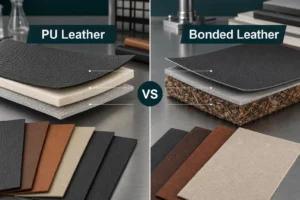
2. 대부분의 3. 일반적인 PU 가죽 소재는 4. 자연적으로 분해되지 않습니다. 가죽 산업의 급속한 발전과 함께 생분해성 5. 식물성 가죽 6. 및 무용제 친환경 PU 가죽이 시장에 영향을 미치기 위해 개발되었습니다. 일반 PU 가죽은 일선 시장에서 가장 수요가 많은 소재이며 가장 많이 소비되는 가죽 원단입니다. 패션, 스포츠, 가구, 의료, 항공우주 및 기타 분야에서 사용됩니다. 패션7. , 스포츠 및 가구 분야에서 가장 많이 사용되며 가장 일반적인 PU 가죽을 사용합니다. 특정 소재의 분해 시간은 다음과 같습니다.
| Material | 8. 분해 방법 | 9. 분해 시간 |
|---|---|---|
| Ordinary PU leather | 10. 환경 풍화 | 11. 200-500년 이상 |
| 12. 수성 PU 가죽 | 10. 환경 풍화 | 13. 200-500년 |
| Solvent-free PU leather | 10. 환경 풍화 | 13. 200-500년 |
| 14. 선인장 식물성 가죽 | 15. 생분해 + 환경 풍화 | 16. 3-12개월 이상 |
17. 일반 PU 가죽이 생분해되지 않는 이유
18. 화학 물질 합성
19. 일반 PU 가죽이 생분해되지 않는 이유는 그 20. 소재 구조가 21. 화학적으로 합성된 플라스틱 폴리머에서 비롯되기 때문입니다. 이는 석유화학 제품에서 파생된 두 가지 원료인 폴리이소시아네이트와 폴리올의 복잡한 중합 반응을 통해 제조됩니다. 제조 과정에서 안정적이고 반복적인 우레탄 결합이 다수 생성됩니다. 이러한 화학 결합은 PU 폴리머의 주 사슬을 구성하며, 마치 강력한 리벳을 사용하여 수천 개의 분자 단위를 단단히 고정하여 크고 견고한 네트워크 또는 사슬 구조를 형성하는 것과 같습니다.
22. 두 가지 분해 방식 구분
23. 생분해:
24. 이 방법은 다음으로 나뉩니다.
25. 호기성 분해: 26. 미생물은 호흡을 통해 산소를 사용하여 유기물을 산화시키고, 이를 더 간단한 물질로 분해하여 에너지를 얻습니다.
27. 혐기성 분해: 28. 이는 다양한 유형의 혐기성 박테리아가 함께 작용하여 큰 유기 분자를 점진적으로 분해하는 다단계 과정입니다.
29. 퇴비화 분해: 30. 수분, 산소(퇴비를 뒤집는 등의 방법을 통해), 온도, 탄소-질소 비율. 산업 퇴비화는 고온(55-65°C)을 생성하여 병원균과 잡초 씨앗을 효과적으로 죽일 수 있습니다.
31. 매립 분해: 32. 압축 후 산소는 빠르게 고갈되고 혐기성 상태가 됩니다. 유기물은 매립지 내에서 천천히 분해되어 침출수와 매립 가스(주로 메탄)를 생성합니다.
33. 수중 분해: 34. 산소가 풍부한 강 표층에서는 호기성 분해가 우세합니다. 산소가 부족한 호수나 해양 퇴적물에서는 혐기성 분해가 우세합니다.
35. 환경 풍화:
36. 초기 단계: 자연 환경의 햇빛 굴절, 산소, 온도 변화에 의해 PU 가죽은 점차 탄성을 잃고 건조하고 단단해지며 색이 바래고 갈라집니다. 마치 오랫동안 햇볕에 노출된 플라스틱 의자가 앉으면 부서지는 것과 같습니다. 중간 단계: 바람, 비, 물의 흐름, 압축으로 인해 부서지기 쉬워집니다. 지속적인 물리적 힘에 의해 점점 더 작은 조각으로 찢어져 쌀알 크기의 입자가 됩니다. 후기 단계: 햇빛 굴절, 산소, 온도 변화, 바람, 비, 물의 흐름으로 인한 압축에 지속적으로 노출되어 수많은 입자로 변하고, 그 다음 미세 플라스틱으로 변합니다. 겉으로는 사라지는 것처럼 보이지만 실제로는 육안으로는 감지할 수 없는 미세한 입자로 줄어듭니다. 이러한 나노-미세 플라스틱은 결국 토양, 물, 공기로 유입되어 식물과 동물에 흡수됩니다. 궁극적으로 먹이 사슬을 통해 인체에 유입되어 전체 생태계와 인류에게 장기적인 건강 위협을 가합니다.

37. 자연에 대한 해악
38. PU 가죽은 동물에게 직접적인 위협을 가하지는 않지만, 그 원료가 석유와 플라스틱에서 파생되기 때문에 재생 불가능합니다. 생산 과정에는 휘발성 유기 화합물(VOC) 및 기타 유독성 화학 물질의 사용 및 방출이 포함됩니다.
Continuing to release plastic into the environment for centuries will cause ongoing ecological damage. Its only advantage is that it doesn’t directly kill animals, but it can become a chronic source of animal slaughter through ecological damage.
Cactus plant PU biodegradable leather
Plant-based biodegradable leather (cactus, corn, and mushroom mycelium) undergoes a mixed degradation process, but it’s not fully biodegradable. For example, cactus leather degrades by first breaking down the organic components. During the degradation process, enzymes are released to break down these complex organic macromolecules into water, carbon dioxide, and humus, allowing these components to return to nature and contribute to the ecological cycle.
The remaining synthetic components still need to be decomposed through environmental weathering, driven by light, heat, oxygen, and physical forces. Ultimately, these components will become microplastics, remaining in the soil or water and not being recycled naturally.
Objective comparison of PU leather materials
Plant-based biodegradable leather (from cactus, corn, and mushroom mycelium) is a promising alternative. As the most sustainable biodegradable leather, it typically incorporates a PU coating with recycled natural plant materials. This is the fastest way to degrade leather, reducing dependence on fossil fuels and lowering the carbon footprint. Under specific conditions, the material can be degraded by microorganisms, bacteria, and fungi into natural substances such as water, carbon dioxide, and biomass, effectively integrating with nature and avoiding the creation of permanent plastic waste.

Comparison between ordinary PU leather and genuine leather
| Comparison Dimension | Ordinary PU leather | 本革 | Core Differences |
|---|---|---|---|
| raw materials | fossil fuels | Animal skins | Fossil fuels are non-renewable, and animal skins are a natural by-product |
| Production Process | Dependence on petrochemicals, high energy consumption | Animal husbandry itself has a huge carbon footprint; the chrome tanning process produces toxic wastewater containing heavy metal chromium, causing serious pollution. | The main problem with PU is carbon emissions, while the main problem with genuine leather is water pollution and chemical toxicity. |
| Animal Welfare | No harm to animals involved | Directly derived from animals | Vegan vs. Animal Products |
| Durability and lifespan | The lifespan is short (usually 2-5 years) and it is prone to aging, cracking and peeling. | Very durable, with proper care it can last for decades or even longer, developing a unique vintage patina. | Consumables vs. Durable Goods |
| Degradation and disposal | Non-biodegradable températures, weathering into microplastics in the environment over 200-500 years | The tanning process causes it to degrade extremely slowly (about 50 years) and may release heavy metal chromium to pollute the soil. | Plastic pollution vs. heavy metal pollution |
| Cost and Price | Low price, suitable for fast fashion and low-cost products | Expensive, high-end material | Economy vs. Luxury |
| performance | Good waterproofness, uniform appearance and various colors | Good breathability, unique texture, each leather texture is different | Functional stability vs. natural texture |
Comparison between ordinary PU leather and water-based PU leather
| Comparison Dimension | Ordinary PU leather | Water-based leather | Core Differences |
|---|---|---|---|
| raw materials | fossil fuels | Animal skins | Solvent vs. Water |
| 생산 프로세스 | Use toxic organic solvents (such as DMF) by wet or dry coating | Use water as dispersion medium, no toxic solvents | The main problem with PU is carbon emissions, while the main problem with genuine leather is water pollution and chemical toxicity. |
| For employee health | The solvent evaporates to produce toxic gases, which can seriously harm workers' health if exposed for a long time. | Non-toxic and harmless, safe production environment | High Risk vs. Safety |
| 생산 프로세스<br>환경 영향 | Volatile organic compounds (VOCs) emissions cause air pollution; wastewater treatment is complex | No VOCs emissions, cleaner production process and lower energy consumption | Consumables vs. Durable Goods |
| Product Performance | Mature technology, stable performance, good control of indicators such as feel and wear resistance | The performance of the early technology was slightly inferior, but it has been greatly improved and can reach or even exceed the physical properties of solvent-based PU. | Comparable performance |
| Core chemical essence | polyurethane plastic | polyurethane plastic | Exactly the same |
| Degradation and disposal | Non-biodegradable and eventually form microplastics | Non-biodegradable and eventually form microplastics | The ending is exactly the same, both are plastic pollution |
Material comparison of ordinary PU leather vs. cactus leather
| Comparison Dimension | Ordinary PU leather | Cactus Leather | Core Differences |
|---|---|---|---|
| raw materials | Fossil fuels (petroleum), non-renewable | Renewable biomass (cactus), which consumes very little water during growth and absorbs CO₂ | Fossil-based vs. bio-based |
| 생산 프로세스<br>환경 영향 | Oil extraction and chemical production have a high carbon footprint | Organically grown, pesticide-free, low energy consumption and no toxic chemicals in the processing | High carbon emissions vs. low carbon or even negative carbon |
| Core chemical essence | Pure polyurethane plastic | Mixture of organic matter and synthetic polymers | Pure plastics vs. biohybrids |
| Degradation and disposal | Non-biodegradable, completely remains and breaks into microplastics | Partially biodegradable. The organic part can be broken down by microorganisms, but the synthetic part will remain | Permanent pollution vs. partial return to nature |
| 9. 분해 시간 | About 200-500 years ago | Unknown. The organic part lasts for several months to several years, and the synthetic part remains for a long time. The degradation rate is slow. | Extremely slow vs. relatively fast but still not ideal |
| performance | Stable performance, but poor air permeability | Good breathability, soft texture, performance close to real leather | Artificial vs. Natural |
| cost | Lowest cost | The highest cost, belonging to the emerging high-end environmentally friendly materials | Huge cost gap |