

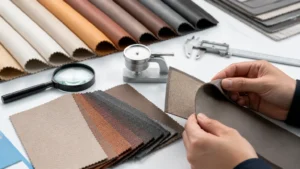
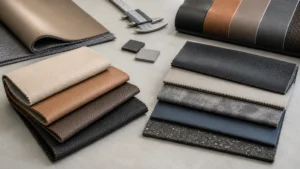
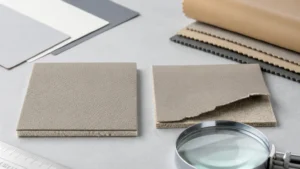
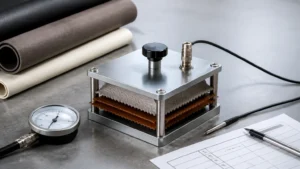
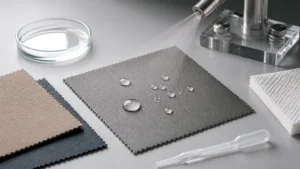
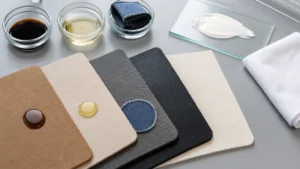
Is PU leather good quality? It can be, but PU leather quality depends on how the material is made. Good quality PU leather usually has a stable polyurethane coating, strong backing fabric, suitable thickness, consistent grain, low odor, good abrasion resistance, and enough flex or hydrolysis resistance for the final application. Cheap PU leather may look similar at first, but it can peel, crack, smell, feel sticky, or wear out faster if the coating and backing are weak.
The most useful answer is not that PU leather is always good or always bad. The better answer is that PU leather must be judged by structure, performance, and application fit. A material for a decorative bag does not need the same performance as a car seat cover, a sofa, a shoe upper, or a gym bench pad. Buyers should compare the coating, backing, surface finish, test data, and sample behavior before making a decision.
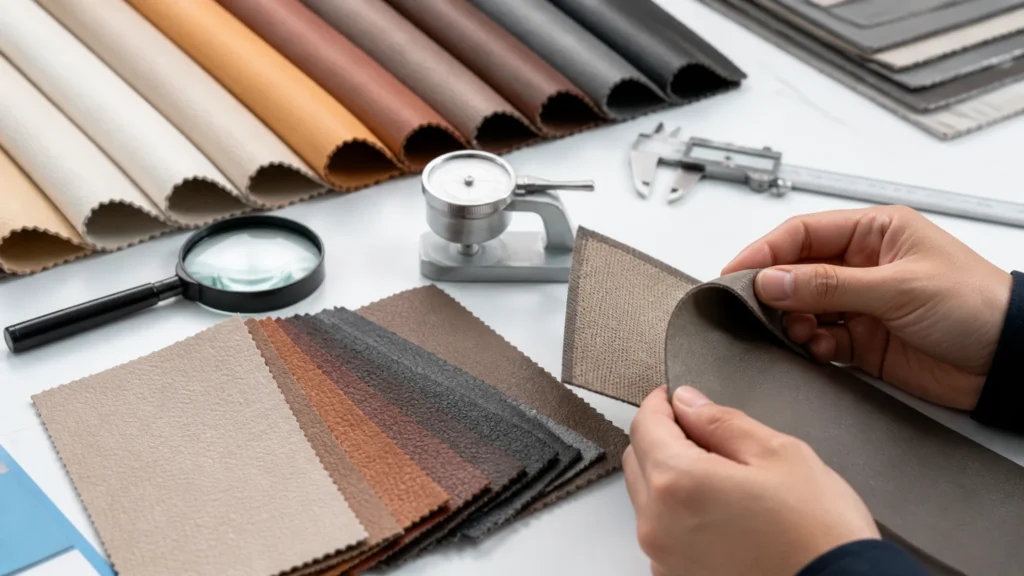
Is PU Leather Good Quality? Quick Answer
PU leather can be good quality when the coating is flexible, the backing is strong, the surface finish is stable, and the material is designed for the product it will become. A well-made PU material can look clean, feel soft, resist daily wear, and support many consumer and industrial applications. But a weak PU material can fail quickly if the coating is poorly bonded, the backing is loose, or the formulation cannot handle humidity, friction, bending, or cleaning.
This is why the question is PU leather good quality should never be answered only by looking at a photo. Product photos show color and grain, but they do not show coating adhesion, hydrolysis resistance, backing strength, rub resistance, or long-term surface stability. For real purchasing decisions, samples and application-specific test data matter more than a generic material name.
For buyers comparing different PU leather materials, the first step is to define the final use. A sofa needs comfort and cleaning stability. A bag needs hand feel and scratch resistance. A shoe upper needs flex resistance. An automotive interior needs heat, odor, fogging, and color stability. The same PU leather cannot be judged well without knowing the target product.
What Makes PU Leather Good or Poor Quality?
Coating stability matters more than surface appearance
The surface of PU leather is usually the first thing buyers notice. A smooth grain, attractive color, and soft touch are important, but they are not enough. The coating must stay bonded to the backing and remain flexible during use. If the coating is weak, the material may peel, crack, become sticky, or lose its finish even if it looked good when new.
Coating stability depends on formulation, process control, curing, surface finishing, and how well the coating works with the backing fabric. A material used in a dry decorative product may have different requirements from a material used in humid climates, high-traffic furniture, footwear, or automotive interiors. That is why a good-looking sample still needs performance checks.
Backing fabric changes strength and hand feel
The backing is the foundation of PU leather. It affects tear strength, stretch, drape, sewing behavior, bonding, embossing, and how the material feels in the hand. A knitted backing may give softness and flexibility. A woven backing may support dimensional stability. A non-woven backing may be cost-effective for certain uses. A microfiber base can improve structure and durability in higher-performance materials.
If the backing is weak or mismatched, the material can deform, tear, wrinkle, or feel unstable in production. For example, a bag material needs enough structure to hold shape, while an upholstery material may need more softness and comfortable compression. Good quality PU leather is not only a good coating; it is the right coating and backing combination.
Thickness alone does not prove quality
Thickness is easy to measure, but it does not prove quality by itself. A thicker PU leather can still peel if the coating is weak. A thinner material can perform well if the construction is stable and the application is suitable. Thickness should be evaluated together with hand feel, backing type, surface finish, flexibility, tensile strength, sewing requirements, and the final product design.
Overly thick materials may be difficult to sew, fold, wrap, or bond. Very thin materials may not provide enough durability for high-wear products. The correct thickness is the one that supports the final use without creating production problems.
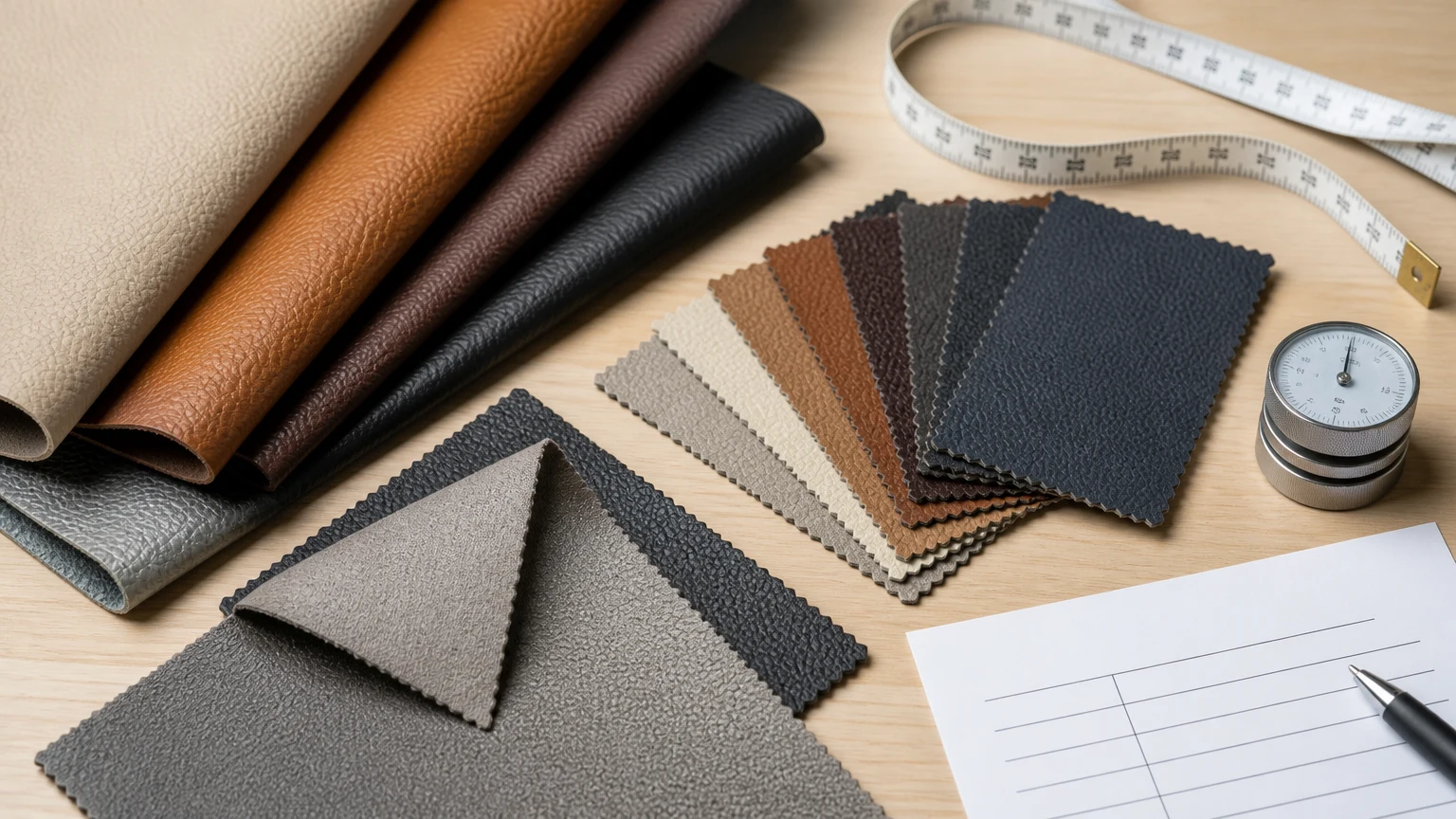
How to Tell If PU Leather Is Good Quality Before Buying
| Check point | What to look for | Why it matters |
|---|---|---|
| Surface grain | Even, stable, not overly plastic-looking | Shows finishing consistency |
| Hand feel | Soft, stable, not sticky | Reflects coating and plasticizer balance |
| Backing | Strong and suitable for the application | Affects tear, sewing, stretch, and durability |
| Odor | Low and not harsh after normal airing | Helps identify process, storage, or formulation issues |
| 耐摩耗性 | Relevant test data or sample rubbing check | Predicts surface wear |
| Flex resistance | No early cracking under bending | Important for shoes, bags, seats, and folded parts |
| 耐加水分解性 | Suitable for humid or hot use | Helps reduce peeling and coating breakdown risk |
| Cleaning stability | No easy color transfer or coating damage | Important for sofas, car interiors, and public seating |
Check the surface, backing, and smell
Before looking at technical reports, buyers can do a basic sample inspection. The surface should look consistent across the swatch. The grain should not look random or poorly embossed. The hand feel should be stable, not oily, sticky, brittle, or overly plastic. The backing should not feel loose, dusty, fragile, or easy to distort.
Odor also matters. Some new-material smell can be normal, especially after packaging, but a harsh chemical smell that remains after airing should be treated carefully. Strong odor may come from formulation, production, storage, packaging, or contamination issues. It does not automatically mean the material is unsafe, but it should trigger further checking before bulk orders.
Ask for application-specific test data
Good quality depends on the target product. For upholstery, ask about abrasion resistance, cleaning stability, stain resistance, hydrolysis resistance, color fastness, and odor control. For bags, check scratch resistance, color stability, tear strength, flex performance, and edge-finishing compatibility. For shoes, focus on flex resistance, abrasion, bonding, and comfort. For automotive interiors, check heat resistance, fogging, UV, odor, cleaning, and flame requirements when relevant.
The right test list changes by application. A material can pass one test and still fail in another environment. A supplier that understands the final use should be able to recommend which tests matter most instead of offering one generic material for every product.
Is PU Leather Good for Sofas, Bags, Shoes, and Cars?
For sofas and upholstery
PU leather can be good for sofas when it is soft, stable, easy to clean, and resistant to daily sitting pressure. Upholstery materials should be checked for abrasion resistance, stain resistance, surface stability, hydrolysis resistance, and odor. If the material is too hard, too thin, or poorly bonded, it may crack or peel in high-contact areas.
For sofas, comfort and long-term appearance are both important. A material that looks attractive in a showroom may still perform poorly if it cannot handle sweat, humidity, friction, cleaning, or repeated compression. Buyers should test samples under realistic use conditions before ordering.
For bags and accessories
For bags, good quality PU leather should have stable color, a pleasant hand feel, suitable thickness, enough scratch resistance, and good compatibility with stitching, edge paint, lining, embossing, or hardware. Bags often depend heavily on appearance, but surface stability is still important because corners, handles, and folded areas receive repeated stress.
A bag material does not always need the same abrasion target as public seating, but it should not crack easily when folded or scratched. It should also hold its shape well enough for the design. The best choice depends on the bag type, from soft fashion bags to structured luggage and business accessories.
For shoes and footwear
PU leather for shoes must handle flexing. Shoe uppers bend repeatedly, especially near the toe area. If the coating or backing is weak, cracking can appear early. Footwear materials may also need good bonding with adhesives, suitable breathability for the design, abrasion resistance, and stable color under use.
A material that works well for a decorative panel may not work well for shoes. Buyers should test bending, abrasion, bonding, and surface recovery before confirming bulk production. For performance footwear or long-use casual shoes, a stronger structure may be needed.
For automotive interiors
Automotive interiors are more demanding than many consumer products. A material may need heat resistance, UV stability, low odor, low fogging, cleaning resistance, color fastness, and sometimes flame-related requirements. Regular consumer-grade PU leather may not be suitable unless it is designed for automotive use.
In automotive applications, buyers should not rely on general appearance alone. A material exposed to sun, high cabin temperatures, cleaning agents, and long-term contact pressure needs stricter evaluation. This is where application-specific testing becomes essential.
Good Quality PU Leather vs Cheap PU Leather
| Factor | Good quality PU leather | Cheap or weak PU leather |
|---|---|---|
| コーティング | Stable, flexible, well bonded | Peels or cracks early |
| Backing | Strong and application-matched | Weak, loose, or easily deformed |
| 臭い | Low odor after normal airing | Strong chemical smell remains |
| Surface | Consistent grain and finish | Uneven, sticky, or overly plastic feel |
| Tests | Can provide relevant test data | Only visual samples, little data |
| Use fit | Matched to sofa, bag, shoe, or car use | One generic material for all uses |
Cheap PU leather is not only a price issue. Sometimes the bigger problem is application mismatch. A low-cost material may be acceptable for short-term decorative use, but unsuitable for furniture, footwear, automotive interiors, or heavy-use products. A good material is not simply the most expensive one; it is the one that meets the performance needs of the application.
When buyers want to understand failure risks, common PU leather quality problems such as peeling, cracking, sticky surfaces, color transfer, and weak backing should be treated as warning signs rather than isolated defects. These issues often point back to coating stability, material selection, process control, or wrong application matching.
What Test Results Should Buyers Request?
The most useful tests depend on the final product, but several test categories are commonly relevant. Abrasion resistance helps predict surface wear. Hydrolysis resistance helps evaluate humid or hot use conditions. Flex resistance matters for shoes, bags, folded parts, and seating areas. Coating adhesion helps evaluate peeling risk. Color fastness and rub resistance help prevent staining or transfer. Cleaning resistance matters for furniture, public seating, and vehicle interiors.
If peeling is a major concern, it is useful to understand why PU can fail and how environment, cleaning, humidity, and coating structure contribute to breakdown. A more detailed discussion of PU leather peeling can help buyers separate normal wear from preventable material failure.
For automotive materials, fogging, heat, UV, odor, and flame-related requirements may be important. For low-temperature products, cold crack resistance can matter. For sewn products, tensile strength, tear strength, seam strength, and backing stability may be more useful than surface appearance alone.
When Should Buyers Consider Alternatives?
PU leather is versatile, but it is not the best answer for every product. If the product needs very high structural strength, long-term flexing, premium hand feel, or stronger resistance under demanding use, microfiber leather may be worth comparing. If waterproofing, easy cleaning, and cost control are more important, PVC may be practical in some applications. If sustainability claims are important, buyers may need water-based PU, solvent-free PU, recycled content, or other material systems with supporting documentation.
For applications where durability and structure are more important than cost alone, comparing microfiber leather vs PU leather can help buyers decide whether a stronger synthetic leather structure is needed. The right choice depends on the product, price range, performance target, and customer expectations.
Buyer Checklist Before Ordering PU Leather
- Define the final application before comparing materials.
- Confirm the coating type, backing fabric, thickness, and hand feel.
- Check whether the surface is stable, even, and not sticky.
- Smell the sample after normal airing and packaging removal.
- Ask for abrasion, flex, hydrolysis, color fastness, and cleaning data when relevant.
- Compare sample behavior under the product’s real use conditions.
- Check whether custom color, texture, thickness, and backing are possible.
- Confirm batch consistency before moving into large orders.
This checklist helps buyers avoid judging from photos or price alone. The right sample should be tested in the final product environment whenever possible. That may include sitting pressure, folding, rubbing, cleaning, heat exposure, humidity, stitching, gluing, or edge finishing depending on the product.
FAQ
Is PU leather good quality?
PU leather can be good quality if the coating, backing, thickness, surface finish, and tests match the final application. Poor PU leather may look similar at first but can peel, crack, smell, or wear faster.
How can you tell if PU leather is good?
Check surface consistency, hand feel, backing strength, odor, thickness, abrasion resistance, flex resistance, hydrolysis resistance, and sample performance under realistic use conditions.
Does good quality PU leather peel?
Good quality PU leather is less likely to peel early, but peeling can still happen if the material is used in the wrong environment, cleaned with harsh chemicals, exposed to heat and humidity, or poorly maintained.
Is PU leather better than PVC leather?
It depends on the application. PU often offers a softer hand feel and a more leather-like surface, while PVC may offer stronger water resistance or cost advantages in some use cases.
Is PU leather good for sofas?
It can be good for sofas when it has suitable softness, abrasion resistance, cleaning stability, low odor, and hydrolysis resistance. Sofa materials should be tested for daily sitting pressure and cleaning conditions.
What should buyers ask before ordering PU leather?
Buyers should ask for material structure, backing, thickness, surface finish, application-specific test data, sample lead time, MOQ, and batch consistency before placing bulk orders.
Final Thoughts
Is PU leather good quality? The answer depends on construction and application. A stable coating, suitable backing, correct thickness, low odor, relevant test data, and application-specific design can make PU leather a strong option for many products. A weak material, however, can fail quickly even if it looks attractive in a photo.
If you are comparing PU leather for sofas, bags, shoes, automotive interiors, or other manufactured products, start with the exact application and performance requirements first. Taite can help buyers compare coating, backing, thickness, surface finish, and test requirements, then prepare suitable synthetic leather samples through custom leather solutions.