
PU Leather vs Faux Leather: Are They the Same?
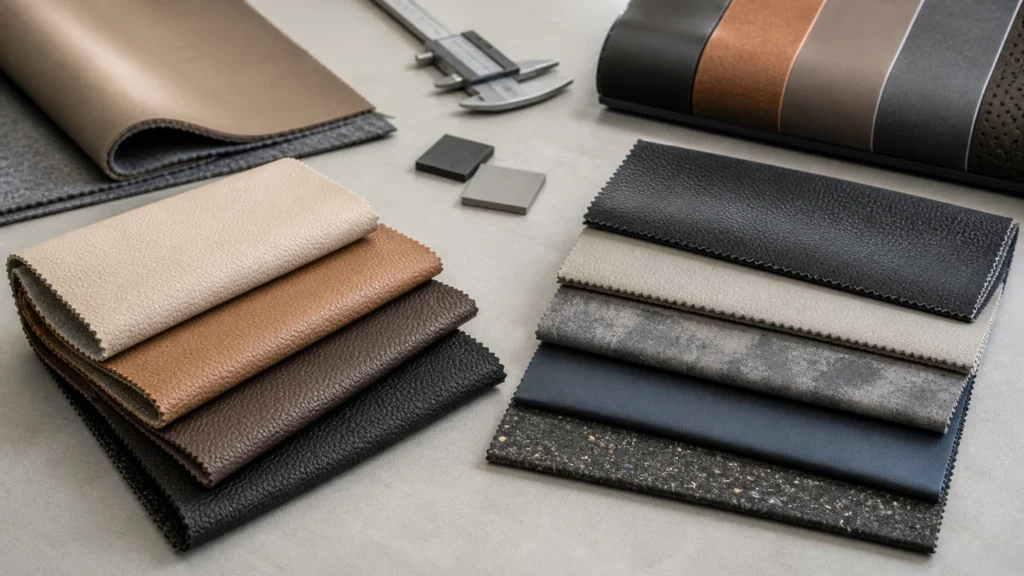
PU leather vs faux leather: learn whether PU leather is faux leather, what each term means, how PU, PVC, microfiber, and synthetic leather differ, and how buyers should choose materials.
Does PU Leather Peel? Causes, Prevention, and Better Material Choices
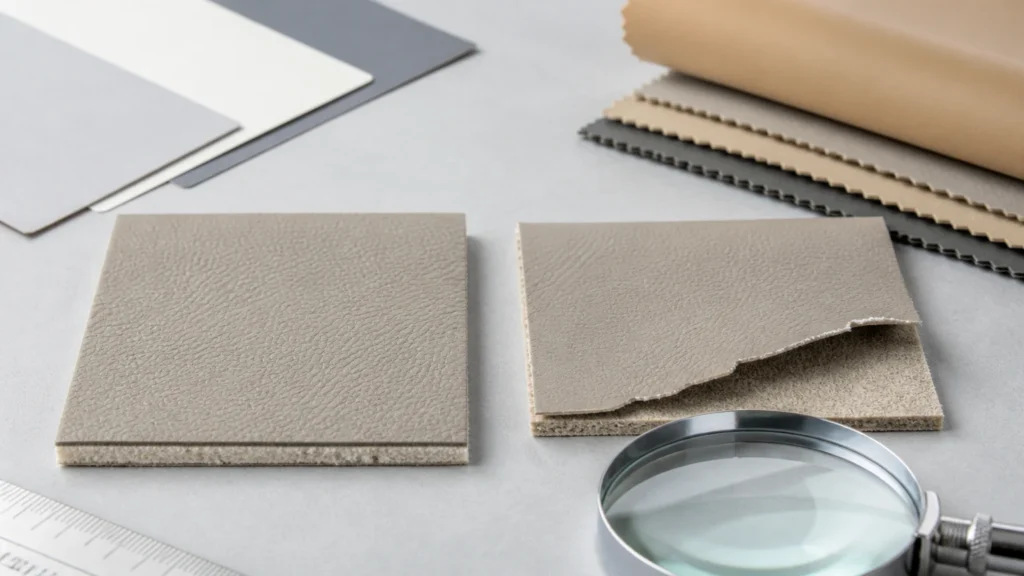
Does PU leather peel? Learn why PU leather peels, how coating quality, hydrolysis, friction, cleaning, and heat affect peeling, and how buyers can choose better materials.
Synthetic Leather Blocking Resistance Test: Heat, Pressure, and Surface Stickiness
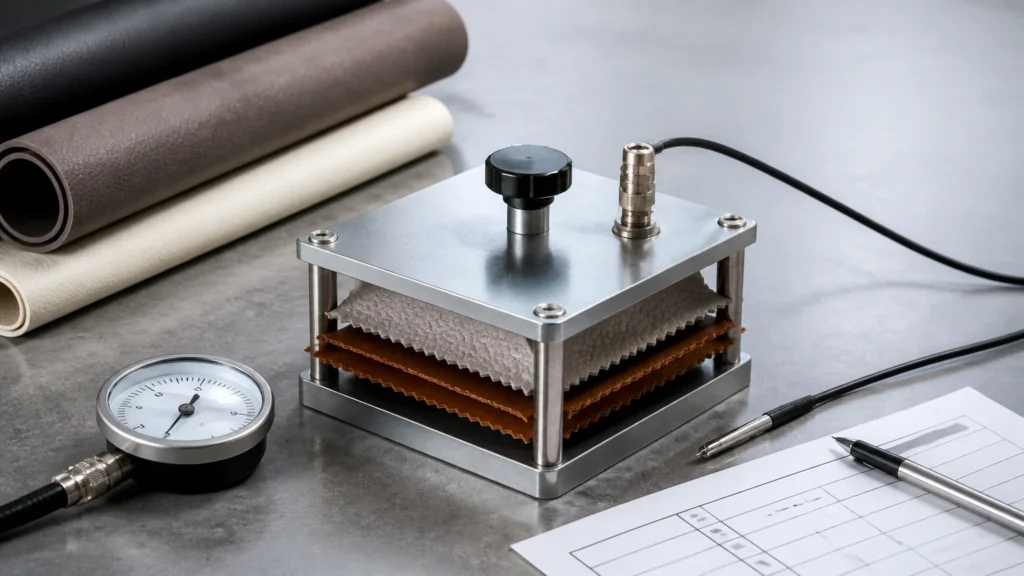
Learn how a synthetic leather blocking resistance test evaluates surface stickiness, coating transfer, pressure marks, and heat-storage risks for automotive, furniture, medical, and bag materials.
Synthetic Leather Water Resistance Test: Waterproofing, Moisture, and Buyer Requirements
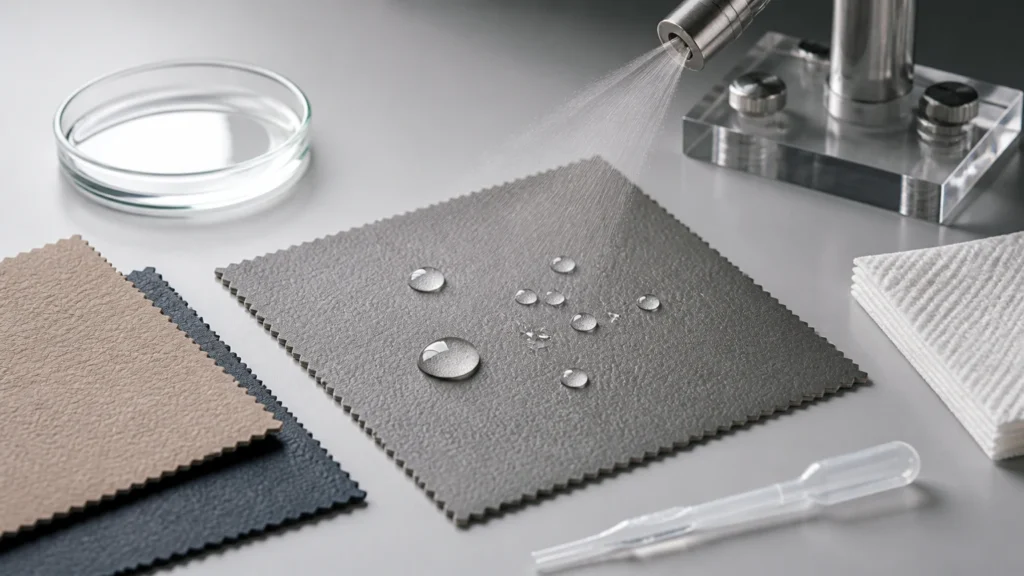
Learn how a synthetic leather water resistance test works, how waterproofing differs from water repellency, and how buyers should define moisture exposure requirements.
Synthetic Leather Stain Resistance Test: Easy-Clean Performance for Upholstery and Automotive Use
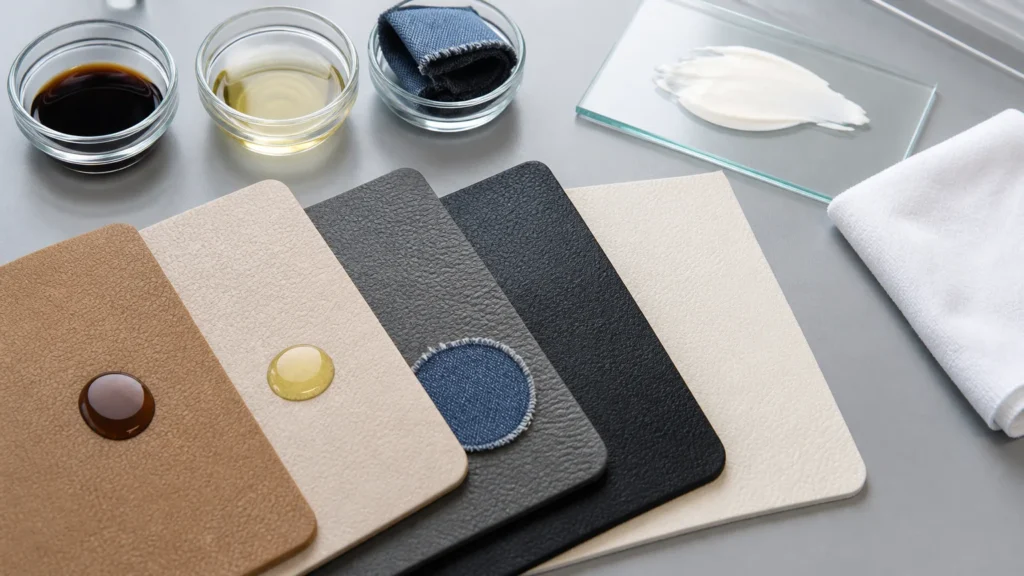
Learn how a synthetic leather stain resistance test works, what stains buyers should evaluate, and how easy-clean performance affects upholstery, automotive, medical, and sports materials.
Synthetic Leather Fogging Test: Why It Matters for Automotive Interiors

A synthetic leather fogging test evaluates whether volatile substances from synthetic leather can evaporate under heat and condense on a cooler glass or metal surface. For automotive interiors, this matters because fogging deposits may affect windshield clarity, interior cleanliness, odor perception, and material approval. A material can smell acceptable in a cabin and still require fogging evaluation because odor, VOC, and fogging are related but not identical concerns. For buyers asking when a synthetic leather fogging test is necessary, automotive seats, door panels, armrests, headrests, steering wheel wraps, and EV interior trim are the key applications. Fogging is not just a laboratory detail. Vehicle cabins can reach high temperatures during […]
Mold and Mildew Resistant Synthetic Leather: Causes, Tests, and Buyer Tips
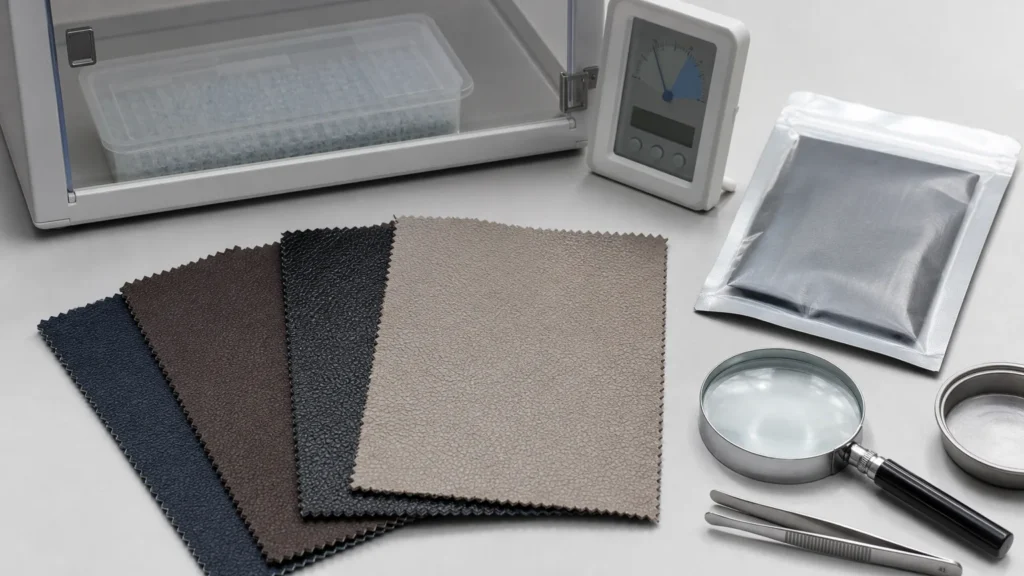
Mold resistant synthetic leather is designed to reduce the risk of fungal growth, mildew marks, odor, and surface contamination when materials are used, shipped, or stored in humid conditions. However, mold resistance does not depend on the coating alone. Moisture, dust, organic residues, backing fabric, adhesive, packaging, ventilation, shipping time, and storage temperature can all influence whether mildew appears on synthetic leather products. For buyers, mold resistant synthetic leather matters most in tropical markets, sea shipment, warehouse storage, medical seating, hotel furniture, car interiors, sports grips, shoes, and other products that may face sweat, condensation, heat, or long storage. A good supplier should not simply claim that a material is […]
Synthetic Leather Scratch Resistance Test: Methods, Ratings, and Buyer Tips
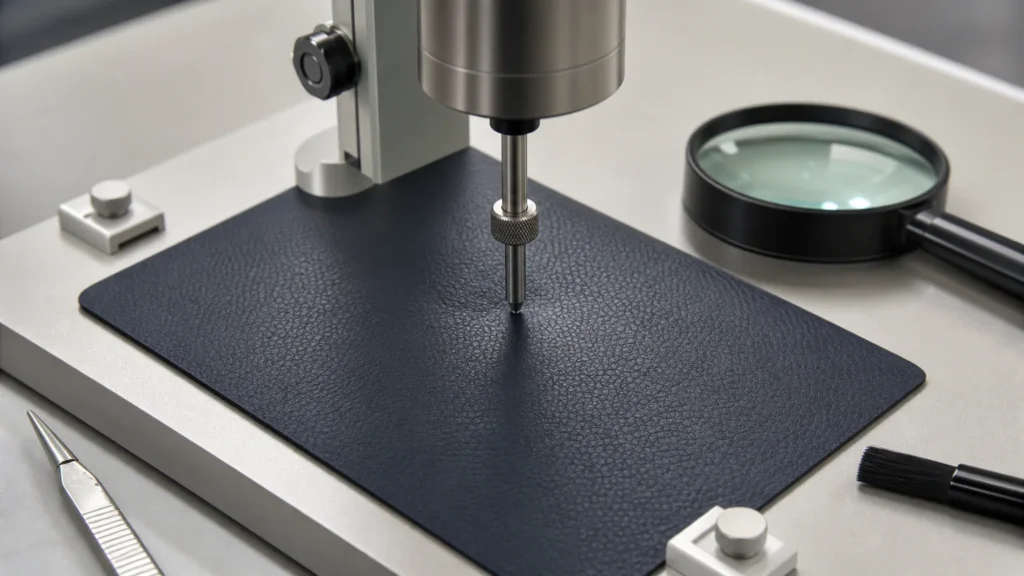
A synthetic leather scratch resistance test evaluates how well the surface coating resists visible scratches, whitening, gloss change, coating breakage, or permanent marks caused by localized contact. It is different from abrasion testing, which measures repeated wear, and from rubbing color fastness testing, which measures color transfer. For buyers, scratch resistance is especially important for car interiors, furniture, bags, shoes, and sports equipment that may contact keys, nails, buckles, tools, sand, or frequent handling. What Is a Synthetic Leather Scratch Resistance Test? A synthetic leather scratch resistance test is used to judge how the finished surface responds when a hard or sharp object moves across it under controlled conditions. The […]
Can You Use Alcohol on Synthetic Leather? Safe Cleaning and Disinfection Guide
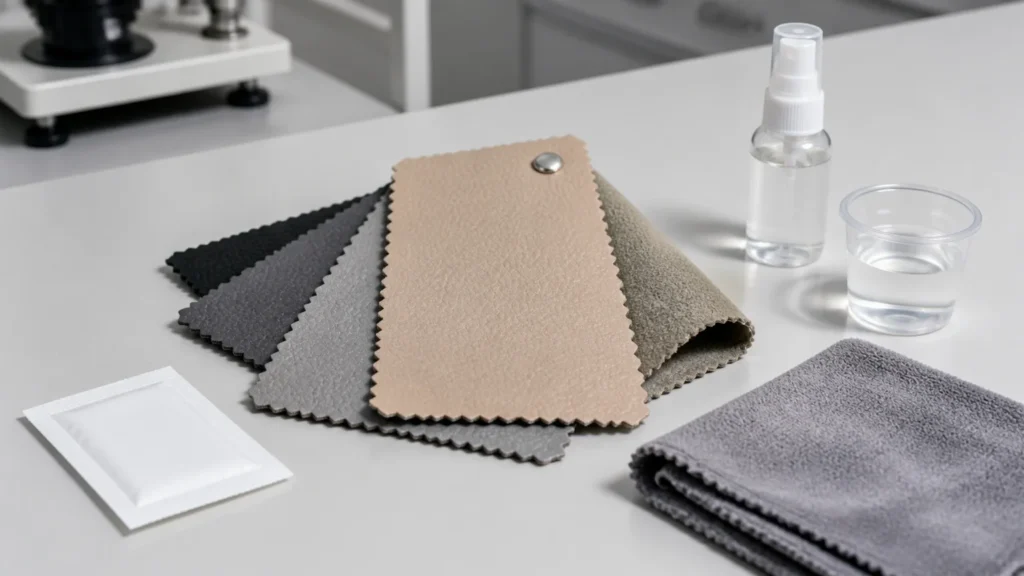
Can you use alcohol on synthetic leather? Learn when alcohol, bleach, and disinfectants may damage PU, PVC, microfiber, or silicone leather and how to clean safely.
Why Does Synthetic Leather Smell? Causes, VOCs, and How to Reduce Odor
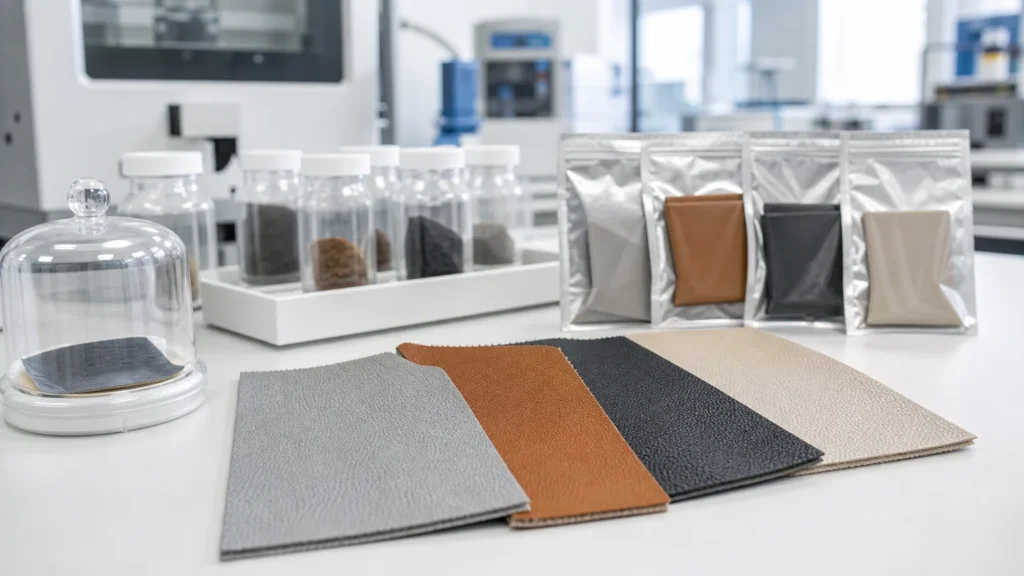
Why does synthetic leather smell? Learn where odors come from, how VOCs relate to synthetic leather, and how buyers can reduce odor risk in finished products.