

Antimicrobial synthetic leather is increasingly specified for medical, hospitality, and public-seating products where surface hygiene matters. It is engineered to inhibit the growth of bacteria, mold, and other microbes on the material surface — a meaningful advantage in high-contact environments. This guide explains what antimicrobial synthetic leather is, how it works, how its performance is tested, and how to specify it correctly.
What Is Antimicrobial Synthetic Leather?
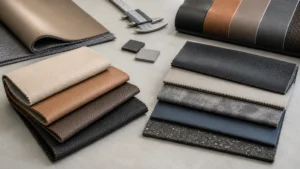
Antimicrobial synthetic leather is a coated material that has antimicrobial agents built into its surface layer or finish, so it resists the growth of microorganisms. It looks and performs like standard synthetic leather but adds a hygiene function. A few related terms are often confused:
- Antimicrobial: a broad term covering agents that inhibit bacteria, fungi, and mold.
- Antibacterial: specifically targets bacteria.
- Antifungal: specifically targets mold and mildew.
In practice, most of these materials focus on inhibiting bacterial growth on the surface, and they are built on the same layered construction described in what synthetic leather is.
How Does Antimicrobial Synthetic Leather Work?
The antimicrobial function comes from additives incorporated into the coating or top finish during production. Common approaches include silver-ion based agents and quaternary ammonium compounds, which disrupt microbial cell function and slow reproduction on the surface. These agents are integrated during the synthetic leather manufacturing process so the protection is part of the material rather than a temporary spray.
It is important to be precise about what this does: antimicrobial synthetic leather inhibits the growth of microbes on the material surface. It is a material-hygiene feature, not a medical treatment or a substitute for disinfection protocols.
This distinction also shapes how the feature should be communicated to end users. Responsible manufacturers describe the material as helping to keep surfaces more hygienic between cleanings, rather than making health or medical-grade claims. Overstating the benefit can create compliance risk in regulated markets, so the technical framing — surface growth inhibition verified by a recognized test method — is both more accurate and safer for the brand using the material.
How Is Antimicrobial Performance Tested?
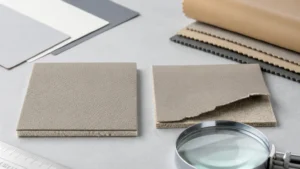
Antimicrobial performance is verified with standardized laboratory testing rather than marketing claims. The most widely referenced method is ISO 22196, which measures antibacterial activity on plastic and other non-porous surfaces. The logic of the test is straightforward:
- A known quantity of bacteria is inoculated onto both a treated (antimicrobial) sample and an untreated control sample.
- Both samples are incubated under controlled conditions.
- The surviving bacteria are counted, and the reduction on the treated sample versus the control is calculated.
The specific reduction rate or performance level required is defined by the applicable standard and the buyer’s own specification, so it should always be confirmed on the test report. You can review the scope of the method directly from the ISO 22196 standard. Antimicrobial testing complements the mechanical and durability checks in the broader test suite, such as the Martindale abrasion test and color fastness testing.
Durability of the antimicrobial effect
One question buyers should always ask is how long the protection lasts. Some antimicrobial finishes are surface treatments that can diminish with repeated cleaning and abrasion, while others are integrated more deeply into the coating for longer-lasting performance. Because hygiene-sensitive products are cleaned frequently, the durability of the antimicrobial function over the product’s service life is often more important than the initial laboratory result. A credible supplier can explain how their treatment is applied and whether performance has been validated after wash or abrasion cycles.
Why It Matters — Key Applications
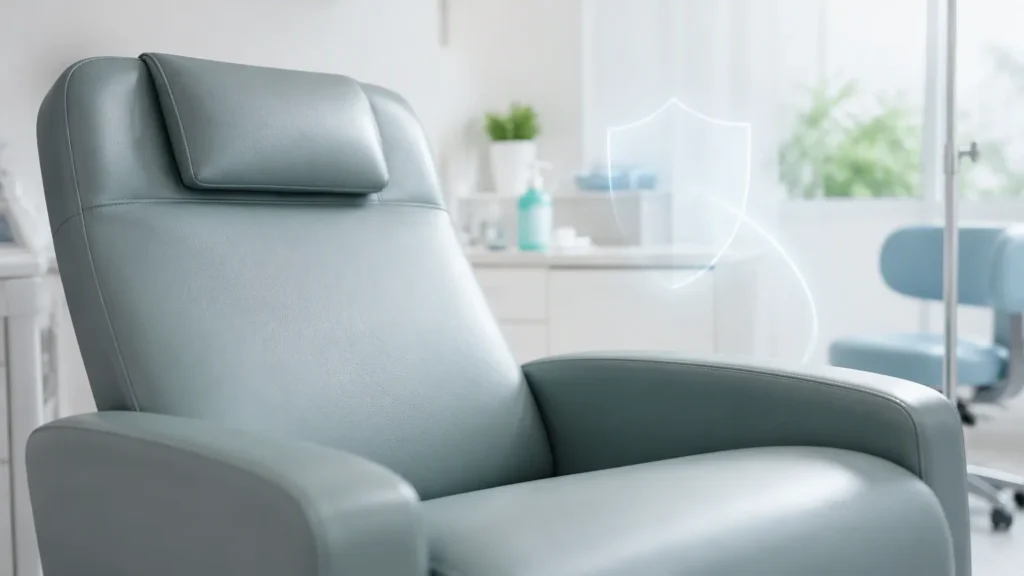
Antimicrobial synthetic leather is most valuable in environments where surfaces are touched frequently and hygiene is a priority. The table below summarizes where it matters and why.
| 申し込み | Why antimicrobial matters | Key consideration |
|---|---|---|
| Medical & clinic seating | Cross-contamination control | Must withstand disinfection |
| Hotels & restaurants | High-frequency contact | Hygiene plus easy cleaning |
| Public transport & seating | High passenger flow | Durability with hygiene |
| Baby & education products | Safety and cleanliness | Safe, low-odor finish |
| Fitness equipment | Sweat and frequent contact | Sweat and abrasion resistance |
Antimicrobial vs Easy-to-Clean: Not the Same Thing
A common misconception is that antimicrobial synthetic leather is the same as waterproof or easy-to-clean material. They are different properties. An antimicrobial finish inhibits microbial growth on the surface, while cleanability and water resistance are about wiping away spills and dirt. A good hygiene strategy uses both: an antimicrobial material still needs regular cleaning. For routine maintenance, follow standard care practices similar to those in our guide on how to clean PU leather.
How to Specify & Verify Antimicrobial Synthetic Leather
Because antimicrobial performance is invisible, verification is essential. When sourcing antimicrobial synthetic leather, work through these checks:
- Request the test report: ask for an ISO 22196 (or equivalent) report, not just a claim or logo.
- Confirm the standard and scope: check which organisms were tested and what reduction was achieved.
- Ask about durability: confirm whether the antimicrobial effect persists after cleaning and abrasion, since some treatments wear over time.
- Match it to the application: pair antimicrobial function with the right durability grade — for upholstery, see how to choose PU leather for furniture.
As a technical manufacturer, we can build antimicrobial performance into a material specification and supply the supporting test data buyers need for hygiene-sensitive markets.
Getting this right early pays off. Defining the required hygiene function, the test standard, and the durability expectation at the specification stage avoids costly surprises later — such as discovering after production that a material was never validated for the intended organisms, or that its protection fades after the first few cleaning cycles. Treated as a deliberate engineering choice rather than a marketing add-on, surface hygiene becomes a reliable, verifiable property of the finished product.
よくある質問
What is antimicrobial synthetic leather?
Antimicrobial synthetic leather is coated material with antimicrobial agents built into its surface, so it inhibits the growth of bacteria and mold. It is used where surface hygiene matters, such as medical and hospitality seating.
How is antimicrobial synthetic leather tested?
It is tested with standardized methods such as ISO 22196. Bacteria are applied to a treated sample and an untreated control, incubated, and counted to measure how much microbial growth the antimicrobial surface reduces.
Does antimicrobial synthetic leather replace cleaning?
No. It inhibits microbial growth on the surface but does not replace routine cleaning and disinfection. It is one part of a hygiene strategy, not a substitute for proper maintenance.
Where is antimicrobial synthetic leather used?
It is used in medical and clinic seating, hotels and restaurants, public transport, baby and education products, and fitness equipment — environments with frequent contact and high hygiene requirements.