

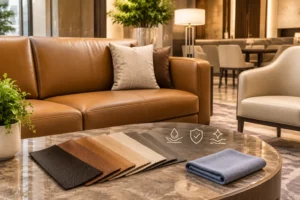
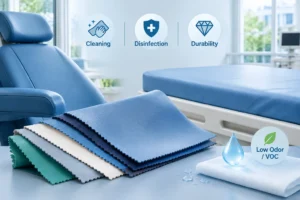
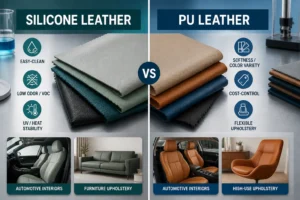
Hospitality synthetic leather can be a strong choice for hotel furniture, restaurant seating, lounge chairs, banquettes, and public-area upholstery when the material is specified for commercial use. It can offer easy cleaning, consistent color, leather-like appearance, stain resistance, and more predictable maintenance than many fabrics. However, hotel and contract furniture projects should not choose synthetic leather by look alone. Buyers should check abrasion resistance, stain response, cleaning compatibility, surface finish, backing strength, hydrolysis resistance, odor, flame-retardant requirements, and sample performance before confirming bulk upholstery material.
Hospitality furniture is exposed to different pressure than ordinary residential furniture. A guest room chair, lobby sofa, cafe banquette, bar stool, or public waiting-area seat may serve many users with different habits, cleaning routines, and maintenance expectations. The upholstery material must support interior design, but it also needs to survive real use, repeated wiping, guest turnover, luggage contact, food spills, drink stains, and long-term batch consistency.
For hotel owners, furniture factories, interior contractors, and material buyers, the right question is not simply whether synthetic leather looks premium. The practical question is whether the grade, backing, coating, surface finish, and test profile fit the exact hospitality area. A material that works in a quiet guest room may not be strong enough for a busy lobby or restaurant booth. This guide explains how to compare options without relying on appearance alone.
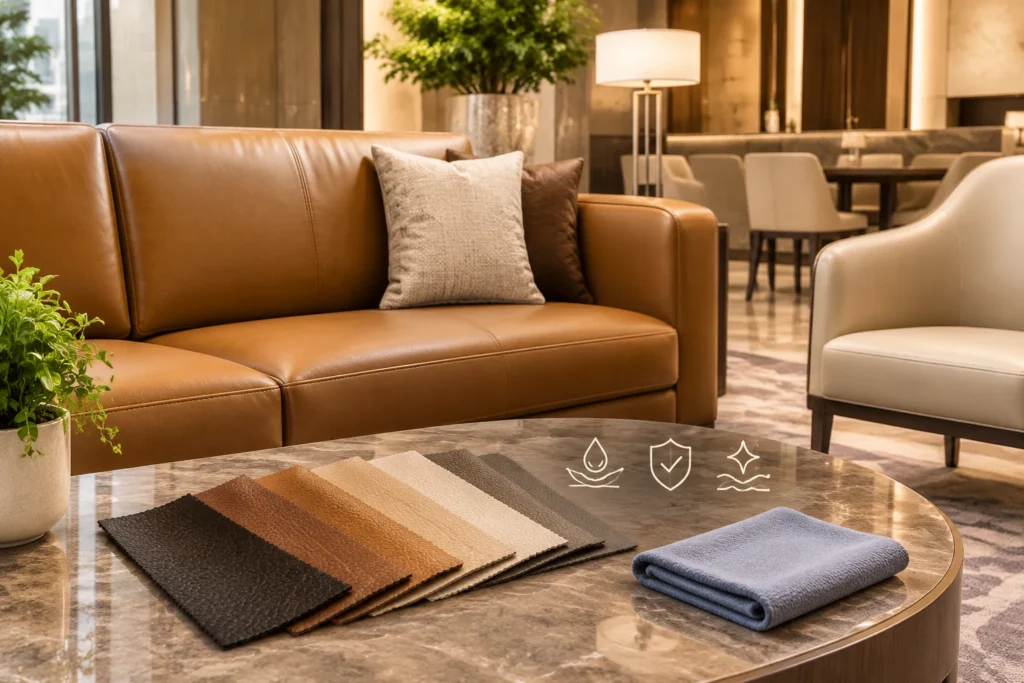
What Is Hospitality Synthetic Leather?
Hospitality synthetic leather is artificial leather used for hotel furniture, restaurant seating, bar stools, lounge chairs, banquettes, public waiting areas, serviced apartments, and other contract furniture applications. It may be made with PU, microfiber, silicone, PVC, or other synthetic constructions, depending on the required appearance, cleaning performance, durability, cost, and project specification.
The key difference from ordinary residential upholstery is the performance expectation. Hospitality projects often need predictable color, stable grain, easy maintenance, repeatable production, and documented material checks. A hotel project may also need to consider flame-retardant requirements, odor, VOC comfort, stain response, humidity, and cleaning compatibility depending on the market and use area.
Why Hotel and Contract Furniture Need Different Upholstery Requirements
Higher traffic than residential furniture
Hotel and contract furniture usually faces more users than home furniture. Lobby sofas, lounge chairs, restaurant seats, cafe benches, bar stools, and banquet seating can be used repeatedly by different guests in a single day. This repeated use increases abrasion, edge wear, seam stress, surface polishing, and color change risk.
For this reason, buyers should avoid judging the material only by softness or showroom appearance. They should consider how the surface and backing behave after rubbing, repeated sitting, cleaning, and contact with clothing, bags, luggage, belts, buttons, and table edges.
More frequent cleaning and stain exposure
Hospitality spaces face coffee, alcohol, food sauces, oil, cosmetics, sunscreen, denim transfer, dust, and cleaning chemicals. A material may look elegant when new but become difficult to maintain if stains settle into grain patterns or if cleaners dull the surface. A synthetic leather stain resistance test helps buyers compare stain response and cleaning behavior instead of depending only on catalog claims.
Guest comfort and brand image
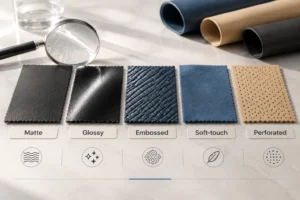
Hotels need durability, but they also sell experience. Upholstery should match the room style, brand image, seating comfort, and lighting environment. A deep grain may look more premium, but it may hold dirt if the grooves are difficult to clean. A glossy finish may look bright under lobby lighting, but it can reveal scratches or fingerprints. Choosing the right synthetic leather surface finish is therefore both a design decision and a maintenance decision.
Key Material Options for Hospitality Upholstery
PU leather for hotel furniture
Matériau en cuir PU is widely used in hotel chairs, soft panels, dining seating, guest room furniture, and decorative upholstery because it can offer flexible design, color, texture, and cost options. For hospitality use, buyers should not select PU leather only by hand feel. They should check coating stability, backing, abrasion, cleaning response, hydrolysis resistance, and color consistency.
Microfiber leather for higher-use areas
Microfiber leather for higher-use seating can be considered where dense structure, stronger support, and more stable performance are important. It may be used for lounge sofas, business seating, high-contact chairs, and premium contract furniture. However, buyers still need to confirm surface coating, softness, thickness, color, and application fit through samples.
Silicone leather for demanding cleaning conditions
Silicone leather may be considered for demanding cleaning environments, public seating, healthcare-adjacent hospitality areas, or spaces where stain resistance and easy maintenance are high priorities. It is not automatically required for every hotel project, and it may not fit every budget or design target. The best choice depends on cleaning frequency, expected contact, project positioning, and buyer specifications.
PVC or vinyl for budget and high-cleaning areas
PVC or vinyl upholstery may fit some budget-sensitive or high-cleaning areas, especially where water resistance and simple wiping are priorities. It may feel less premium than some PU, microfiber, or silicone options, so buyers should evaluate hand feel, indoor comfort, flexibility, and long-term appearance before selecting it for higher-end spaces.
Performance Factors Buyers Should Check
Abrasion and surface wear
High-traffic hospitality furniture needs surface durability. Abrasion testing can help compare how the surface responds to repeated rubbing, but no single number should be treated as a complete durability guarantee. Seat design, cleaning routine, surface finish, backing, stitching, and real use conditions all influence performance. Buyers should request test direction and sample construction, not only a headline claim.
Stain resistance and easy cleaning
Restaurant seating, bar stools, cafe chairs, guest room furniture, and public lounges all face different stains. Coffee and wine are different from body oils or cleaning chemicals. A material that wipes clean with water may not tolerate alcohol-based products or aggressive degreasers. Buyers should test realistic stains and approved cleaners on the exact color and finish.
Hydrolysis and humidity resistance
Hotels in humid regions, coastal cities, spa areas, poolside-adjacent spaces, or poorly ventilated storage conditions may face moisture-related aging. Hydrolysis resistance matters because humidity and heat can weaken some polyurethane structures over time. When the project involves humid climates or long storage, buyers should ask whether the material has been evaluated for wet-heat aging or similar project requirements.
Backing strength and upholstery construction
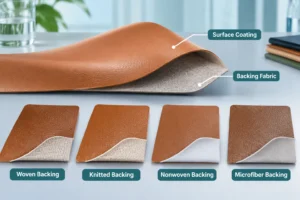
The backing controls more than thickness. It affects tear resistance, seam strength, wrapping, stretch control, and edge stability. A strong surface can still fail if the backing is unsuitable for the furniture shape. For curved chairs, banquettes, stitched panels, and tight corners, buyers should check the synthetic leather backing fabric together with the coating and finish.
Odor, VOC, and indoor comfort
Hospitality interiors are closed environments where odor can affect guest experience. Newly produced synthetic leather may have a smell from materials, packaging, adhesives, or insufficient ventilation. Buyers should not expect absolute zero odor in all conditions, but they should test unpacking smell, ventilation behavior, and indoor acceptability before placing large orders.
Flame-retardant requirements
Some hospitality and public seating projects may require flame-retardant performance. Requirements depend on local market rules, project specifications, furniture construction, and the final use environment. Buyers should confirm the applicable requirement before ordering and avoid assuming that a general upholstery grade automatically meets all fire-safety expectations.
How to Match Material to Hospitality Areas
| Area | Main risk | Material priority | Buyer check |
|---|---|---|---|
| Guest room chair | Comfort, cleaning, color consistency | Soft hand feel, easy cleaning, stable grain | Sample comfort and cleaning response |
| Hotel lobby sofa | High traffic, visual image | Abrasion, surface finish, backing strength | Wear, stain, batch consistency |
| Restaurant / cafe seating | Food stains, wiping, edge wear | Stain resistance, cleaning compatibility | Food and drink stain test |
| Bar seating | Alcohol, dark colors, friction | Surface stability, cleaning resistance | Alcohol or cleaner compatibility |
| Banquet / event seating | Frequent movement, storage | Scratch resistance, seam strength | Handling and stacking checks |
| Public waiting area | High user turnover | Abrasion, easy cleaning, odor control | Durability and maintenance plan |
Different hospitality areas should not be judged by one universal standard. A guest room lounge chair may need comfort and visual warmth. A restaurant booth may need stain resistance and frequent cleaning tolerance. A hotel lobby sofa may need stronger abrasion performance and batch color consistency. Defining the exact area first helps buyers choose material features instead of overpaying for the wrong specification.
Surface Finish and Design Considerations
Matte vs glossy finish
A matte finish can look calm and premium in many hotel interiors, while a glossy finish may appear brighter and easier to wipe in some dining or bar areas. The best choice depends on lighting, scratch visibility, cleaning marks, and design tone. Buyers should compare samples under the actual lighting condition, not only under showroom lights.
Embossed grain and texture depth
Embossed grains can create a more leather-like appearance and help hide light marks. However, deeper texture may hold dust, food residue, or cleaning solution if the surface is not easy to wipe. Hospitality projects should balance visual richness with maintenance simplicity.
Color consistency across batches
Hotel projects often require many pieces of furniture in the same room or across multiple locations. Color difference can become visible when chairs, sofas, panels, and replacement pieces are placed together. Buyers should keep a master sample, confirm acceptable tolerance, and check production samples before full rollout.
Buyer Checklist Before Ordering Hospitality Synthetic Leather
- Which hotel area will use the material: guest room, lobby, restaurant, bar, banquet, or public seating?
- Is the material specified for commercial or only residential furniture?
- What abrasion, stain, cleaning, and humidity requirements apply?
- Which cleaning products will housekeeping use?
- Does the material need flame-retardant performance for the project market?
- Is odor acceptable after unpacking and ventilation?
- Is the backing suitable for the furniture shape, seams, and corners?
- Does the surface finish hide or reveal scratches and stains?
- Can the supplier keep color and grain consistent across batches?
- Are sample tests based on real hotel use conditions, not only a clean swatch?
FAQ
Is synthetic leather good for hotel furniture?
Yes, when it is commercial-grade, easy to clean, properly backed, and tested for abrasion, stain resistance, cleaning compatibility, and project requirements.
What is the best synthetic leather for hospitality upholstery?
The best option depends on the area, traffic level, cleaning routine, budget, design target, and required tests. PU leather, microfiber leather, silicone leather, and vinyl each fit different use cases.
Is PU leather suitable for hotel furniture?
PU leather can be suitable for many hotel furniture applications when the coating, backing, finish, cleaning response, and durability are matched to the project.
Is microfiber leather better for high-traffic hotel seating?
Microfiber leather is often considered for higher-use seating because of its dense base structure and durability potential, but the final choice should be based on samples and test requirements.
What tests should buyers check for hospitality synthetic leather?
Buyers should consider abrasion, stain resistance, cleaning compatibility, hydrolysis resistance, backing strength, colorfastness, odor, and any required flame-retardant performance.
Can hospitality synthetic leather be cleaned daily?
Many commercial-grade materials can handle routine cleaning, but buyers must confirm approved cleaners and avoid assuming that all solvents or disinfectants are safe.
Final Buyer Takeaway
Hospitality synthetic leather should be selected through a project-based lens. The material must match the hotel area, seating design, cleaning routine, traffic level, indoor comfort requirement, and expected service environment. Buyers should compare samples, surface finish, backing, stain response, abrasion direction, humidity resistance, odor, and any flame-retardant requirement before confirming bulk production.
For hotel furniture, restaurant seating, lounge chairs, banquettes, or contract upholstery projects, Taite can help compare PU leather, microfiber leather, surface finish, backing construction, cleaning response, and sample performance before bulk production.