

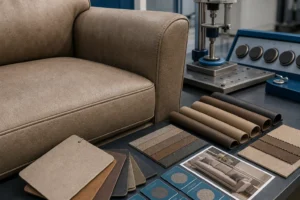
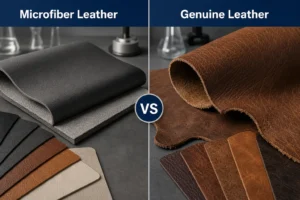
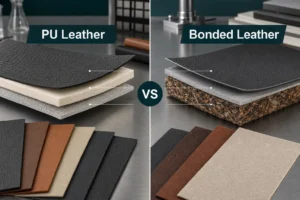
Microfiber leather for sofas is a strong synthetic leather option for furniture upholstery, especially when buyers need better durability, easier cleaning, consistent grain, and stable performance in high-contact seating areas. Compared with many ordinary PU materials, microfiber leather usually has a denser base structure, better wear resistance, and stronger support under repeated sitting, rubbing, and cleaning. However, not every microfiber leather is suitable for sofas. Buyers should check abrasion resistance, coating quality, backing strength, thickness, softness, colorfastness, hydrolysis resistance, and sample performance before choosing it for home sofas, hotel seating, office furniture, or commercial upholstery projects.
Sofa upholstery is different from decorative trim. A sofa material must handle body weight, repeated friction, cleaning, flexing, sunlight near windows, sweat, color transfer from clothing, and long-term compression. A good surface should look attractive, feel comfortable, and still remain stable after daily use. For B2B buyers, the goal is not only to find a soft material, but to match the correct structure and finish to the target sofa project.
Is Microfiber Leather Good for Sofas?
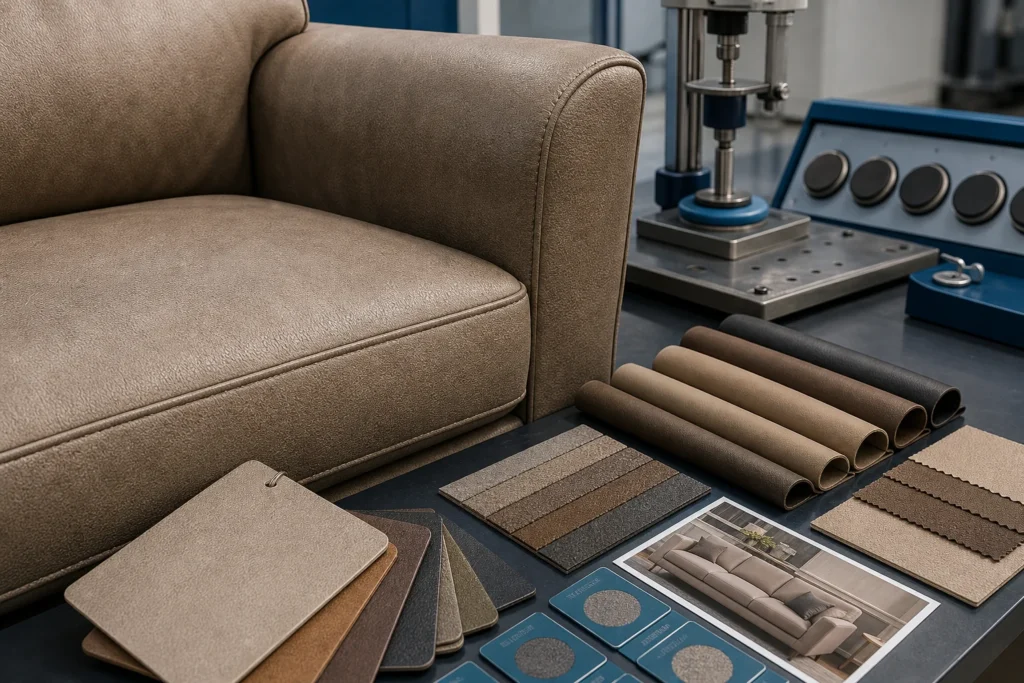
Microfiber leather can be a good choice for sofas when the material grade is designed for furniture upholstery. It can offer a leather-like grain, consistent color, flexible hand feel, and better structural support than many low-grade artificial leathers. It is commonly considered for home sofas, hotel seating, office furniture, commercial chairs, modular sofas, recliners, and other upholstered products.
The key point is specification. A thin decorative microfiber material may not be suitable for a high-use sofa seat, while a properly engineered upholstery grade can perform well in seat cushions, armrests, back panels, and side sections. Buyers should choose according to the final application, not only by touching one small swatch.
What Makes Microfiber Leather Suitable for Sofa Upholstery?
Dense microfiber base structure
One major advantage of microfiber leather is its dense fiber base. This structure can provide better support than many ordinary coated fabrics, especially in areas that receive pressure and movement. Sofa seats, armrests, and back corners need this support because they face repeated sitting, leaning, rubbing, and cleaning.
Surface coating and grain stability
Sofa materials are judged by appearance, but appearance depends on surface stability. The coating should resist friction, cleaning, color change, and early wear. Grain stability also matters because furniture orders often require multiple rolls to match across cushions, panels, and repeated production batches.
Soft hand feel with better support
Comfort is important for sofas, but softness alone is not enough. If the material is too soft without enough backing support, it may stretch, wrinkle, or wear too quickly. If it is too hard, the sofa may feel stiff and less comfortable. The right upholstery material balances soft touch, recovery, thickness, and structural stability.
Consistent color and texture for bulk production
Furniture manufacturers need consistent color, grain, roll width, and batch quality. This is especially important for hotel seating, office furniture, and commercial sofa projects where many pieces must look the same. Microfiber leather can be controlled by color, embossing, finish, backing, and thickness, making it suitable for repeat orders when specifications are clearly approved.
Microfiber Leather vs PU Leather for Sofas
When comparing microfiber leather vs PU leather for sofas, the most important difference is structure. Ordinary PU leather often uses a fabric base with a PU coating. Microfiber leather usually has a denser synthetic fiber base, which can provide stronger support for repeated use when the grade is designed for upholstery.
This does not mean microfiber leather is always the best option. Some high-quality PU materials can work well for furniture, and some microfiber materials may be unsuitable if they are too thin or designed for another application. For high-use sofa upholstery, premium microfiber leather is often a better choice than ordinary PU when durability, structure, and long-term appearance matter.
| Factor | 超細纖維皮革 | Ordinary PU leather | Why it matters for sofas |
|---|---|---|---|
| Base structure | Dense microfiber base | Often fabric base plus PU coating | Affects support and long-term durability |
| Wear resistance | Usually stronger in high-use grades | Varies widely | Seats and armrests face repeated friction |
| Softness | Can be engineered for soft touch | Often soft but may lack structure | Comfort and durability must balance |
| Peeling risk | Lower when coating and bonding are well made | Higher in low-grade materials | Important for long-term sofa appearance |
| Cost | Usually higher | Usually lower | Buyers must match budget and application |
Microfiber Leather vs Genuine Leather for Sofas
Genuine leather is valued for natural texture and a premium feel, but it can have variation in grain, thickness, color, and cost. It also requires specific care and may not fit every buyer’s sustainability, sourcing, or budget requirements. Microfiber leather offers more controlled production, consistent texture, and easier color matching for large furniture orders.
For residential furniture, the choice may depend on appearance, touch, budget, and maintenance expectations. For hotel seating, office furniture, and commercial upholstery, consistency and supply stability often matter more. Microfiber leather can be a practical option when buyers need a leather-like surface with predictable production quality and customizable specifications.
Key Performance Tests Buyers Should Check
耐磨性
Sofa seats, armrests, and front edges face repeated rubbing. Abrasion testing helps buyers compare how the surface performs after friction. The exact requirement should depend on the end use, because a hotel lobby sofa, family sofa, and decorative side panel do not face the same wear level.
Hydrolysis and humidity resistance
Humidity, sweat, cleaning, and long-term storage can affect synthetic leather. Poor hydrolysis resistance may lead to stickiness, cracking, or surface breakdown in certain environments. Buyers selling to humid regions or commercial spaces should pay attention to this before approving bulk materials.
Colorfastness and cleaning response
Light-colored sofas are especially sensitive to color transfer from denim, dark clothing, or cleaning products. Buyers should test rubbing, cleaning response, and color stability before production. Easy cleaning is valuable, but it should not come at the cost of surface whitening, gloss change, or coating damage.
Coating adhesion and peel strength
A sofa material bends, stretches, and compresses during upholstery and daily use. If coating adhesion is weak, the surface may delaminate or show early damage around seams, corners, and high-pressure zones. Peel strength and coating stability are important for long-term appearance.
Which Sofa Applications Need Microfiber Leather?
Home sofas
Home sofas need comfort, easy cleaning, color options, and reasonable resistance to daily wear. Families with children or pets may also care about scratch resistance, stain response, and whether the surface is easy to wipe. The material should feel pleasant while still supporting repeated sitting and cleaning.
Hotel and commercial seating
Hotels, restaurants, lounges, and office spaces need stronger durability and batch consistency. For these projects, furniture leather fabric should be selected by abrasion resistance, cleaning response, color consistency, and the ability to maintain appearance across many seats.
Modular sofas and recliners
Modular sofas and recliners have more seams, moving parts, folds, and stress points. Their materials must handle bending, compression, stitching, and repeated movement. Buyers should check flexibility, seam performance, thickness, and recovery after pressure.
Pet-friendly or family furniture
No upholstery material should be described as completely pet-proof. However, microfiber leather can be more suitable for some family furniture when scratch resistance, easy cleaning, and a suitable surface texture are specified. The buyer should still test samples under realistic conditions rather than relying on a general product name.
How to Choose Microfiber Leather for Sofa Projects
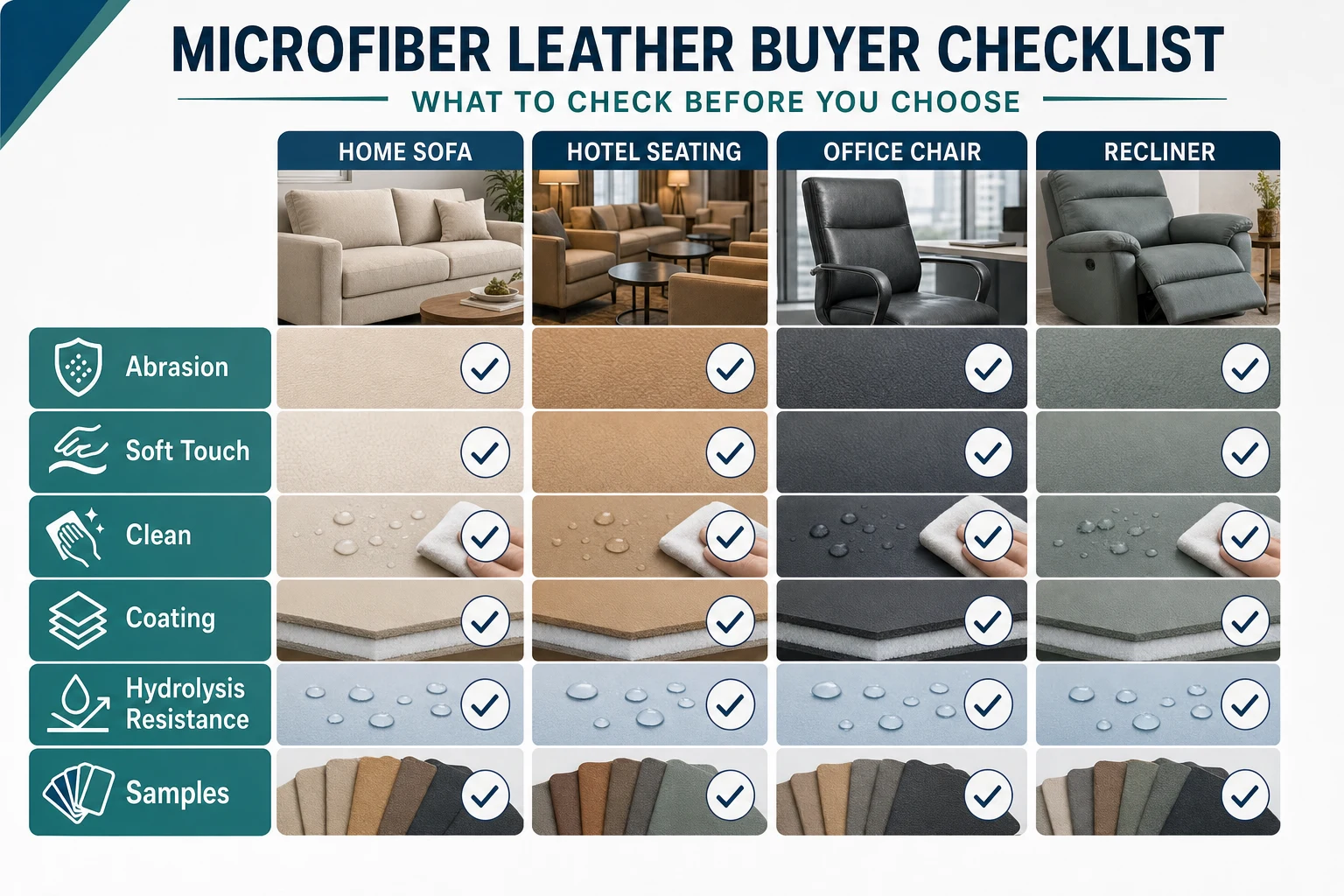
Start by defining the sofa application: home sofa, hotel seating, office furniture, commercial lounge seating, modular sofa, recliner, or decorative panel. Each application has different comfort, durability, and cleaning needs. The best material for a soft home sofa may not be the best material for a high-traffic hotel lobby.
Buyers should compare thickness, softness, surface grain, backing structure, abrasion resistance, coating quality, colorfastness, and cleaning response. Physical samples are important because the same color or grain may feel different when used over foam, stitching, and curves. A reliable selection process should include touch evaluation, bending, rubbing, cleaning, and panel mockups.
For sofa-focused material selection, microfiber leather fabric for sofa should be reviewed together with the target furniture design, foam structure, stitching method, color plan, roll width, MOQ, and delivery schedule. The material should support both design appearance and long-term usability.
Common Buyer Mistakes When Selecting Sofa Leather
Choosing only by softness
A soft swatch can feel attractive, but softness alone does not prove durability. Sofa leather must balance comfort, support, coating stability, and resistance to daily friction. A material that feels very soft may still fail early if the backing and coating are not suitable for upholstery.
Ignoring high-contact zones
Armrests, seat edges, back corners, cushion seams, and recliner folds usually wear faster than flat center panels. Samples should be tested with these areas in mind. If a material only looks good on a flat swatch, it may not perform the same after cutting, sewing, stretching, and sitting pressure.
Comparing prices without comparing grades
Two sofa materials may look similar in photos but have very different base structures, coatings, thicknesses, and test results. Lower-cost material can be suitable for some decorative uses, but it may create higher replacement costs if used on high-contact seating. Buyers should compare specifications, not just unit price.
Skipping pre-production samples
Pre-production samples help confirm color, texture, touch, cutting behavior, sewing performance, and cleaning response. They are especially important for hotel projects, chain furniture brands, and export orders where repeatability matters. Bulk production should begin only after the sample matches the real product requirement.
How Microfiber Leather Fits a Wider Material Strategy
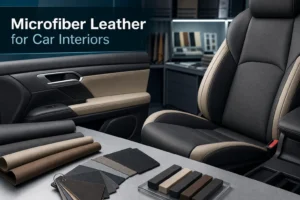
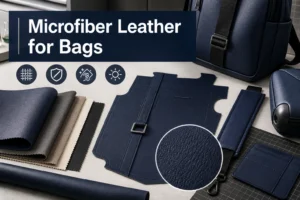
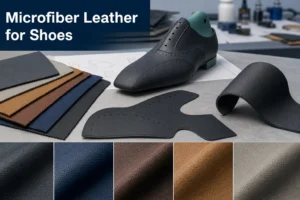
Microfiber leather for sofas should be considered as part of a wider material strategy, not as an isolated choice. Brands that already use microfiber materials for shoes, bags, or automotive interiors may need different specifications for sofa upholstery. A shoe upper needs flex and shape retention, while a sofa needs comfort, large-panel consistency, abrasion resistance, and sitting pressure stability. The article on 鞋用超細纖維皮革 shows how application-specific requirements change even when the material family is similar.
This is also why many buyers study why microfiber leather is replacing traditional PU leather in demanding applications. The material can offer better structure and durability when correctly engineered, but the final specification must still match the project’s target market, price level, usage frequency, and design goals.
FAQ
Is microfiber leather good for sofas?
Yes, microfiber leather can be a good sofa upholstery material when buyers need durability, consistent grain, easier cleaning, and stable performance in high-contact seating areas.
Is microfiber leather better than PU leather for sofas?
Premium microfiber leather often has a stronger base structure and better wear resistance than ordinary PU leather, but the final choice depends on grade, coating, budget, and application.
Does microfiber leather peel on sofas?
High-quality microfiber leather is less likely to peel when the coating and bonding are well made, but poor coating, harsh cleaning, humidity, and low-grade materials can still cause surface problems.
Is microfiber leather sofa easy to clean?
Many microfiber leather sofa materials are easy to wipe clean, but buyers should still test stain resistance, colorfastness, and cleaning response before bulk production.
What thickness is best for microfiber leather sofas?
The best thickness depends on the sofa design, padding, stitching, softness, and durability requirements. Buyers should approve physical samples instead of choosing thickness alone.
Can microfiber leather be customized for sofa projects?
Yes, microfiber leather can usually be customized by color, texture, thickness, backing, softness, surface finish, and performance requirements for different sofa and upholstery projects.
Conclusion: Choose Sofa Upholstery by Real Use
Microfiber leather for sofas can be a strong option when buyers need durable, cleanable, consistent, and customizable materials for high-contact seating areas. However, the right choice depends on coating quality, microfiber base structure, thickness, softness, abrasion resistance, hydrolysis resistance, colorfastness, and real sample testing. Buyers should choose specifications according to the sofa application rather than judging by hand feel or appearance alone.
If you are choosing microfiber leather for sofas, hotel seating, office furniture, recliners, or commercial upholstery projects, Taite can help you compare surface grain, softness, thickness, backing, abrasion resistance, cleaning response, hydrolysis resistance, and sample performance before bulk production. Contact us to request samples or discuss a custom microfiber leather solution for your sofa project.