

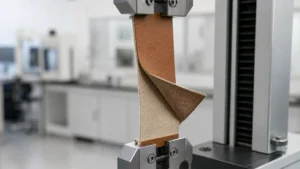
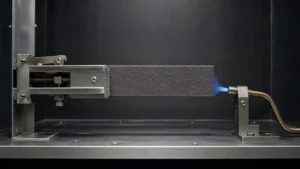
PU leather color fastness determines how well a material keeps its intended appearance after exposure to light, friction, moisture, heat, and everyday use. For automotive interiors, furniture, bags, and outdoor products, color stability is often as important as abrasion or hydrolysis performance.
Color fastness is not a single number. Fading, rub-off, color transfer, and yellowing are different failure modes with different causes and different tests. This guide explains what PU leather color fastness means, why PU can turn yellow, how color stability is tested, and what buyers should confirm before approving a material.
What Does PU Leather Color Fastness Mean?
PU leather color fastness is the ability of a material to resist unwanted color change, fading, staining, or color transfer under defined use and test conditions. A material can perform well in one condition and poorly in another, so the test method and application must always be specified.
Several related but distinct issues are often grouped together as “color problems”:
- Fading: the original color becomes weaker or shifts, usually after light exposure.
- Crocking / rub-off: color rubs off the surface under dry or wet friction.
- Color transfer: color migrates onto another material through contact.
- Yellowing: the material shifts toward a yellow tone, often on white or light shades.
- Heat or chemical discoloration: color changes after heat, cleaning agents, or contact migration.
Color fastness is not one test
Because each failure mode has a different mechanism, a single “high color fastness” claim is not meaningful on its own. Good PU leather color fastness should be described per test and per application. A white automotive headliner, a black gym bench, and a bright fashion bag each need different color-stability priorities and different test conditions.
Why Does PU Leather Turn Yellow?
PU leather can yellow when its coating, resin, or pigment system changes under environmental stress. Yellowing risk depends on formulation, color, coating, storage, and use environment, so it should be evaluated for the specific material and application rather than assumed.
UV and visible-light exposure
Ultraviolet and strong visible light can trigger oxidation and gradual color change in the surface layer. Light shades and whites show these changes more visibly than dark colors. Materials used near windows, in vehicles, or outdoors face higher exposure than indoor items.
Heat aging and storage conditions
High storage temperatures, long transport in hot containers, and use near heat sources can accelerate color change. This is one reason color performance should be evaluated under conditions that reflect the real supply chain, not only a lab bench at room temperature.
Material formulation and surface coating
Resin type, pigments, additives, topcoat, and backing all influence color stability. There is no single cause of yellowing; a change in any part of the construction can affect the result. This is why an approved sample and consistent production specification matter for repeat orders.
Contact with adhesives, plastics, packaging, and chemicals
Some plastics, foams, adhesives, packaging films, and cleaning agents can cause migration staining or contact yellowing. A material that performs well in isolation may still discolor when combined with other components, so finished-product testing is important.
Light Fastness Tests for PU Leather
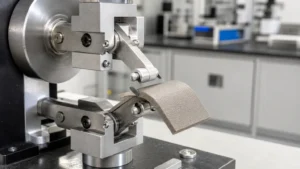
Light fastness is one of the most important parts of PU leather color fastness. Light fastness tests expose a material to a controlled light source and compare its color change against an agreed rating scale. The result is only meaningful when the test method, exposure conditions, color, application, and acceptance criteria are clearly defined.
Xenon arc exposure
Xenon arc equipment is commonly used to simulate light exposure and evaluate how a color changes over a defined test period. It is useful for comparing materials and detecting weak formulations, but an accelerated test result should not be treated as an exact prediction of real-world service life.
How buyers should read light-fastness reports
Before trusting a light-fastness result, confirm the test method and edition, the sample color and surface, the exposure conditions, the rating system, the pass or fail requirement, and whether the report applies to the exact construction you are buying. You can review the official ISO standards catalogue to understand how standardized test methods are organized, then request the specific method relevant to your product.
Crocking, Rub-Off, and Color Transfer: What Is the Difference?
These issues are often confused, but they describe different problems with different triggers. The table below summarizes what buyers should confirm for each.
| Issue | What happens | Typical trigger | What buyers should confirm |
|---|---|---|---|
| Crocking | Color rubs off the PU surface | Dry or wet friction | Test method, dry/wet condition, rubbing material |
| Color transfer | Color moves to another material | Contact pressure, heat, moisture | Counter-material, contact time, temperature |
| Light fading | Original color weakens or shifts | Light exposure | Light source, duration, rating system |
| Yellowing | Material shifts toward yellow | UV, heat, oxidation, migration | Original shade, aging condition, evaluation criteria |
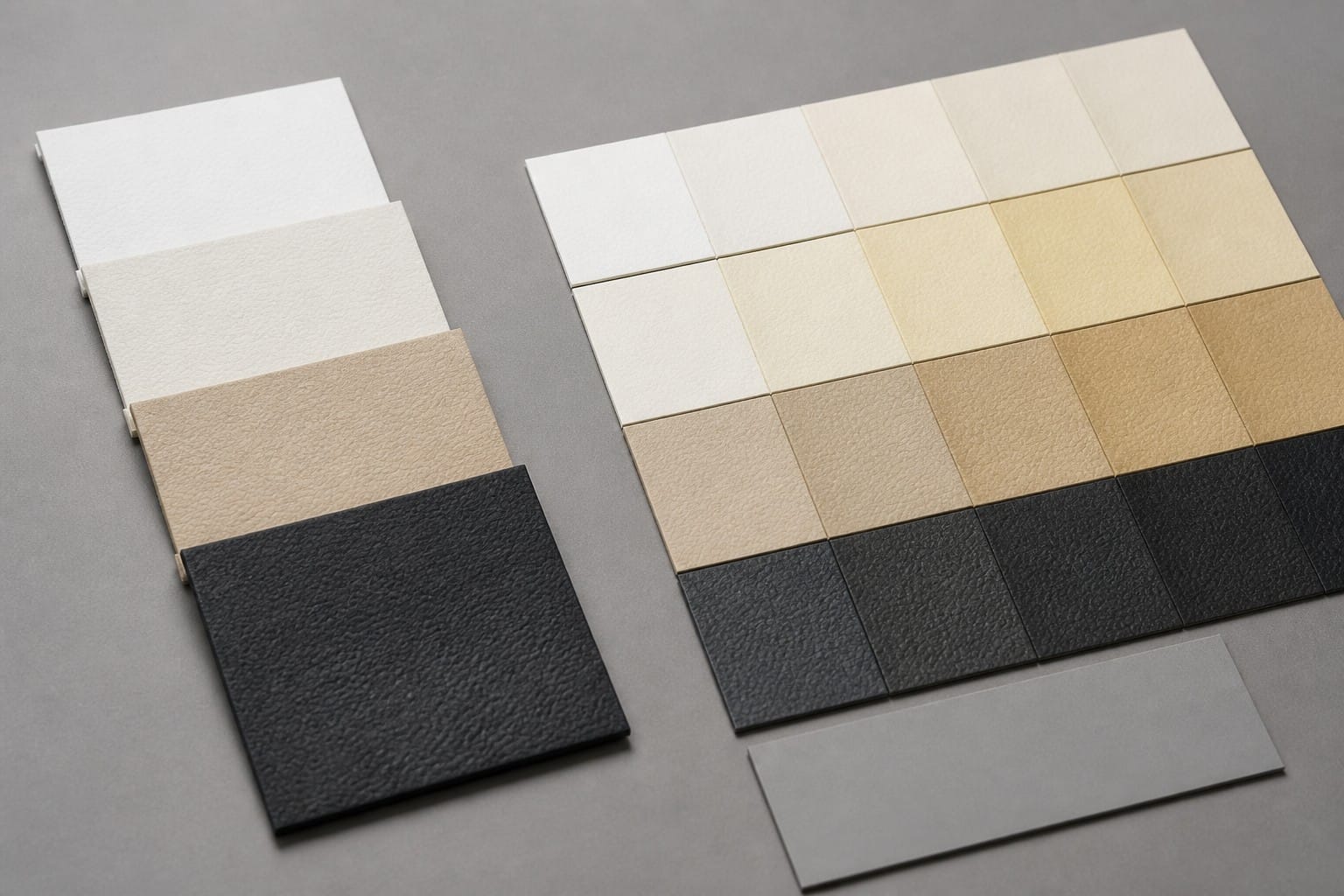
Risk also depends on color. White, ivory, pastel, fluorescent, and highly saturated shades usually require stricter evaluation than mid-tone or dark colors.
How to Test PU Leather Color Stability for Different Applications
Color-stability priorities change with the application. The most efficient approach is to test the conditions the finished product will actually face, not a generic checklist.
Automotive interiors
Automotive materials face sunlight through glass, high cabin temperatures, contact with skin and clothing, and cleaning agents. Light-colored interiors need careful light-fastness and heat-aging evaluation. See our automotive PU leather guide for related sourcing considerations.
Furniture and upholstery
Furniture is exposed to indoor light, repeated body contact, friction, and cleaning over a long service life. Color consistency across production batches is also important for large upholstery orders. Our guide on how to choose PU leather for furniture covers related selection factors.
Bags, footwear, and fashion accessories
Bags and accessories face friction, rain, hand contact, and contact with linings, hardware, and adhesives, plus storage yellowing on light colors. Learn more in our article on PU leather for bags.
Outdoor and sports products
Outdoor and sports items face UV, sweat, wet rubbing, cleaning, and grip-coating stress. Color stability should be checked together with abrasion and flexing. See our sports synthetic leather guide for application context.
How to Reduce Yellowing and Color Problems in PU Leather
Color problems are easier to prevent during specification than to fix after production. The following steps reduce risk without over-promising performance:
- Choose the material construction for the actual exposure environment.
- Confirm the color against an approved standard under agreed lighting.
- Test the finished product, not only a flat material swatch.
- Check adhesives, foams, plastics, packaging, and cleaners for migration risk.
- Define storage and transport conditions, especially for white and light shades.
- Reconfirm color and performance for repeat orders or any formulation change.
Material selection also plays a role; our article on material selection and formulation considerations explains related factors.
What Should Buyers Ask a PU Leather Supplier?
Use this checklist when evaluating PU leather color fastness with a supplier:
- Which color-stability tests apply to this material?
- What is the exact test method and test condition?
- Is the report for the same color, grain, coating, and backing?
- What acceptance criteria were used?
- Has the material been tested for dry and wet rubbing?
- Has it been assessed for light exposure or heat aging when relevant?
- What packaging is recommended to reduce migration risk?
- Are there application limits for white or light-colored PU?
- How is batch-to-batch color consistency controlled?
- Can the supplier provide an approved sample and technical data sheet?
How Taite Supports PU Leather Color Development
Taite Leather Group provides PU, microfiber, and eco-friendly material directions and can discuss color, grain, thickness, surface finish, and performance for a specific application. Buyers are encouraged to share the Pantone or physical color reference, the intended use, the light, cleaning, and friction environment, and the expected quantity so the team can recommend a suitable sample. Final performance is confirmed through the approved sample, specification, and the actual agreed test conditions. Explore our PU leather material range to start a color-development discussion.
Sıkça Sorulan Sorular
Does PU leather turn yellow?
PU leather can yellow under certain conditions, especially with UV, heat, oxidation, or contact migration. The degree of risk depends on formulation, color, coating, storage, and use environment.
How can I prevent white PU leather from yellowing?
Select a suitable formulation, confirm light and heat-aging behavior, avoid incompatible packaging, adhesives, and cleaners, and validate the finished product rather than only a swatch.
What is the difference between light fastness and crocking?
Light fastness measures color change after light exposure, while crocking measures color rub-off under dry or wet friction. They are separate tests with separate criteria.
Can a colorfastness report apply to every color?
No. A report should confirm that the color, construction, coating, backing, and test conditions match the material you are buying.
Should I test the finished product or just the material?
Both matter, but finished-product testing is important because adhesives, linings, foams, hardware, and processing can affect color stability in ways a flat swatch cannot show.
Need to confirm color stability for your application? Share your color reference, application, light and cleaning environment, and estimated quantity through our request a color-stability sample and quotation page.