


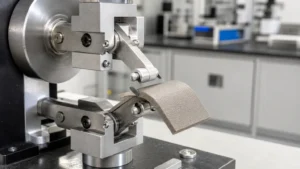
Can you use alcohol on synthetic leather? Sometimes, but not blindly. Alcohol may be safe on some synthetic leather surfaces if the material has been tested for alcohol resistance, but repeated wiping, high-concentration alcohol, or long contact time can damage many PU and faux leather coatings. For general cleaning, mild soap, water, and a soft cloth are usually safer. For products that need routine disinfection, buyers should confirm chemical resistance before production.
Can You Use Alcohol on Synthetic Leather?
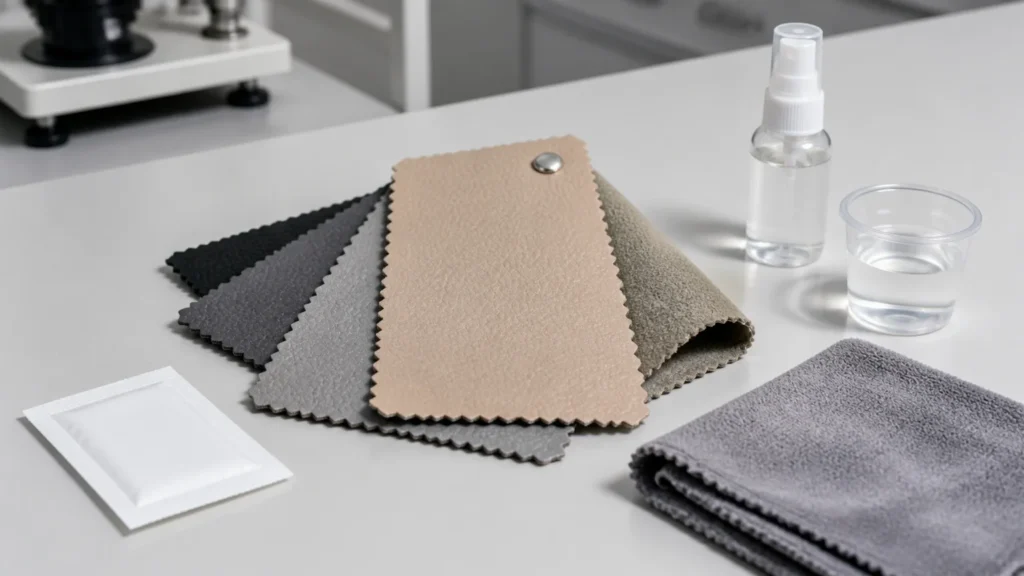
The short answer is: only when the material is designed or tested for alcohol contact. Synthetic leather is not one single material. It can be PU, PVC, microfiber leather, silicone leather, or another coated construction. Each surface uses a different resin system, topcoat, pigment, finish, and backing. That is why one material may tolerate occasional alcohol wiping while another may lose gloss, transfer color, become sticky, or crack.
For everyday cleaning, alcohol should not be the first choice unless the care instructions allow it. A safer default is gentle cleaning with a soft cloth, mild soap, and water. If disinfection is required, test a hidden area first or request chemical resistance data from the supplier.
- Occasional spot wiping may be acceptable for some tested synthetic leather surfaces.
- Repeated alcohol wipes can increase the risk of coating damage.
- High-concentration alcohol or soaking is more likely to cause color change, gloss loss, stickiness, or surface cracking.
So the practical answer to can you use alcohol on synthetic leather is not a simple yes or no. It depends on the material formulation, exposure time, cleaning frequency, and test results.
What Can Alcohol Do to PU Leather and Faux Leather?
Before answering can you use alcohol on synthetic leather in daily care, it helps to understand what alcohol can do to coated surfaces. Alcohol evaporates quickly, which makes it useful in many cleaning and disinfecting contexts. But on coated materials, fast evaporation does not mean no risk. The surface of synthetic leather may contain finishing agents, pigments, softeners, protective topcoats, or printed effects. Alcohol can interact with these layers differently.
Possible effects include dulling the surface gloss, lifting color, drying the coating, weakening surface finishes, or creating a sticky feel. In some cases, the effect is small and only appears after repeated wiping. In other cases, a sensitive coating may show color transfer or visible surface change after a short test.
Heat and friction make the risk higher. A car seat wiped with alcohol in a hot cabin, a sports grip cleaned repeatedly after use, or a bag surface rubbed with alcohol wipes may experience more stress than a flat sample tested once in a lab. This is why cleaning performance should be evaluated under realistic use conditions.
Is Bleach Safe for Synthetic Leather?
When people ask can you use alcohol on synthetic leather, they often ask the same question about bleach. Bleach is a strong disinfecting chemical, but it is not automatically safe for synthetic leather. It can affect color, coating strength, adhesives, surface feel, and gloss. Some materials may tolerate certain diluted disinfectants under controlled conditions, while others may be damaged quickly.
The CDC provides general information on cleaning and disinfecting with bleach, but that guidance is not a material compatibility approval for every synthetic leather surface. For coated fabrics and artificial leather, the supplier’s care guide and chemical resistance test results should come first.
If a final product will be exposed to bleach, alcohol, disinfectant wipes, or strong cleaners, the requirement should be defined before material approval. Do not assume that a material is bleach-safe just because it is waterproof or easy to wipe.
Safer Ways to Clean Synthetic Leather
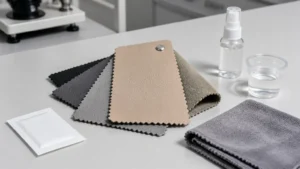
If you are unsure can you use alcohol on synthetic leather, start with a lower-risk cleaning method. For normal daily cleaning, keep the process simple. Remove dust with a dry, soft cloth. For light dirt, use a damp cloth with mild soap, then wipe again with clean water and dry the surface. Avoid soaking the material because moisture can enter seams, edges, foam layers, or backing structures.
Do not use acetone, strong solvents, aggressive degreasers, abrasive pads, or unknown household cleaners on the visible surface. These products may remove the finish, change the color, or weaken the coating. Even if the surface looks fine immediately, repeated cleaning can create long-term problems.
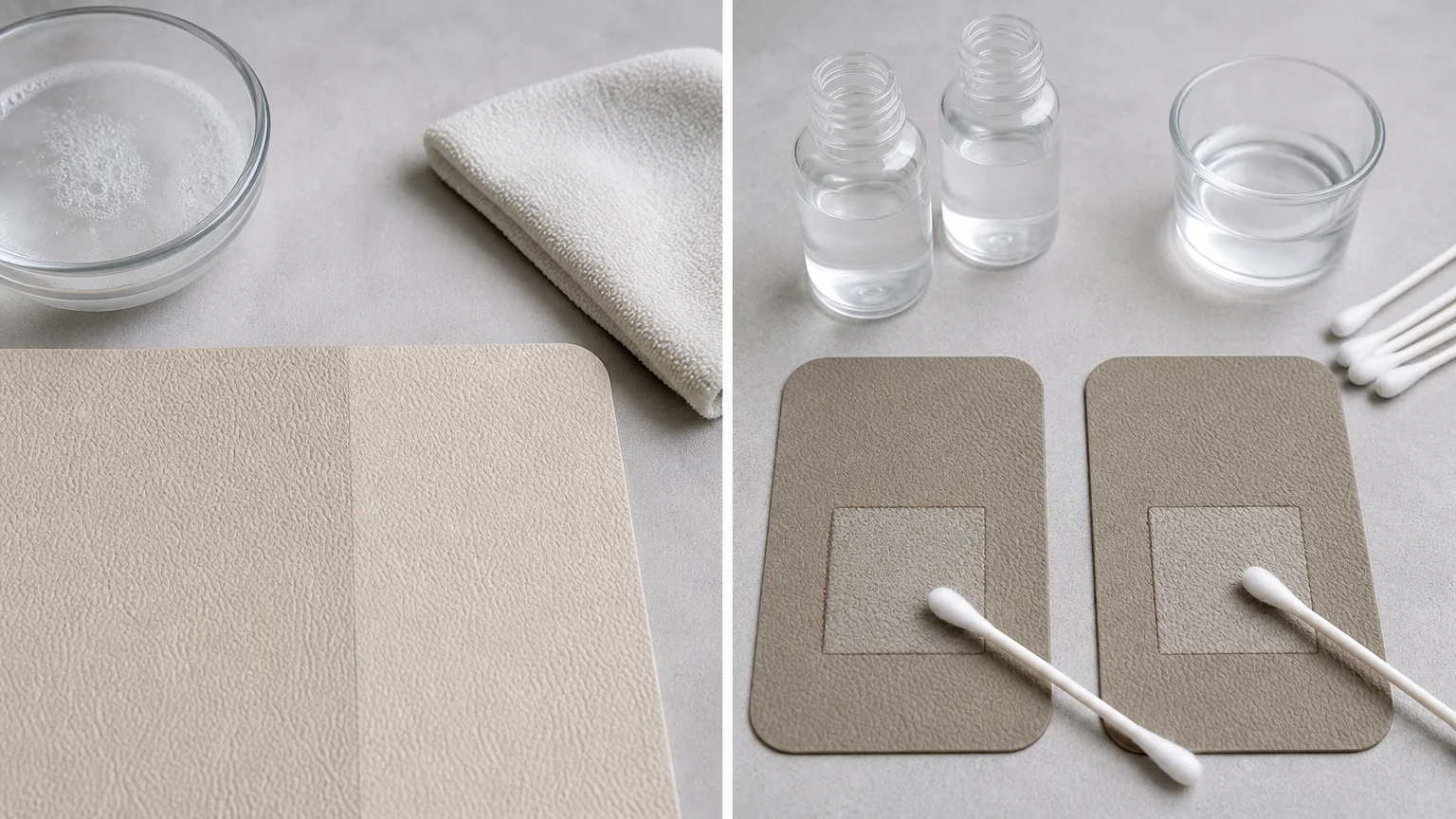
Before using any cleaner on a large area, test a hidden spot. Check for color transfer on the cloth, gloss loss, sticky feel, swelling, cracking, or surface whitening after the test area dries. If the material is used for furniture, shoes, automotive interiors, or public seating, keep the test condition close to the real cleaning process.
For microfiber-specific care, Taite’s guide on how to clean microfiber leather can be used as a related reference. For footwear, the article on how to clean leather fabric shoes provides application-specific cleaning context.
Material Type Matters: PU, PVC, Microfiber, and Silicone Leather
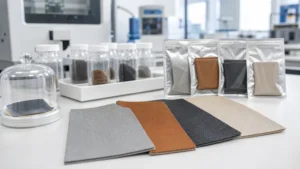
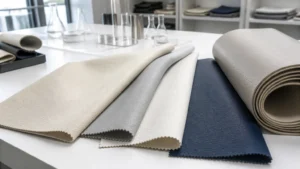
The answer to can you use alcohol on synthetic leather changes with the material type. Different synthetic leather systems respond differently to alcohol and disinfectants. A care method that works on one surface may be unsuitable for another. Material name alone is not enough; buyers should review the coating, topcoat, backing, finish, and test data.
PU deri
PU deri is widely used because it can offer soft hand feel, flexible surfaces, and many grain effects. Its alcohol resistance depends on the polyurethane system, pigment, topcoat, and finishing process. Some PU surfaces may tolerate occasional wiping, while others may show gloss or color changes.
Mikrofiber deri
Mikrofiber deri has a different base structure, but the surface still needs compatibility testing. If the top layer is not designed for alcohol exposure, the backing strength alone will not prevent surface damage.
Silicone leather
Silicone leather is often considered for easy-clean and stain-resistant applications. However, buyers should still confirm the exact disinfectants, concentrations, wipe cycles, and appearance requirements instead of assuming universal resistance.
Water-based and solvent-free PU
Water-based PU leather and solvent-free PU leather can be useful material directions for buyers who care about process, odor, and environmental positioning. But cleaning compatibility is still a separate performance requirement. A low-odor or solvent-reduced process does not automatically mean the surface can resist every alcohol wipe or disinfectant.
Which Applications Need Alcohol or Disinfectant Resistance?
Can you use alcohol on synthetic leather safely in the final product environment? That question matters most when synthetic leather is cleaned frequently, handled often, or placed in shared spaces.
Automotive interiors
Car seats, steering wheel covers, trims, and door panels may be cleaned with wipes by end users. Heat inside the cabin can increase stress on the coating. Buyers choosing car upholstery leather should consider abrasion, heat, odor, chemical cleaning, and color stability together.
Furniture and public seating
Furniture in homes, offices, hotels, clinics, and public spaces may need routine cleaning. For furniture leather fabric, alcohol or disinfectant resistance should be discussed if the product will be cleaned often by different users.
Bags and fashion goods
Consumers may use wet wipes or alcohol pads on bags after travel or daily use. On sensitive finishes, this can cause local discoloration or gloss change. For bag fabric, test folded edges, printed surfaces, and high-touch areas.
Shoes
Shoe uppers may contact dirt, sweat, rain, cleaning sprays, and disinfectant wipes. When selecting PU leather for shoes, buyers should evaluate both flex performance and cleaning behavior, especially around bending zones.
Sports grips
Sports grips are exposed to hand sweat, friction, and frequent wiping. A surface that feels good at first may become sticky if it is not compatible with alcohol wipes or repeated cleaning. For kavrama kumaşı, chemical cleaning should be reviewed together with touch, slip resistance, and abrasion.
How Buyers Should Specify Chemical Resistance
For B2B projects, can you use alcohol on synthetic leather should become a clear test requirement, not a guess. Buyers should avoid vague phrases such as “easy to clean” or “disinfectant resistant” without details. A good specification defines the chemical, concentration, contact time, wipe pressure, number of cycles, test temperature, and acceptable appearance change.
After testing, inspect for color change, gloss loss, sticky feel, whitening, coating transfer, cracking, swelling, or delamination. For B2B projects, the same cleaner should be tested on the same color, grain, thickness, and finish that will be used in production.
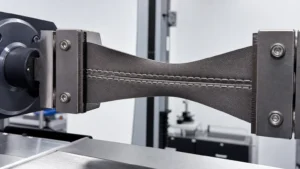
Chemical exposure can also reveal weak coating adhesion. If the surface begins to peel or transfer after cleaning, related tests such as a synthetic leather coating adhesion test, Martindale abrasion test, or synthetic leather flex test may help explain the failure mechanism.
Cleaning performance should also be considered with odor and VOC concerns. Taite’s article on why synthetic leather smells explains how materials, packaging, and chemicals can affect user experience.
Quick Cleaning Decision Guide
The table below gives a quick answer to can you use alcohol on synthetic leather in common cleaning situations without replacing proper material testing.
| Situation | Safer Choice | Avoid |
|---|---|---|
| Daily dust | Dry soft cloth | Abrasive brush |
| Light dirt | Mild soap and water | Strong solvent |
| Unknown stain | Hidden-area test first | Soaking the surface |
| Need disinfection | Supplier-approved disinfectant | Repeated alcohol or bleach without testing |
| Unknown material | Ask for care guide and test data | Guessing based only on material name |
Sıkça Sorulan Sorular
Can you use alcohol wipes on synthetic leather?
Can you use alcohol on synthetic leather wipes for quick disinfection? You can use alcohol wipes only if the synthetic leather surface has been tested or approved for alcohol contact. Without that confirmation, mild soap and water are safer for routine cleaning.
Will alcohol damage PU leather?
If the question is can you use alcohol on synthetic leather made with PU, the answer depends on the topcoat. Alcohol can damage some PU leather surfaces by causing color change, gloss loss, stickiness, or coating weakness. The result depends on the PU formulation, topcoat, alcohol concentration, and wiping frequency.
Can bleach be used on faux leather?
Bleach should not be used on faux leather unless the supplier’s care guide or test data confirms compatibility. It may discolor or weaken some coatings.
What is the safest cleaner for synthetic leather?
For general cleaning, a soft cloth with mild soap and water is usually the safest starting point. Always dry the surface and avoid soaking seams, edges, and backing layers.
How do you test a cleaner before using it?
Apply a small amount on a hidden area, wait for it to dry, and check for color transfer, gloss change, stickiness, whitening, cracking, or coating transfer before cleaning the visible surface.
Which synthetic leather is easier to disinfect?
There is no universal answer. Easier disinfection depends on the material surface, topcoat, chemical resistance, and approved cleaning method. Buyers should request testing based on the exact disinfectant used in the final product environment.