

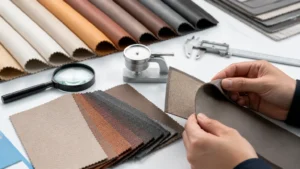
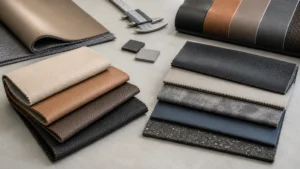
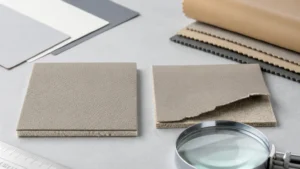
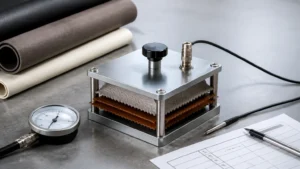
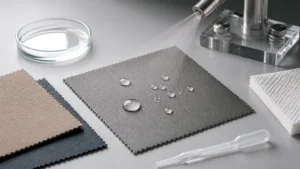
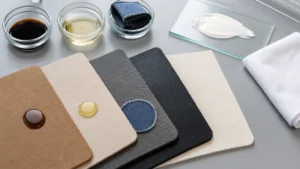
A synthetic leather fogging test evaluates whether volatile substances from synthetic leather can evaporate under heat and condense on a cooler glass or metal surface. For automotive interiors, this matters because fogging deposits may affect windshield clarity, interior cleanliness, odor perception, and material approval. A material can smell acceptable in a cabin and still require fogging evaluation because odor, VOC, and fogging are related but not identical concerns.
For buyers asking when a synthetic leather fogging test is necessary, automotive seats, door panels, armrests, headrests, steering wheel wraps, and EV interior trim are the key applications. Fogging is not just a laboratory detail. Vehicle cabins can reach high temperatures during storage, shipping, parking, and real use. Under these conditions, low-molecular substances from coatings, adhesives, backings, additives, or finishing layers may migrate and condense on cool surfaces. This guide explains how the test works, how it differs from VOC and odor testing, and what buyers should ask before approving automotive synthetic leather.

What Is a Synthetic Leather Fogging Test?
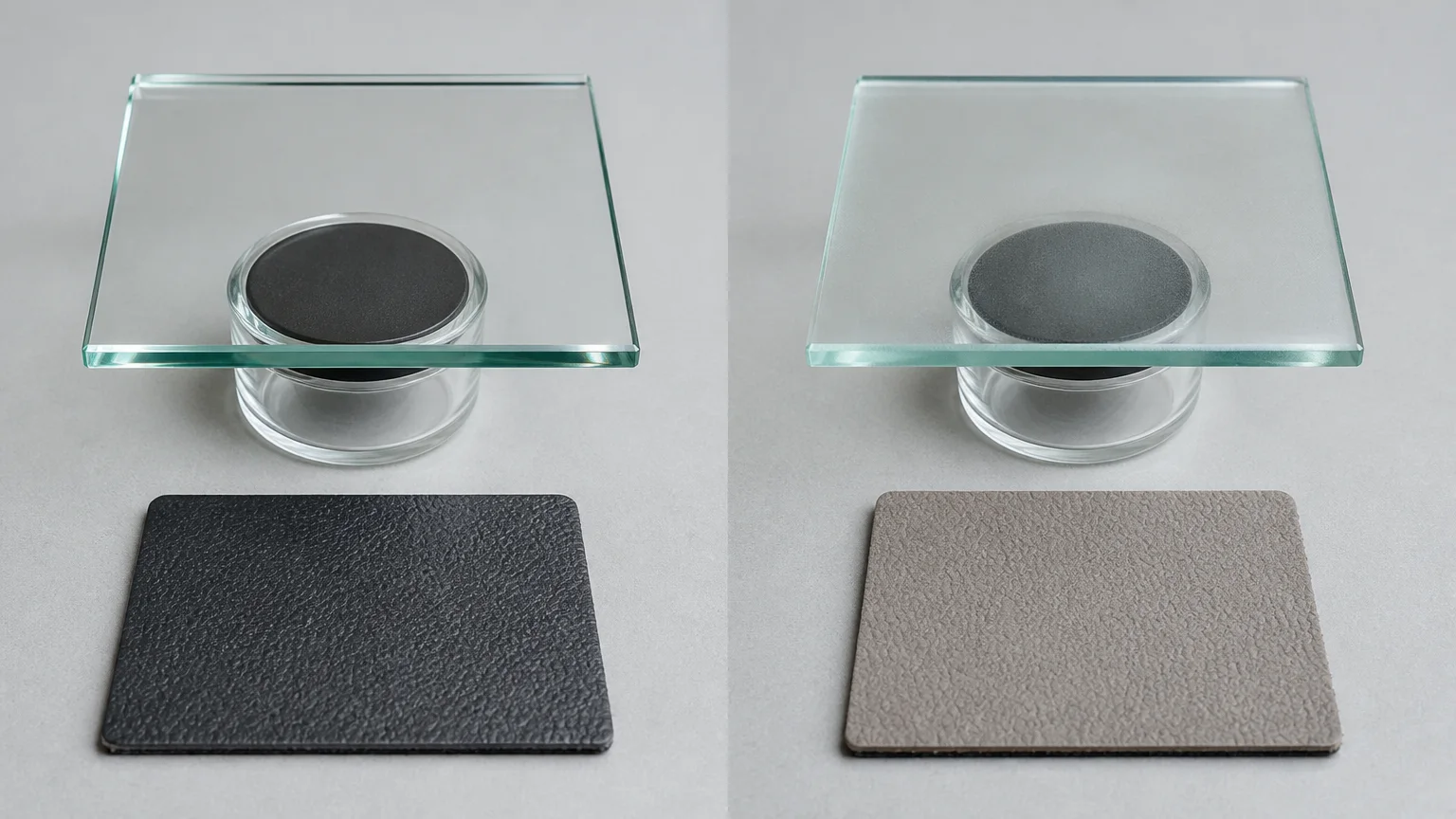
A synthetic leather fogging test is a controlled laboratory method used to evaluate the tendency of synthetic leather or automotive trim materials to release condensable volatile substances. The sample is usually exposed to heat, while a cooler glass plate, aluminum foil, or similar collection surface captures any deposits formed by evaporation and condensation.
The point is not to judge whether the material simply has a smell. The point is to estimate whether materials used inside a vehicle could leave a film, haze, or deposit on glass or interior surfaces under heat. This makes the synthetic leather fogging test especially relevant for automotive applications, where cabin clarity, perceived cleanliness, and OEM material approval can all be affected.
In practical sourcing, a buyer should treat fogging data as one part of a larger interior-material evaluation. It should be reviewed together with odor, VOC, abrasion, color fastness, hydrolysis resistance, heat aging, cleaning resistance, and the final composite structure of the material.
Why Fogging Matters for Automotive Synthetic Leather
A synthetic leather fogging test is important because automotive interiors are exposed to a combination of heat, sunlight, enclosed air, human contact, and cleaning chemicals. A seat cover material that looks good at room temperature may behave differently after long exposure to cabin heat. That is why low-fogging performance can matter for car upholstery leather, door trim, dashboard soft surfaces, armrests, headrests, and interior accessories.
Fogging deposits are a concern because they may reduce windshield clarity, create visible film on glass, make interior surfaces look less clean, or suggest that the material has not been optimized for automotive use. Even when the deposit is not dramatic, OEM and tier supplier approval programs may require fogging data before a material can enter production.
For electric vehicles and modern interiors, buyers often ask for lower odor, lower emissions, improved cleaning resistance, and stable surface appearance. Taite’s automotive PU leather guide explains broader B2B requirements for vehicle interiors. This article focuses on the more specific question of fogging risk.
Fogging vs VOC vs Odor: What Is the Difference?
Before reading a synthetic leather fogging test report, buyers should understand that fogging, VOC, and odor are connected because all three may involve substances released from a material. However, they measure different things. Confusing them can lead buyers to approve the wrong material or misunderstand a test report.
| Concern | What It Focuses On | Why Buyers Care |
|---|---|---|
| Odor | Human-perceived smell from the material or finished part | Cabin comfort, perceived quality, and customer complaints |
| VOC | Volatile organic compounds released from materials | Emission control, material safety programs, and automotive requirements |
| Fogging | Condensable volatile substances that deposit on glass, foil, or another surface | Windshield clarity, interior cleanliness, and OEM approval |
| Heat aging | Material stability after thermal exposure | Risk of hardening, cracking, discoloration, odor change, or emission change |
Taite has already explained where odors can come from in why synthetic leather smells. A low-odor material is helpful, but low odor does not automatically prove low fogging. A separate synthetic leather fogging test may still be needed for automotive approval.
Common Fogging Test Standards for Automotive Interior Materials
A synthetic leather fogging test may refer to ISO 6452, DIN 75201, SAE J1756, and related automotive or leather material methods. The exact method depends on the customer’s specification, target market, and product application. Buyers should not assume that one supplier’s report is directly comparable to another supplier’s report unless the same method, sample condition, and acceptance criteria are used.
Intertek explains that fogging tests can evaluate whether a material leaves a light-scattering film on a glass surface or deposits foreign material on aluminum foil. This type of explanation is useful for understanding the difference between photometric and gravimetric approaches: Intertek fogging test reference.
It is important to be precise. A testing laboratory or industry article may explain a method, but it is not the same as the official standards body. When a buyer needs formal compliance, the final acceptance limit should come from the OEM, brand, or customer’s own specification.
How a Synthetic Leather Fogging Test Works
The exact synthetic leather fogging test procedure depends on the standard and customer requirement, so a supplier should not invent a universal temperature, duration, or pass limit. Still, most fogging evaluations follow the same basic logic: prepare a sample, heat it under controlled conditions, collect deposits on a cooler surface, and evaluate the deposit using a defined method.
Sample preparation
The sample should represent the actual material that will be used in production. For automotive synthetic leather, this may mean testing the finished coated material, laminated structure, backing, adhesive layer, or final composite rather than only testing a coating resin. Batch number, thickness, color, surface finish, backing type, and conditioning should be recorded.
Heating and condensation
During the test, the material is exposed to heat so volatile substances can evaporate. These substances may then condense on a cooler glass plate, aluminum foil, or other collection surface. This process simulates the risk of deposits forming in vehicle interiors when materials are heated in an enclosed cabin.
Photometric method
A photometric method focuses on how deposits affect light transmission or light scattering through glass. This is directly related to windshield clarity. If a material leaves a haze-like film, it may affect the way light passes through the glass surface.
Gravimetric method
A gravimetric method focuses on the weight of collected condensate on a surface such as aluminum foil. This helps evaluate the amount of deposited foreign material. It does not describe odor directly; it describes condensable residue under the test condition.
Report interpretation
A useful report should identify the standard used, the method used, the sample condition, the test condition, the result unit, and the acceptance limit. It should also clarify whether the test was performed on the final material construction. Buyers should be careful when a report only covers a raw coating, a different backing, or a development-stage sample that is not the same as the production material.
What Causes High Fogging in Synthetic Leather?
When a synthetic leather fogging test result is high, the cause may come from several parts of a synthetic leather system. It is rarely correct to blame only one material name. PU leather, PVC leather, microfiber leather, silicone leather, water-based PU, and solvent-free systems can all perform differently depending on formulation, curing, backing, and finishing.
- Residual solvent: insufficient removal or curing may leave volatile residues.
- Plasticizers: some low-molecular plasticizers may migrate under heat.
- Additives: processing aids, softeners, or surface treatments may contribute to deposits if not selected properly.
- Adhesive and lamination layers: the final composite can perform differently from the surface material alone.
- Backing treatments: fabric finishing, foam backing, or nonwoven treatments may affect emission and fogging behavior.
- Heat history: storage, shipping, and cabin temperature can accelerate evaporation and migration.
- Cleaning and contact exposure: sweat, oils, cleaners, and disinfectants may change surface stability over time.
This is why buyers should evaluate the complete material structure. A material marketed as low odor or low VOC still needs the appropriate synthetic leather fogging test if it will be used for automotive interiors.
How to Reduce Fogging Risk in Automotive Synthetic Leather
A better synthetic leather fogging test result usually comes from controlling formulation, processing, curing, backing selection, and final material construction. For automotive buyers, the goal is not to ask for vague “better material” but to define the required test method and approve materials based on measured performance.
Water-based and solvent-free systems may help reduce certain solvent-related risks when properly formulated and cured. Taite offers water-based PU leather and solvent-free PU leather options for projects where lower solvent residue, improved environmental positioning, or interior-material requirements matter.
Material selection should also consider microfiber leather, silicone leather, and application-specific PU leather. Each option should be judged by the actual product requirement, not by a general claim.
Which Applications Need Low-Fogging Synthetic Leather?
Low-fogging synthetic leather is most important where materials are used inside a vehicle cabin or other enclosed environment exposed to heat. Automotive applications are the primary use case, but the same thinking can also apply to premium interiors, commercial transport, and enclosed storage conditions.
Automotive seats and door panels
Seat surfaces, door inserts, and trim panels are large-area interior materials. If they release condensable substances under heat, they may contribute to visible deposits on glass or nearby surfaces. For car seat and trim projects, start with Taite’s car upholstery leather materials and confirm the required test package early.
EV interiors
EV interiors often emphasize low odor, low emissions, sustainable material choices, and premium surface feel. Bio-based or lower-solvent systems may support these goals, but every material still needs application-specific testing. Taite’s bio-based PU leather article gives additional context for luxury and EV interior trends.
Steering wheels, armrests, and headrests
These areas face repeated touch, body oils, sweat, cleaning, and heat. Even when the surface is small, the material may be close to the driver’s field of view or frequent contact zones. Buyers should confirm that fogging, cleaning resistance, abrasion, and color fastness are all considered together.
Public transport and commercial interiors
Public transport and commercial interiors can experience frequent use, cleaning, heat, and long service periods. If low odor and clean interior appearance are part of the customer’s requirement, fogging data may be useful even beyond private passenger cars.
Buyer Checklist Before Approving Low-Fogging Synthetic Leather
Before approving a low-fogging synthetic leather, buyers should ask targeted questions instead of relying on generic claims.
- Which fogging standard was used?
- Was the method photometric, gravimetric, or another customer-specified method?
- Was the final laminated or composite material tested?
- What sample condition, test condition, and result unit were used?
- What acceptance limit comes from the OEM, brand, or internal specification?
- Does the same material also meet odor, VOC, abrasion, color fastness, hydrolysis, and cleaning requirements?
- Are the test reports batch-specific, development-stage, or representative sample reports?
- Does the supplier understand the heat, cleaning, and use conditions of automotive interiors?
A buyer should also avoid treating one report as a lifetime guarantee. Material performance depends on production consistency, storage, lamination, assembly, and final use. If the application is demanding, request production-sample verification before mass approval.
FAQ
What is a synthetic leather fogging test?
A synthetic leather fogging test measures whether volatile substances from synthetic leather can evaporate under heat and condense on glass, foil, or another collection surface. It is mainly used for automotive interior material evaluation.
Is fogging the same as VOC?
No. VOC testing measures volatile compounds released from a material, while fogging testing focuses on condensable substances that deposit on glass or foil. They are related but not the same test.
Does low odor mean low fogging?
Not always. A material can have low perceived odor but still require a fogging test for automotive approval. Odor is what people smell; fogging is about deposits formed on a collection surface.
Which standards are used for fogging tests?
Common references include ISO 6452, DIN 75201, SAE J1756, EN 14288, and related customer or automotive methods. The correct method depends on the buyer’s specification.
Why is fogging important in car interiors?
Fogging deposits may affect windshield clarity, interior appearance, customer comfort, and OEM material approval. This is why automotive synthetic leather often needs fogging, odor, VOC, and heat-aging evaluation.
Can water-based PU reduce fogging risk?
Water-based PU may help reduce certain solvent-related risks when the formulation and curing are well controlled. However, buyers should still verify performance with the required synthetic leather fogging test.
What should buyers ask suppliers before ordering?
Ask for the test method, sample condition, result unit, pass/fail limit, material structure, and whether the final composite material has been tested. Also confirm whether the supplier can match automotive interior requirements for odor, VOC, fogging, color stability, and durability.
Final Thoughts
A synthetic leather fogging test helps buyers understand whether a material may release condensable substances that deposit on glass or metal surfaces under heat. For automotive interiors, this is separate from odor and VOC evaluation, even though the issues are related. The safest approach is to define the required standard, test the final material structure, and compare fogging results together with odor, VOC, abrasion, hydrolysis, cleaning, and color fastness performance.
If you are developing synthetic leather for automotive seats, door panels, armrests, headrests, or EV interior surfaces, Taite can help match the material structure, coating system, backing, and test requirements to your target application. Contact Taite with your automotive interior specifications, and our team can recommend suitable PU, microfiber, silicone, water-based, or solvent-free synthetic leather options.