

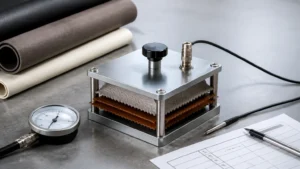
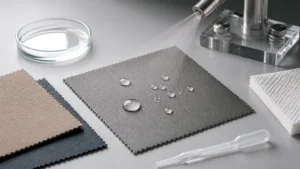
Sports synthetic leather is an engineered material designed for products that face repeated friction, moisture, bending, gripping, stitching, and cleaning. For sports gloves, grip tape, balls, gym equipment, protective gear, and sports bags, the right material must be selected by application rather than appearance alone.
For B2B buyers, material selection affects product comfort, service life, manufacturing efficiency, and repeat-order consistency. This guide explains how to compare PU leather and microfiber leather, define performance requirements, request samples, and prepare a clear sourcing brief for a sports synthetic leather supplier.
What Is Sports Synthetic Leather?
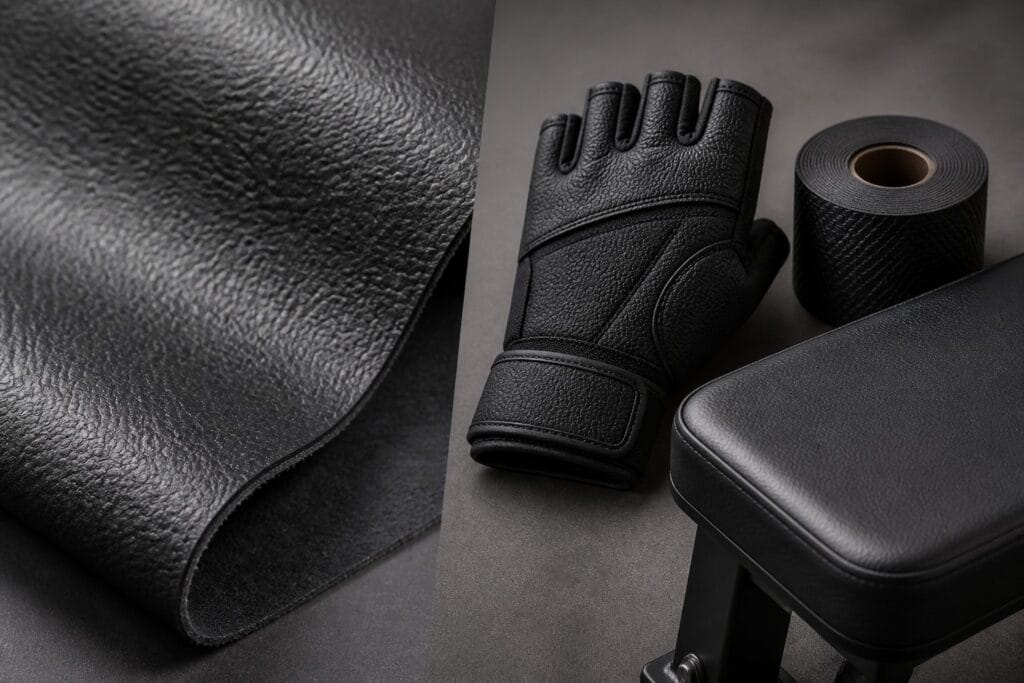
Sports synthetic leather is a coated or laminated material developed for sports products that require controlled abrasion resistance, flexibility, grip, moisture resistance, and consistent surface quality. Compared with decorative upholstery grades, sports materials are usually evaluated more carefully for repeated movement, sweat contact, stitching, bonding, and surface wear.
Why sports equipment requires specialized leather materials
A sports glove may need a soft hand feel and controlled grip, while a commercial gym bench may need a tougher surface, easier cleaning, and higher tear resistance. Grip tape requires a stable thickness and reliable surface friction. A ball cover needs flexibility, printability, and resistance to repeated impact. These requirements are different, so one general-purpose synthetic leather grade should not automatically be used across every sports product.
Common base structures
A sports material can be built with different coating and backing combinations. Common directions include PU coating, microfiber backing, woven backing, non-woven backing, stretch backing, reinforced backing, and foam-lamination-compatible structures. The backing affects flexibility, dimensional stability, sewing, bonding, and the final hand feel. The most suitable construction should be confirmed through a sample and application test.
How to Choose Sports Synthetic Leather by Application
The best sports synthetic leather depends on how the finished product moves, touches the body, receives friction, and is cleaned. Use the following table as an initial sourcing guide, then confirm the final specification with physical samples.
| Application | Key requirements | Suitable direction | Questions to confirm |
|---|---|---|---|
| Sports gloves | Flexibility, grip, sweat resistance, soft hand feel | Soft PU or microfiber-backed material | Palm or backhand? Required stretch? |
| Grip tape | Grip, abrasion resistance, stable thickness, texture | Textured PU or reinforced synthetic leather | Required tackiness and roll width? |
| Balls | Flexibility, printability, abrasion resistance | Lightweight PU with controlled grain | Ball construction and molding process? |
| Gym equipment | Abrasion resistance, easy cleaning, tear strength | Heavy-duty PU or microfiber leather | Commercial or home-use equipment? |
| Protective gear | Flexibility, impact-area durability, seam performance | Flexible PU with reinforced backing | Sewing, bonding, or thermoforming? |
| Sports bags | Scratch resistance, color stability, appearance | PU or microfiber leather | Required grain, weight, and lining method? |
The best material is application-specific. A soft glove material should not automatically be used for a commercial gym bench, and a heavy-duty upholstery grade may be too stiff for a sports glove.
PU Leather vs Microfiber Leather for Sports Equipment
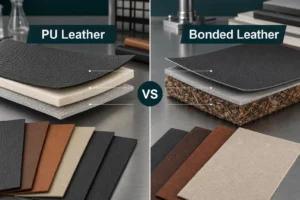
PU leather and microfiber leather can both be considered for sports products, but they offer different balances of cost, structure, hand feel, and performance. The final choice should be based on thickness, coating, backing, grain, processing method, and test results rather than on the material name alone.
| Factor | PU leather | Microfiber leather |
|---|---|---|
| Cost efficiency | Often more cost-efficient for large-volume programs | Usually positioned for higher-performance or premium programs |
| Surface customization | Wide choice of grains, colors, and finishes | Supports custom grain and premium hand feel |
| Flexibility | Depends on coating, thickness, and backing | Can provide strong structure and leather-like hand feel |
| Abrasion performance | Can be engineered for sports use | Suitable for demanding applications when the specification is matched |
| Weight | Available in lightweight structures | May be heavier depending on backing and construction |
| Best use cases | Grip tape, sports bags, balls, and general sports goods | Premium equipment, high-wear areas, and demanding OEM projects |
For more material background, compare our PU leather and microfiber leather product directions before requesting a sample.
Key Performance Requirements for Sports Synthetic Leather
Abrasion resistance
Sports products can experience repeated rubbing from hands, clothing, equipment frames, floors, and transport. Buyers should define the abrasion method, load, abrasive material, number of cycles, and pass criteria instead of asking for a generic “high abrasion” claim. The ISO Martindale abrasion method is one reference method for textile abrasion evaluation, but the applicable test must be confirmed for the product and market.
Sweat, water, and cleaning resistance
Gloves, grips, and gym equipment may contact sweat, water, disinfectants, and cleaning products. Confirm wet rubbing, color transfer, surface coating stability, and resistance to the actual cleaning agents used by the customer. Do not treat “water resistant” as a guarantee that a material is suitable for every chemical or cleaning process.
Flexing, tear strength, and seam performance
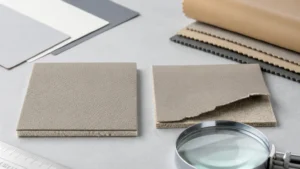
Repeated bending can expose weak points in the coating or backing. A sports buyer should evaluate flex resistance, tear strength, tensile behavior, seam performance, adhesive compatibility, and the risk of edge cracking or delamination. The test should use the same construction process as the final product whenever possible.
Color fastness and UV stability
Outdoor sports products and equipment exposed to strong indoor lighting need controlled color stability. Confirm dry and wet color fastness, UV exposure requirements, anti-yellowing expectations, and the color-matching process. Dark, fluorescent, and highly saturated colors may require additional sampling and batch approval.
Grip and hand feel
Grip is influenced by grain geometry, coating formulation, surface finish, softness, and the counter-material. A glove or handle material should be evaluated by touch and use, not only by a data sheet. Ask for several textures or finishes when the final product depends on athlete comfort and handling confidence.
Custom Options for Sports Synthetic Leather
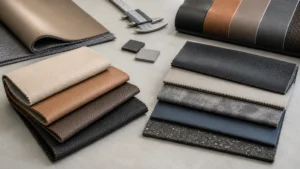
Taite can review sports material requirements across multiple customization dimensions. Customers may specify PU leather, microfiber leather, water-based PU, or solvent-free PU; custom width and thickness; litchi, pebble, Nappa, carbon-fiber, woven, or custom embossing; Pantone or physical-sample color matching; matte, semi-matte, gloss, soft-touch, or high-grip finishes; microfiber, woven, non-woven, stretch, or reinforced backing; and branding options such as debossing, heat stamping, laser engraving, printing, or custom graphics.
Visit our custom synthetic leather solutions and sports leather applications pages for a starting point. The final material still requires sample evaluation and confirmation of the customer’s processing method.
Sourcing Checklist: What to Ask a Sports Synthetic Leather Supplier
Before selecting a sports synthetic leather supplier, ask the following questions:
- What material structure is recommended for the application?
- What thickness and width options are available?
- What abrasion and flexing tests have been completed?
- Can the supplier provide a technical data sheet and test report?
- Can the material be matched to a Pantone code or physical sample?
- Is the surface suitable for printing, embossing, stitching, or bonding?
- What is the MOQ for stock color and custom color?
- What is the sample lead time?
- What is the bulk production lead time?
- Can the supplier support OEM color, grain, backing, and logo development?
- What quality inspection process is used before shipment?
- Can the supplier support ongoing batch consistency?
MOQ, Sample, and Custom Development Process
Step 1: Share the application and target performance
Provide the product type, use environment, expected contact, abrasion level, sweat or cleaning exposure, flexibility, and appearance requirements.
Step 2: Review the material structure
The supplier can compare PU, microfiber, backing, thickness, grain, and coating directions against the intended application.
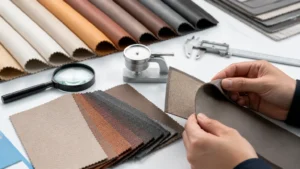
Step 3: Confirm color, grain, finish, and sample requirements
Share a Pantone code, physical sample, reference image, logo file, target thickness, and required surface hand feel.
Step 4: Test and approve the sample
Review appearance, handling, processing compatibility, and application-specific performance before bulk production.
Step 5: Confirm MOQ, lead time, and bulk production
Confirm stock or custom color, MOQ, sample lead time, bulk lead time, inspection documents, packaging, and shipping requirements.
Why Work with Taite Leather for Sports Materials?
Taite Leather Group provides PU, microfiber, and other synthetic leather directions for sports, fashion, furniture, automotive, and specialty applications. Our material review process can consider color, grain, thickness, backing, hand feel, abrasion, flexibility, and processing requirements together. This helps buyers move from an application brief to a suitable sample and a clearer quotation request.
Frequently Asked Questions
What is the best synthetic leather for sports equipment?
There is no single best grade for every sports product. The right choice depends on abrasion, flexibility, moisture, grip, thickness, backing, surface finish, and the manufacturing process.
Is PU leather suitable for sports gloves?
PU leather can be suitable when its flexibility, grip, sweat resistance, thickness, and sewing performance match the glove design. Always approve a physical sample before bulk production.
Can sports synthetic leather be customized by color?
Yes. Color can be developed from a Pantone reference or physical material sample. Final approval should account for substrate, finish, lighting, and batch tolerance.
What tests should sports leather pass?
Depending on the product, buyers may need abrasion, flexing, tear, wet rubbing, sweat, UV, anti-yellowing, cleaning-agent, and adhesion tests. The exact test method and pass criteria should be agreed before sampling.
What is the MOQ for sports synthetic leather?
MOQ depends on stock or custom color, texture, thickness, backing, production schedule, and whether new development is required. Submit the complete specification for an accurate quotation.
Can I request a sample before placing a bulk order?
Yes. Share the application, color, texture, thickness, target performance, and estimated quantity so the supplier can recommend a suitable sample.
Need a sports synthetic leather sample or quotation? Share your application, color, texture, thickness, performance requirements, and estimated quantity through our Request a sample and quotation page.