

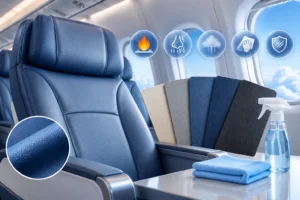
Aviation synthetic leather can be suitable for aircraft seats, cabin panels, armrests, headrests, VIP aircraft interiors, and related cabin upholstery when the material is specified for aircraft interior use and verified against the project’s flame resistance, fogging, odor, cleaning, abrasion, scratch, weight, and durability requirements. Buyers should not choose aircraft upholstery only by leather-like appearance. They need to confirm coating type, backing, surface finish, cleaning compatibility, low-odor behavior, weight, color consistency, and the required flammability documentation for the target aircraft or refurbishment project.
Aircraft interiors place different demands on upholstery compared with standard furniture, hospitality seating, or automotive trim. A cabin is an enclosed environment where passenger comfort, cleanability, material odor, flame behavior, visible wear, and maintenance routines matter together. A surface that looks premium in a showroom may still be unsuitable if it cannot match the documentation, cleaning, backing, or durability needs of the project.
This guide explains how buyers can evaluate synthetic leather for aircraft seats and cabin interiors without relying on appearance alone. It focuses on practical selection factors: flame-related documentation, fogging risk, low odor, abrasion, scratch resistance, cleaning compatibility, weight, backing stability, surface finish, color consistency, and sample validation.
What Is Aviation Synthetic Leather?
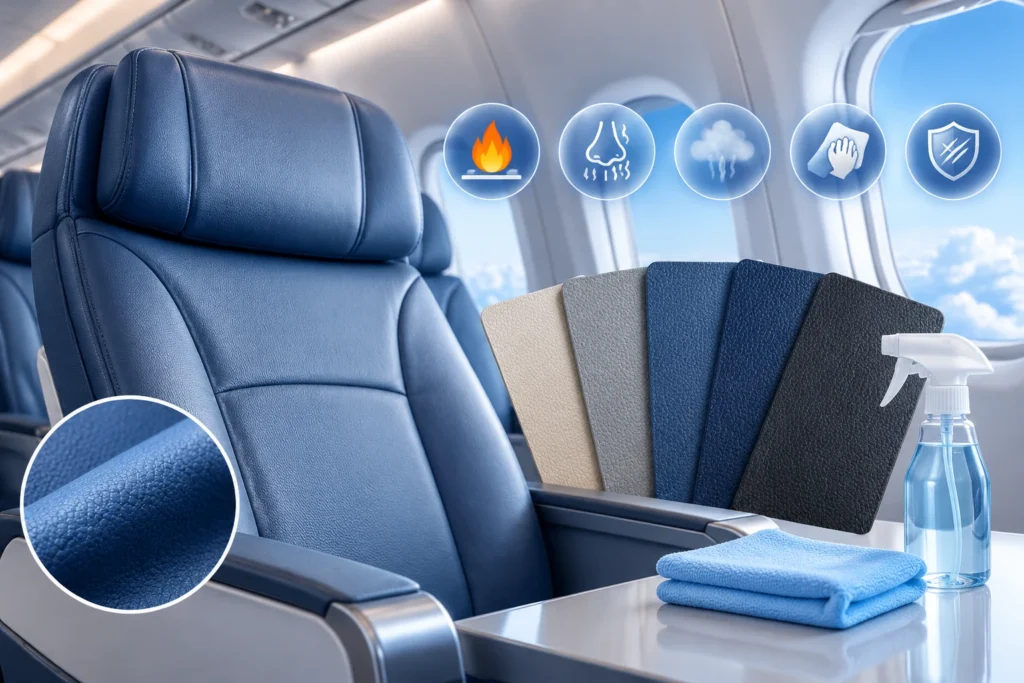
Aviation synthetic leather is a leather-like engineered material selected for aircraft seating, cabin panels, armrests, headrests, tray areas, VIP aircraft interiors, and other interior upholstery parts. It may be based on PU, microfiber, silicone, specialty coatings, or other synthetic structures depending on the project requirement. The material should be evaluated as part of an aircraft interior system, not as a generic furniture fabric.
The key difference is the use environment. Aircraft seats and cabin surfaces may face repeated passenger contact, cleaning cycles, luggage friction, sunlight through windows, enclosed-cabin odor sensitivity, and project-specific flame documentation requirements. Therefore, buyers should compare the material structure, test expectations, and refurbishment requirements before approving a sample.
Why Aircraft Interiors Need Different Upholstery Materials
Cabin safety and flame behavior
Aircraft interior projects commonly require appropriate flammability information, supplier documentation, or project-specific material confirmation. This does not mean every synthetic leather automatically fits every aircraft project. Buyers should ask what information is available for the exact material, backing, finish, and thickness being considered. A synthetic leather flame retardant test can help explain what buyers usually look for, but the applicable requirement should always be confirmed for the target aircraft or refurbishment program.
Low odor and low fogging expectations
Cabin materials are used in enclosed spaces, so odor and volatile residue concerns can be more sensitive than in ordinary furniture. A material that smells acceptable in an open factory area may behave differently after packaging, storage, heat exposure, or installation. Buyers should also consider whether fogging has been evaluated, especially for parts used near windows, panels, or visible interior surfaces. The article on synthetic leather fogging test provides context for why this issue matters in interior applications.
Frequent cleaning and passenger turnover
Aircraft upholstery may be cleaned more frequently than residential furniture. The surface should be checked against the expected cleaning routine, not only against water. Some cleaners may affect gloss, color, softness, or coating stability if the material is not compatible. Buyers should ask which cleaning methods are recommended, which chemicals should be avoided, and whether repeated wiping changes the surface feel.
Weight and installation efficiency
Weight matters in aircraft interiors, but buyers should avoid unsupported claims about how much weight a material saves. Instead, compare material weight, backing structure, thickness, and installation method for the actual cabin part. A lighter material may not be better if it lacks the necessary structure, sewing behavior, or durability for the seat or panel design.
Key Performance Requirements for Aviation Synthetic Leather
The following checklist helps buyers discuss project requirements with suppliers. It does not replace project-specific certification review, but it prevents the common mistake of choosing a cabin material only by grain, softness, or color.
Sample review should also consider the final upholstery process. A flat swatch can look acceptable, but the installed part may include curves, seams, foam, adhesive, piping, and repeated passenger contact. Buyers should test the same construction that will be used in production whenever possible. If the cabin project includes light colors, decorative stitching, perforation, or a soft-touch finish, those details should be included in the sample check rather than added after material approval.
| Requirement | Why it matters in aircraft interiors | What buyers should ask |
|---|---|---|
| Flame resistance | Cabin material safety expectations | What flammability documentation is available for this project? |
| Fogging | Interior visibility and surface cleanliness | Has the material been checked for fogging risk? |
| Odor | Passenger comfort in enclosed cabins | What happens after packaging and heat exposure? |
| Abrasion | Passenger movement and cleaning friction | How does the surface handle repeated rubbing? |
| Scratch resistance | Bags, belts, shoes, and service carts | Is the finish suitable for visible cabin surfaces? |
| Cleaning compatibility | Turnaround cleaning and hygiene | Which cleaners are safe for the surface? |
| Weight | Aircraft interior efficiency | What is the material weight and backing structure? |
| Color consistency | Cabin design and refurbishment matching | Can color and texture be controlled batch to batch? |
PU, Microfiber, Silicone, and Other Options for Aircraft Interiors
PU leather for flexible cabin upholstery
Cuero PU can be considered when a project needs flexible upholstery, controlled grain, color options, and a leather-like hand feel. For cabin use, the key is not just softness. Buyers should confirm coating stability, cleaning response, low-odor behavior, backing compatibility, and the documentation required for the project.
Microfiber leather for higher structural strength
Piel de microfibra may be considered when the buyer wants a stronger structure, tighter backing, premium touch, and better resistance to repeated use. It can be relevant for high-contact seats, armrests, headrests, and premium cabin surfaces. The final choice still depends on the project’s cleaning, weight, flame documentation, fogging, and installation needs.
Silicone or specialty coatings for demanding surfaces
Silicone or specialty coated synthetic leather may be considered when stain resistance, surface cleanliness, soft touch, and chemical resistance are priorities. However, no coating should be selected by category name alone. Buyers should compare actual sample behavior, surface feel, cleaning compatibility, backing, and project documentation before making a decision.
Why ordinary furniture leather may not be enough
Ordinary furniture upholstery may look similar to aircraft cabin upholstery, but the use environment is different. Aircraft projects may place more emphasis on documentation, odor, fogging, cleaning frequency, weight, edge performance, and visible wear. A furniture material should not be assumed suitable for aviation interiors without additional review.
Cleaning and Maintenance Considerations for Aircraft Upholstery
Daily cleaning compatibility
Aircraft interiors may require regular wiping and fast turnaround cleaning. The material should be checked with the cleaning process expected in the project. Buyers should ask whether mild cleaners, disinfecting routines, or repeated wiping may affect color, gloss, softness, or coating integrity. The answer should be based on the exact material, not only on the material category.
Stain and dye transfer control
Passengers bring clothing, bags, belts, shoes, food, drinks, and personal items into the cabin. These can create staining, dye transfer, scuffing, or surface marks. Light-colored upholstery should be reviewed carefully because dye transfer and visible dirt may appear more clearly than on darker colors.
Scratch and scuff visibility
Cabin upholstery can be scratched by luggage, belt buckles, shoe edges, service carts, or cleaning tools. A surface may still look acceptable after rubbing but show bright scuffs under cabin lighting. The synthetic leather scratch resistance test article explains why visible surface damage should be checked before approving high-contact upholstery.
How to Select Synthetic Leather for Aircraft Seats and Cabin Interiors
Buyers should begin with the aircraft interior part and its operating conditions. Seat covers, headrests, armrests, side panels, VIP cabin trim, tray areas, and decorative inserts may not need the same material. A structured selection process helps avoid choosing a material that looks right but fails during documentation review, cleaning, or installation.
The handoff between design, engineering, purchasing, and installation teams should be clear. Each team should know whether the sample is being judged for appearance, sewing, cleaning, documentation, odor, weight, or long-term wear. Without this alignment, a material may pass visual approval but fail later in project review.
- Define the aircraft interior part: seat, headrest, armrest, side panel, VIP cabin, tray area, or decorative trim.
- Confirm the required flammability documentation for the project.
- Check fogging and odor expectations.
- Select coating type: PU, microfiber, silicone, or specialty synthetic leather.
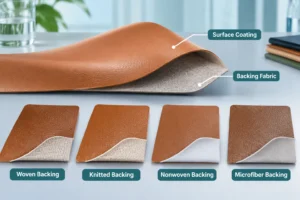
- Check backing stability, weight, and sewing behavior.
- Confirm cleaning chemicals and cleaning frequency.
- Test abrasion, scratch, and scuff visibility.
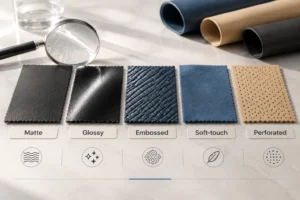
- Review surface finish: matte, embossed, soft-touch, grain depth, gloss.
- Confirm color and batch consistency.
- Test real samples before final approval.
Common Mistakes Buyers Should Avoid
Choosing by appearance only
Leather-like grain, color, and softness are important, but they do not prove flame behavior, fogging, cleaning resistance, abrasion, scratch visibility, or low odor. Buyers should request sample data and project-specific documentation rather than approving only by photos.
Assuming one test result covers every project
Different aircraft types, refurbishment programs, cabin parts, buyer specifications, and regions may have different material expectations. A test result from one construction, color, thickness, or backing should not be assumed to cover every variation. Buyers should confirm what the documentation actually applies to.
Ignoring cleaning and maintenance routines
Cleaning can be a major source of material problems. If the selected surface is not compatible with the cleaner, the result may be gloss change, discoloration, tackiness, stiffness, or coating wear. Cleaning requirements should be discussed before sample approval, especially for high-turnover cabin interiors.
Using ordinary furniture upholstery for aviation interiors
A furniture-grade material may look and feel good, but aircraft interiors require a different review process. Buyers should re-check documentation, fogging, odor, cleaning, weight, backing, and wear behavior instead of assuming a furniture material will work in an aircraft cabin.
FAQ
What is aviation synthetic leather?
It is synthetic leather specified for aircraft seats, cabin panels, armrests, headrests, VIP aircraft interiors, or related aviation interior parts.
Is synthetic leather suitable for aircraft seats?
It can be suitable when the material is selected for the aircraft interior project and verified for flame, fogging, odor, cleaning, abrasion, scratch, weight, and durability requirements.
Does aviation synthetic leather need flame resistance?
Aircraft interior projects usually require appropriate flammability information or documentation. Buyers should confirm the exact requirement for their aircraft or refurbishment project.
Why is fogging important for aircraft interior materials?
Fogging matters because volatile substances can deposit on interior surfaces in enclosed environments. Buyers should check fogging expectations when selecting cabin materials.
Can ordinary furniture synthetic leather be used in aircraft interiors?
Not automatically. Ordinary furniture material may not meet the flame, fogging, odor, cleaning, weight, or documentation requirements of an aircraft interior project.
What should buyers check before ordering aircraft upholstery material?
Buyers should check coating type, backing, weight, flammability documentation, fogging, odor, cleaning compatibility, abrasion, scratch resistance, surface finish, color consistency, and sample performance.
Final Buyer Takeaway
Aviation synthetic leather should be selected through application requirements, not appearance alone. Buyers need to consider the cabin part, flammability documentation, fogging, odor, cleaning method, abrasion, scratch visibility, weight, backing, surface finish, and color consistency before approving materials for aircraft seats or cabin interiors.
If you are developing aircraft seating, cabin panels, headrests, armrests, VIP cabin trim, or related high-requirement interior upholstery, Taite can help compare PU, microfiber, silicone, and specialty synthetic leather options based on your documentation, cleaning, surface finish, color, backing, weight, and sample testing needs.