

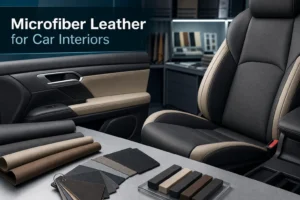
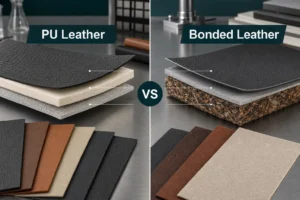
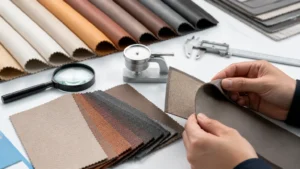
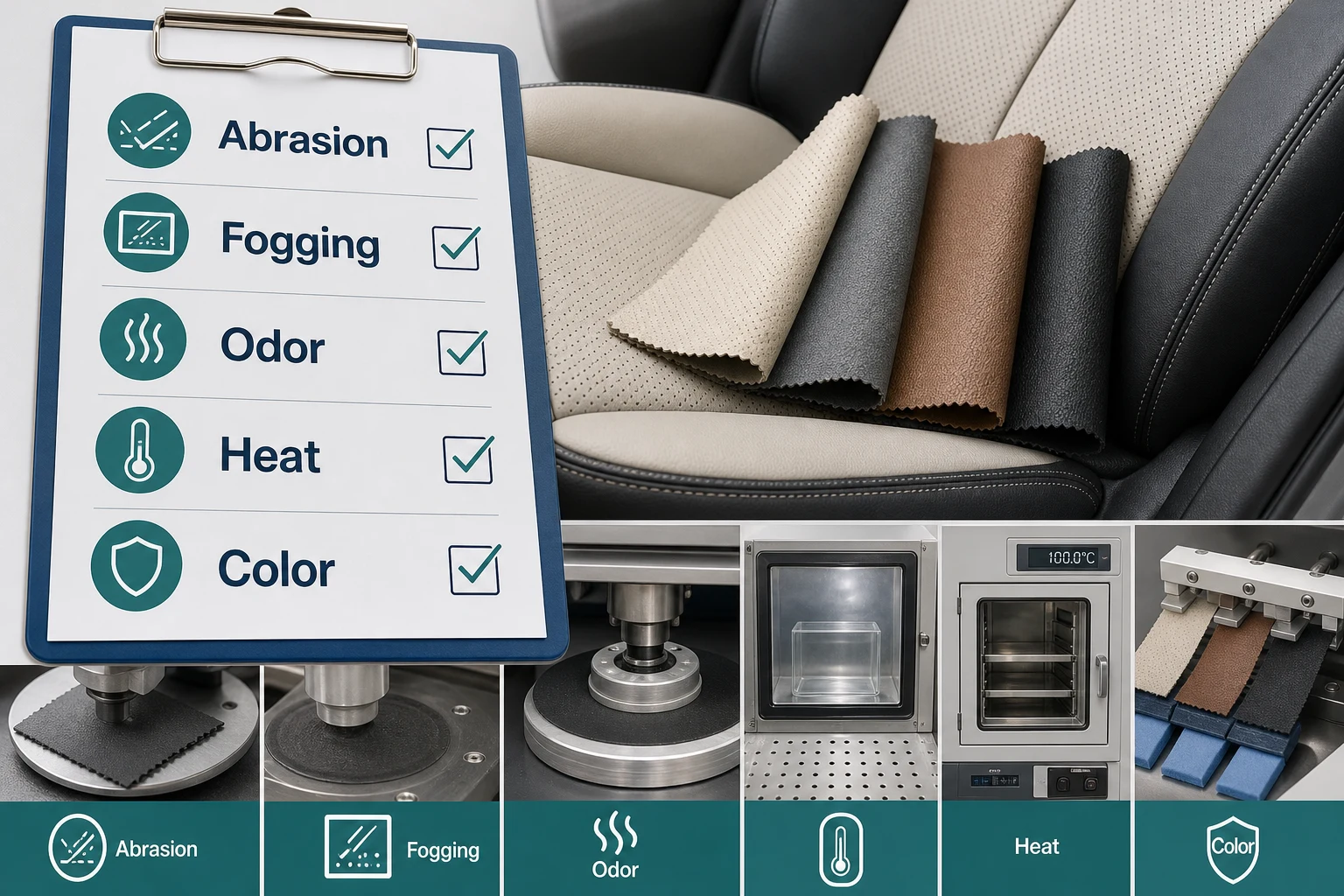
Microfiber leather for car interiors is a high-performance synthetic leather option used for seats, door panels, armrests, steering wheel covers, headrests, and other automotive surfaces. It usually combines a dense microfiber base with a surface coating, giving it a leather-like appearance, good durability, easier cleaning, and more consistent quality than natural leather. For automotive use, buyers should not judge microfiber leather by touch alone. They should check abrasion resistance, heat aging, fogging, odor, color fastness, cold crack resistance, flame retardancy, and cleaning performance before choosing it for car seats or interior trim.
Automotive interiors are more demanding than many furniture, footwear, or bag applications. A car seat may face summer heat, body pressure, sweat, repeated rubbing, sunlight, cleaning chemicals, and long-term use in a closed cabin. Door panels and armrests also need stable appearance after constant hand contact. This is why the best material choice depends on application position, construction, coating, backing, thickness, texture, and test data.
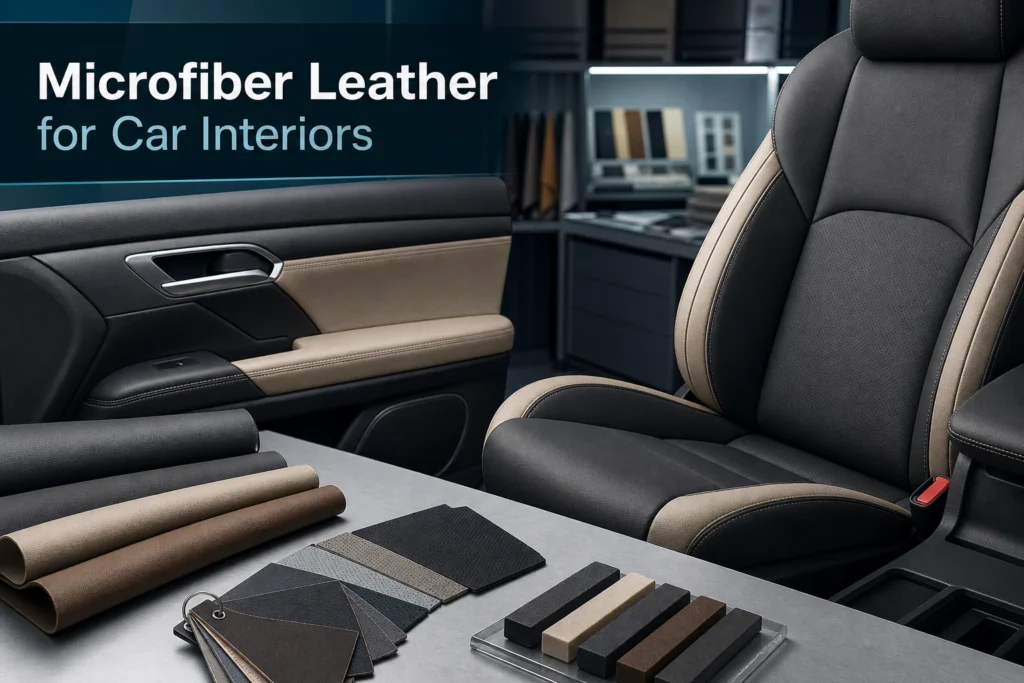
What Is Microfiber Leather for Car Interiors?
Microfiber leather is a synthetic leather built with a microfiber base and a coated surface. The base gives the material structure and strength, while the surface coating creates the grain, color, touch, and cleanability. In automotive interiors, it may be used for seat covers, door panel inserts, armrests, headrests, steering wheel covers, center console trim, and EV interior decorative surfaces.
The term should not be confused with microfiber cleaning cloth or ordinary low-grade faux leather. Automotive microfiber leather normally needs stronger physical performance and more stable surface behavior than casual fashion or decorative materials. Buyers should confirm whether the material is designed for car interior use rather than assuming that any microfiber leather will work.
Why Microfiber Leather Is Used in Automotive Interiors
Consistent quality for mass production
Automotive projects often require stable color, grain, thickness, hand feel, and surface finish across repeated batches. Natural leather can have variation in grain, scars, hide size, and cutting yield. Microfiber leather is easier to control in bulk production, which helps buyers maintain a consistent interior style across seat covers, panels, and trim parts.
Good balance of durability and comfort
Microfiber leather can offer a balanced combination of softness, surface strength, and leather-like appearance. A good automotive material should feel comfortable while still resisting abrasion, cracking, and surface dullness. However, durability is not guaranteed by the material name alone. It depends on the microfiber base, coating formula, backing, thickness, and the test requirements agreed before production.
Easier cleaning and maintenance
Car interiors are exposed to dust, drinks, sweat, body oil, sunscreen, food, and cleaning products. A suitable surface coating can make microfiber leather easier to wipe than many natural materials. Still, cleaning performance should be tested with realistic cleaners and stains, because an overly delicate surface may lose gloss, color, or hand feel after repeated wiping.
Microfiber Leather vs Genuine Leather for Car Seats
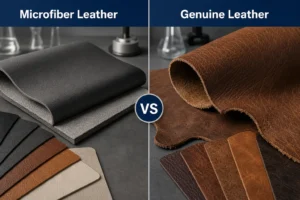
When buyers compare microfiber leather vs genuine leather for automotive interiors, the better choice depends on the project target. Genuine leather is valued for natural grain, traditional premium appeal, and aging character. Microfiber leather is valued for consistency, easier customization, predictable color, and engineered surface performance.
For mass-produced car seat covers, aftermarket upholstery, and EV interiors, consistency is often a major advantage. Microfiber leather can be made in controlled colors, textures, thicknesses, and finishes. For luxury projects that require natural grain and patina, genuine leather may still be preferred. The key is to compare performance, appearance, cost control, and maintenance needs together.
| Factor | Mikrofaser-Leder | Genuine leather |
|---|---|---|
| Consistency | Easier to control in bulk | Natural variation |
| Reinigung | Usually easier to wipe | Needs more careful care |
| Heat and aging | Depends on coating and tests | Depends on hide and finish |
| Cost control | More predictable | Often higher and variable |
| Appearance | Customizable grain and color | Natural grain and patina |
Microfiber Leather vs PU Leather and PVC Leather in Cars
Buyers also compare microfiber leather with PU leather and PVC leather. PU leather can be soft, flexible, and widely used in many interior products. PVC leather may offer cost, waterproofing, or rigidity advantages in some applications. Microfiber leather usually has a stronger base structure and is often chosen when buyers want a more stable, higher-performance synthetic option for seats and interior trim.
The comparison is not about declaring one material universally better. A basic microfiber leather may perform worse than a well-engineered PU leather, while a high-grade microfiber specification may outperform many ordinary alternatives. The article on microfiber leather vs PU leather is useful for understanding the broader structural differences before selecting automotive grades.
Key Performance Tests Buyers Should Check
Abrasion and scratch resistance
Seats, bolsters, armrests, and door panels face repeated rubbing. A material may look attractive on a flat sample but fail earlier on a high-contact zone. Buyers should check abrasion resistance, scratch resistance, and surface wear under conditions close to the final application.
Fogging and low-odor performance
Automotive interiors are closed spaces that can become very hot. Volatile substances from interior materials may contribute to windshield fogging or cabin odor. This makes the synthetic leather fogging test especially relevant when choosing materials for dashboards, panels, seats, and EV interior surfaces.
Color fastness and heat aging
Car interiors are exposed to sunlight, heat, sweat, denim transfer, and repeated cleaning. Buyers should check light fastness, rubbing color fastness, heat aging, yellowing resistance, and cleaning response. Dark colors may show fading or gloss change, while light colors may show stains, yellowing, or dye transfer more clearly.
Cold crack, flame retardancy, and cleaning response
Different markets and vehicle types may require cold crack resistance, flame retardancy, low odor, and chemical cleaning stability. These requirements should be confirmed before sampling. It is safer to define the target performance early than to choose a surface texture first and discover later that the material cannot pass the required tests.
Where Microfiber Leather Works Best in a Car Interior
Seats and seat covers
Seats require comfort, strength, abrasion resistance, cleaning performance, and long-term surface stability. A good material for seat covers should resist pressure marks, repeated sitting, sweat, friction, and routine cleaning. The specification should match whether the product is for OEM interiors, aftermarket seat covers, commercial vehicles, or premium EV designs.
Door panels and armrests
Door panels and armrests experience hand contact, pressure, rubbing, and cleaning. Surface grain should look consistent, but it should also maintain touch and color after repeated use. For these areas, thickness, backing strength, coating flexibility, and surface finish all matter.
Steering wheel covers and trim surfaces
Steering wheel covers and high-touch trim areas need stronger sweat resistance, rubbing resistance, and hand-feel stability. A texture that works on a door insert may not be suitable for a steering wheel cover. Buyers should match the grade to the exact interior position instead of using one material for every part.
For application-specific sourcing, the microfiber leather for car page provides a more direct product path for automotive surfaces and trim materials.
Buyer Checklist: How to Choose Microfiber Leather for Automotive Projects
Before selecting microfiber leather for car interiors, buyers should define the application first: seat surface, side bolster, door panel, armrest, steering wheel cover, headrest, center console, or EV decorative trim. Each position has different friction, heat, sweat, cleaning, and appearance requirements.
For car upholstery leather, buyers should confirm thickness, backing, color, grain, softness, stretch behavior, and sample performance. A beautiful swatch is not enough. The sample should be tested under real light, heat, cleaning, and friction conditions, especially in high-contact zones.
| Buyer check | Why it matters | Typical application |
|---|---|---|
| Thickness and backing | Affects strength, sewing, wrapping, and fit | Seats, panels, armrests |
| Abriebfestigkeit | Controls wear in high-contact zones | Seats, bolsters, door panels |
| Fogging and odor | Important in closed vehicle cabins | Automotive interiors and EVs |
| Color fastness | Reduces fading, rubbing loss, and transfer | Light and dark interior colors |
| Cleaning response | Protects long-term appearance | Shared vehicles, family cars, fleets |
Common Mistakes When Choosing Automotive Microfiber Leather
The first mistake is choosing by softness alone. A soft sample may feel good, but it may not have enough abrasion resistance or coating stability for seats. The second mistake is choosing only by price. A lower-cost material can become expensive if it causes complaints, color change, odor, or early wear.
The third mistake is using one specification for every interior position. Seat bolsters, door panels, armrests, and steering wheel covers face different stress. The fourth mistake is approving a sample under office lighting only. Buyers should compare samples under daylight, heat, bending, rubbing, and cleaning conditions before bulk production.
FAQ
Is microfiber leather good for car seats?
Yes, microfiber leather can be a good option for car seats when it meets the required abrasion, heat aging, cleaning, odor, fogging, and colorfastness requirements.
Is microfiber leather better than genuine leather for car interiors?
It depends on the project. Microfiber leather offers better consistency, easier customization, and often easier maintenance, while genuine leather offers natural grain and traditional premium appeal.
Does microfiber leather get hot in cars?
Like many upholstery materials, it can become warm under direct sunlight. Buyers should check surface finish, color, breathability, and heat aging performance for the target application.
Is microfiber leather easy to clean in automotive use?
It is usually easier to wipe than many natural materials, but cleaning performance depends on the coating, surface finish, and the type of stain or cleaner used.
What tests are important for automotive microfiber leather?
Important tests include abrasion resistance, fogging, odor/VOC behavior, color fastness, heat aging, cold crack resistance, flame retardancy, and cleaning response.
Can microfiber leather be customized for EV interiors?
Yes, it can be customized in texture, color, thickness, backing, softness, and surface finish, but samples should be tested before bulk production.
Conclusion: Choose by Application and Test Data
Microfiber leather for car interiors can be a strong material choice when buyers need consistent appearance, durable surface performance, easier cleaning, and customizable textures or colors. However, the right material should be selected by application position and verified through automotive-related tests such as abrasion, fogging, odor, heat aging, color fastness, cold crack resistance, flame retardancy, and cleaning response. Buyers should test samples before bulk production instead of choosing by touch or surface look alone.
If you are choosing microfiber leather for car seats, door panels, armrests, EV interiors, or aftermarket automotive upholstery, Taite can help compare material structure, coating system, backing, thickness, texture, color, fogging, odor, abrasion, and heat-aging requirements before bulk production. Contact us to request samples or discuss a custom automotive synthetic leather solution for your project.