

In the competitive global fashion and luggage ecosystem, handbag brand owners, OEM/ODM designers, and procurement teams face a continuous material challenge: balancing luxurious, supple hand-feel with long-term structural durability. Modern consumers demand luxury aesthetics—such as butter-soft Nappa grain textures or elegant pebbled finishes—without the functional drawbacks of premature wear, corner abrasion, or surface peeling. Selecting the ideal PU leather for bags requires a precise evaluation of polymer chemistry, backing cloth engineering, and physical performance metrics.
As an enterprise synthetic leather manufacturer operating four specialized production facilities, Taite Leather Group partners with international bag brands to deliver high-performance polyurethane textiles. This technical evaluation explores how advanced polymer chemistry enhances scratch resistance, prevents seam fatigue, and satisfies the rigorous quality standards demanded by global handbag markets.
1. The Mechanical Demands on PU Leather for Bags
Unlike stationary upholstery or casual footwear, handbag materials are subjected to multidirectional mechanical stress, frequent surface friction, and localized impacts. A high-tier PU leather for bags must be engineered to withstand four primary real-world degradation factors:
- Abrasive Friction at Stress Points: The base corners, handles, and strap connection loops of a handbag experience continuous friction against clothing, zippers, and hard surfaces.
- Flex Fatigue and Seam Strength: Daily loading places tensile stress on stitched seams. Inferior synthetic leather exhibits stitch-hole elongation or tear propagation under heavy loads.
- Surface Scratching from Sharp Objects: Keys, metallic buckles, and fingernails frequently contact the bag’s exterior, requiring a highly resilient elastomeric coating that resists micro-scratching.
- Environmental Hydrolysis: Exposure to atmospheric humidity, skin oils, and ambient temperature shifts can degrade low-grade polyurethane, causing eventual surface cracking and peeling.
2. Advanced Chemistry: Achieving Anti-Scratch and Anti-Cracking Performance
To overcome traditional material limitations, advanced polyurethane formulations incorporate specific polymer cross-linking techniques and protective surface topcoats. Understanding these chemical mechanics enables B2B buyers to specify the optimal material grade for their handbag lines.
A. Polycarbonate-Based Polyurethane Resins
Traditional synthetic materials often utilize polyester or polyether polyols. However, premium PU leather for bags utilizes polycarbonate-based resins. Polycarbonate polyurethane chains provide exceptional molecular stability, delivering superior hydrolysis resistance (passing 5 to 10 years in standard Tropical Jungle Testing) and ensuring the surface coating remains intact without cracking over years of active consumer use.
B. High-Density Cross-Linked Topcoats
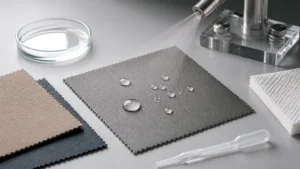
To prevent localized scratching, high-grade bag materials utilize custom polyurethane or silicone-modified topcoats. These clear elastomeric layers possess high rebound resilience. When subjected to surface pressure from fingernails or keys, the polymer matrix flexes and rebounds rather than tearing, maintaining a flawless surface finish on luxury tote bags, backpacks, and luggage pieces.
C. Solvent-Free and Water-Borne Environmental Formulations
International fashion brands increasingly mandate zero-VOC and REACH-compliant materials. Utilizing solvent-free (Zero-DMF) or water-based production lines ensures that the PU leather for bags carries no residual chemical odors, passes strict chemical compliance audits, and maintains an exceptionally soft, natural drape.
3. Substrate Selection: Microfiber vs. Micro-Knitted Backings for Handbags
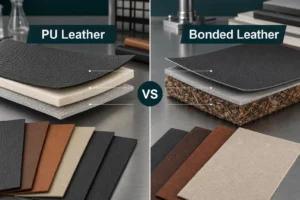
The structural performance of any synthetic leather is heavily dictated by its backing fabric (substrate). When customizing PU leather for bags, manufacturers select specific backing structures depending on the final bag design and firmness requirements:
| Substrate Type | Technical Characteristics | Best Handbag Application |
|---|---|---|
| 3D Microfiber Base | Non-woven 3D structure mimicking natural collagen fibers. Exceptional tear resistance, high density, and authentic edge-cut appearance. | Structure totes, luxury handbags, luggage straps, and unlined minimalist bags. |
| Micro-Knitted Terylene Backing | High-elasticity knitted fabric delivering superior softness, excellent drape, and consistent thickness. | Slouchy hobo bags, soft backpacks, cosmetic pouches, and flexible fashion accessories. |
| Woven/TC Fleece Backing | Cost-effective structural fabric with high tensile stability and minimal diagonal stretch. | Hard-shell luggage exteriors, structured briefcases, and volume commercial bag linings. |
4. Critical Physical Testing Benchmarks for Bag Sourcing
When reviewing technical data sheets (TDS) or auditing factory samples for a prospective handbag production run, B2B sourcing managers should verify the following laboratory metrics:
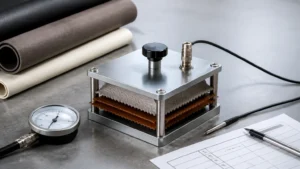
- Martindale & Taber Abrasion Resistance: High-performance bag leather should exceed 30,000 to 50,000 dry cycles on the Martindale Abrasion Test without surface film breakdown or grain loss.
- Stitch Tear Resistance (ISO 4674): To prevent handles and shoulder straps from pulling out under load, stitch tear resistance should meet or exceed 35N to 50N depending on thickness.
- Color Fastness to Rubbing (ISO 105-X12): Ensures zero color transfer onto consumer clothing under both dry and wet rubbing conditions (Grade 4.0 or higher).
- Cold Crack Resistance: Essential for winter conditions or international shipping; high-grade materials resist cracking at temperatures down to -20°C or -30°C.
5. Customization Capabilities for Global Handbag Brands
To differentiate fashion collections in a saturated market, material customization is essential. Modern production lines allow custom engineering of every physical parameter of PU leather for bags:
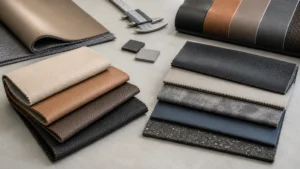
- Custom Surface Grains: From classic Saffiano, Box Calf, and Epsom grains to exotic lizard or bespoke embossed brand logos.
- Bespoke Color Matching: Utilizing digital spectrophotometer color matching to ensure absolute batch-to-batch consistency across high-volume production orders.
- Tactile Engineering: Adjusting surface oil-wax effects, pull-up finishes, metallic sheens, or ultra-soft dry-touch feel to align with seasonal design moodboards.
6. Partner with 泰特皮革集團 for Premium Handbag Manufacturing
Scaling a successful handbag line requires a reliable raw material partner capable of delivering consistent quality, rapid sampling, and verified compliance. Taite Leather Group combines state-of-the-art coating lines across four specialized factories with an extensive library of high-performance PU leather for bags.
Whether you require ultra-durable anti-scratch microfiber leather for luxury totes or REACH/GRS-compliant sustainable materials for contemporary fashion lines, our engineering team provides comprehensive technical support. Contact our sales department today to request custom swatch books, laboratory test reports, or development samples for your upcoming handbag collection.