

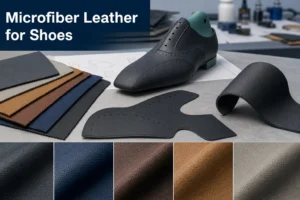
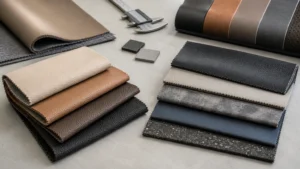
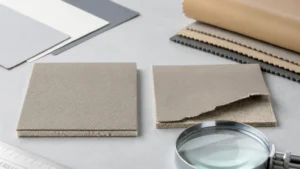
Microfiber leather for shoes is a high-performance synthetic leather used for shoe uppers, linings, trims, tongues, sports panels, and casual footwear materials. It is popular because it can offer good abrasion resistance, flex resistance, consistent grain, easy cleaning, color stability, and lower material variation than genuine leather. For buyers, the key is not only whether microfiber leather looks good, but whether its thickness, backing, softness, breathability, coating adhesion, and test performance match the shoe type and production process.
Shoe materials face tougher use conditions than many decorative materials. A shoe upper must bend, rub, stretch, recover, hold color, accept stitching, and stay comfortable against movement. This is why shoe brands and material buyers often compare microfiber leather with standard PU leather, genuine leather, mesh, fabric, and other synthetic leather options before choosing a material for bulk production.
What Is Microfiber Leather for Shoes?
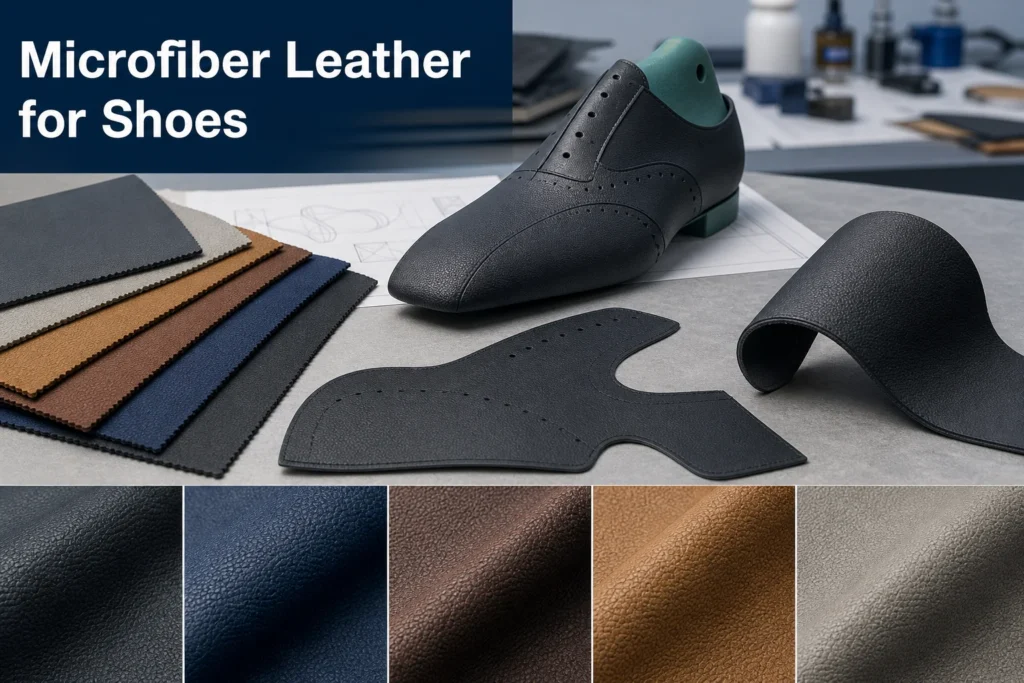
Microfiber leather is a synthetic leather built with a microfiber base and a finished surface layer. In footwear, it can be used for uppers, panels, collars, trims, lining parts, tongues, and decorative sections. The microfiber base gives the material a more structured foundation than many ordinary PU materials, while the finish can provide grain, color, gloss, matte texture, embossing, or special hand feel.
For buyers who want to understand what microfiber leather is, the most important point is that it is not only a surface coating. The base structure, coating system, backing, thickness, and finishing all influence how the material behaves in shoe production and daily wear.
In shoes, the material must do more than look attractive on a swatch. It must survive cutting, stitching, lasting, folding, edge processing, adhesive bonding, storage, shipping, and repeated use. A material that looks good in a flat sample may still fail if it does not match the shoe design or factory process.
Why Is Microfiber Leather Used in Shoes?
Durability for repeated wear
Footwear materials face repeated flexing and surface friction. A shoe upper bends at the vamp, rubs during walking, and often meets dust, sweat, rain, and cleaning. Microfiber leather is used in shoes because it can be engineered for abrasion resistance, flex resistance, tear strength, and stable surface appearance. These properties are useful for casual shoes, school shoes, sneakers, work shoes, and many sports-inspired designs.
Consistent grain and color
Genuine leather has natural character, but it also has natural variation. For mass-production footwear, variation can create sorting, color matching, and cutting issues. Microfiber leather can offer more consistent grain, color, thickness, and surface finish across batches. This helps shoe brands maintain a stable look across sizes, production runs, and product lines.
Flexible design options
Different shoe categories need different material effects. A fashion shoe may need a fine grain and soft touch. A school shoe may need easy cleaning and stable color. A sports shoe may need flexibility and abrasion resistance. A safety shoe may need stronger thickness and tear behavior. Microfiber leather can be customized in grain, gloss, softness, thickness, backing, color, and finish, making it suitable for many footwear designs.
Is Microfiber Leather Durable Enough for Shoe Uppers?
The durability of a shoe upper depends on more than the surface. Buyers should check flex resistance, abrasion resistance, tear strength, backing stability, coating adhesion, colorfastness, hydrolysis resistance, and edge behavior. The material should be tested after bending, rubbing, and processing, not only when it is new and flat.
A good shoe material should resist cracking at flex zones, peeling at folded edges, coating separation after repeated movement, and surface scuffing in normal use. For a deeper material-level view, buyers can review whether microfiber leather is durable before deciding how much performance is needed for a target shoe line.
| Durability factor | Why it matters for shoes | Buyer check |
|---|---|---|
| Resistencia a la abrasión | Controls surface wear during use | Rub sample surface after finishing |
| Flex resistance | Prevents cracking at bending zones | Bend the sample repeatedly |
| Resistencia al desgarro | Supports stitching and lasting | Check edges and punched areas |
| Coating adhesion | Reduces peeling and delamination | Inspect folded and cut edges |
| Colorfastness | Keeps appearance stable | Check rubbing and cleaning response |
Breathability and Comfort: What Buyers Should Know
Comfort is one of the most important questions for microfiber leather for shoes. Microfiber leather is not the same as mesh, and buyers should not assume that every synthetic leather has the same breathability. Breathability depends on the material structure, thickness, surface finish, perforation, lining, foam layers, shoe construction, and final design.
A thicker material may improve structure but feel less flexible. A tighter surface may clean more easily but reduce air movement. Perforation can help comfort, but it must be designed without weakening important stress zones. Lining choice also matters because the user touches the full shoe structure, not only the outer material.
For B2B buyers, the right question is not simply whether the material is breathable. The better question is whether comfort, structure, flex, cleaning, and cost match the target shoe category.
| Factor | Why it matters for shoes | Buyer check |
|---|---|---|
| Espesor | Affects softness and flex | Match shoe type |
| Backing | Affects strength and comfort | Check base stability |
| Surface finish | Affects cleaning and appearance | Test rub and scuff |
| Perforation | Helps breathability | Check design compatibility |
| Flex resistance | Prevents cracking | Bend sample repeatedly |
Microfiber Leather vs PU Leather for Shoes
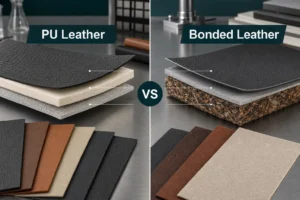
Standard PU leather is often used in footwear because it is flexible, economical, and easy to make in many colors and finishes. However, microfiber leather is usually considered a higher-performance synthetic leather option when the buyer needs stronger structure, better durability, improved backing stability, or a more premium feel. The right choice depends on the shoe category, price point, expected lifetime, and factory processing.
For low-cost fashion shoes or short-life products, standard PU may be enough. For school shoes, casual shoes, sports-inspired shoes, or products that need better flex and abrasion performance, microfiber leather may be a stronger option. Buyers comparing the two can use the existing microfiber leather vs PU leather comparison as a material-level reference.
Microfiber Leather vs Genuine Leather for Shoes
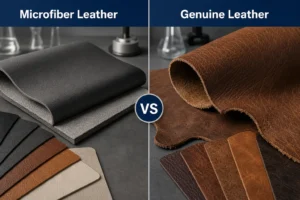
Genuine leather still has natural grain, premium positioning, and traditional value in many shoe categories. It can be an excellent choice for high-end footwear when natural appearance is part of the product story. However, genuine leather also has variation in surface, size, thickness, scars, and cutting yield. These natural differences can affect mass production.
Microfiber leather offers another path. It can provide more consistent color, controlled grain, predictable thickness, animal-free positioning, and stable supply. For commercial footwear brands, this can reduce sorting issues and make color matching easier. However, microfiber leather should still be selected by real performance, not only by appearance. The best material depends on the shoe type, target consumer, cost, and processing method.
How to Choose Microfiber Leather for Different Shoe Types
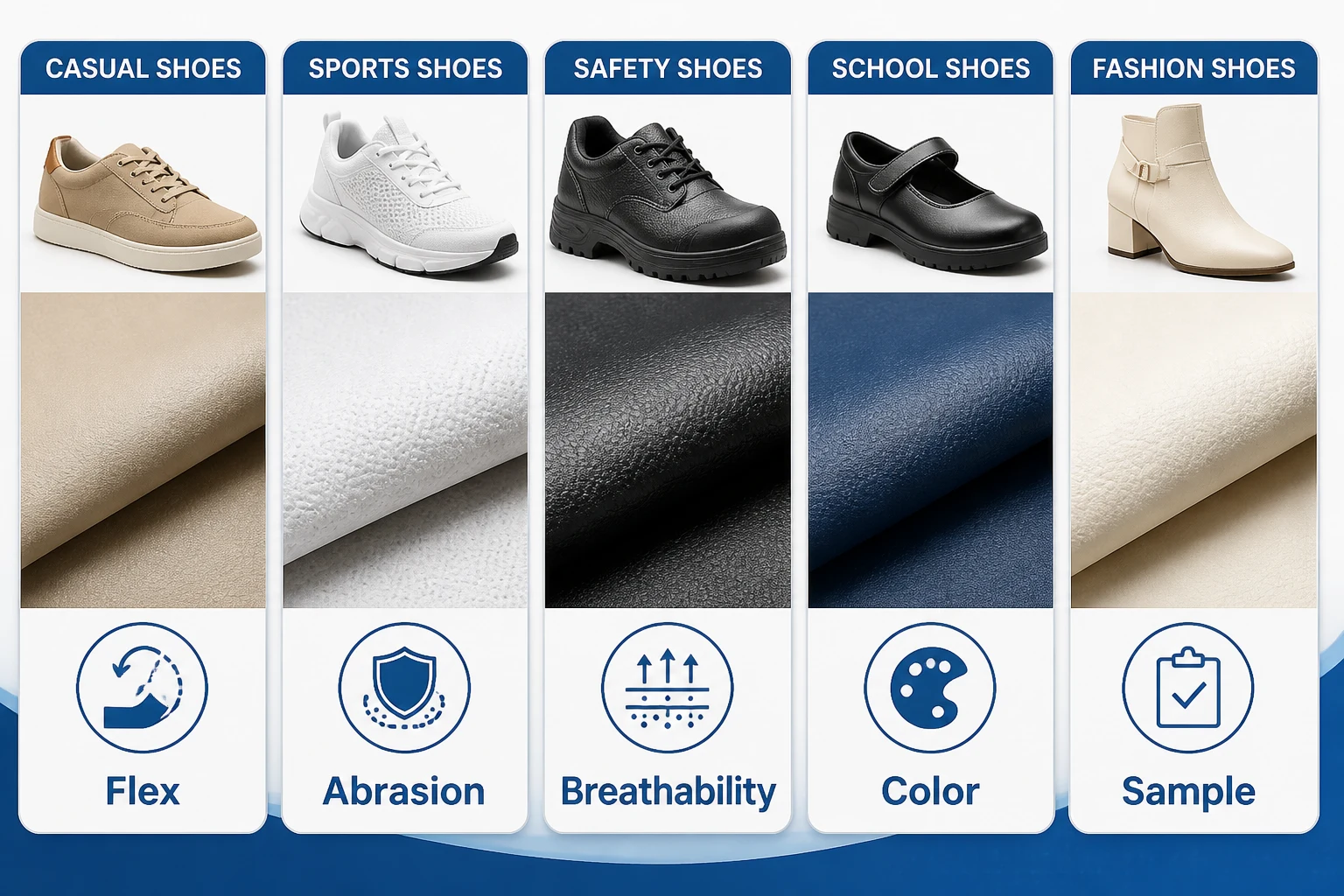
Different shoes need different material priorities. There is no single best specification for all footwear. A casual shoe may need softness and appearance. A sports shoe may need flex and abrasion resistance. A safety shoe may need tear strength and structure. A school shoe may need easy cleaning and stable cost.
Buyers selecting microfibra de cuero para zapatos should start with the final shoe category, not with a generic material swatch. The same material may perform well in one shoe and poorly in another if thickness, softness, backing, or processing compatibility is wrong.
| Shoe type | Material priority | Notes |
|---|---|---|
| Casual shoes | Softness, appearance, easy cleaning | Balance comfort and style |
| Sports shoes | Flex, abrasion, breathability | Check bending and lining design |
| Safety shoes | Tear strength, thickness, durability | Match work conditions |
| School shoes | Cost, durability, easy cleaning | Stable color and surface |
| Fashion shoes | Grain, finish, color, hand feel | Need consistent appearance |
Buyer Checklist Before Ordering Shoe Upper Materials
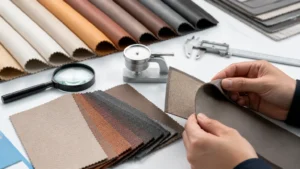
Before ordering shoe upper materials, buyers should request samples and test them against real production requirements. A swatch should not be approved only because it looks good. It should be checked for physical performance, processing compatibility, and finished shoe appearance.
Buyers should also test the material after normal footwear processing steps. Cutting can expose weak backing. Stitching can show whether the edge tears easily. Lasting can reveal whether the surface wrinkles, stretches, or loses shape. Bonding can show whether the back side works well with the selected adhesive. Embossing or heat processing can change surface gloss, grain, or hand feel. These details are easy to miss when judging a flat sample, but they often decide whether a material works in real production.
Another useful step is comparing the same material in several thicknesses or backing options. A softer sample may feel more comfortable, but it may not provide enough structure for certain shoe designs. A thicker sample may look stronger, but it may reduce flex comfort or make stitching more difficult. A balanced choice should match the shoe type, factory process, target price, and expected wearing environment.
For sport-related products, material selection should also consider grip, flex, sweat, abrasion, contact surfaces, and cleaning. Broader sports synthetic leather applications can help buyers think beyond shoe uppers and consider the full material environment.
Check physical performance
- Resistencia a la abrasión
- Flex resistance
- Resistencia al desgarro
- Coating adhesion
- Colorfastness
- Resistencia a la hidrólisis
Check processing compatibility
- Cutting
- Stitching
- Embossing
- Laminating
- Edge finishing
- Bonding
Check appearance and comfort
- Grain
- Gloss
- Softness
- Espesor
- Backing
- Lining compatibility
FAQ
Is microfiber leather good for shoes?
Yes, microfiber leather can be a good shoe upper material because it offers durability, consistent appearance, easy cleaning, and flexible customization.
Is microfiber leather breathable enough for shoes?
It depends on the material structure, thickness, surface finish, perforation, lining, and shoe construction. Buyers should test comfort based on the target shoe type.
Does microfiber leather peel on shoes?
Good microfiber leather should resist peeling under normal use, but poor coating adhesion, repeated flexing, moisture, or unsuitable material selection can increase peeling risk.
Is microfiber leather better than PU leather for shoes?
Microfiber leather is often stronger and more durable than standard PU leather, but the best choice depends on shoe type, target cost, performance requirements, and design.
Can microfiber leather be used for sports shoes?
Yes, it can be used for sports shoes if the material meets flex, abrasion, breathability, softness, and processing requirements.
What should buyers check before ordering microfiber leather for shoes?
Buyers should check thickness, backing, surface finish, flex resistance, abrasion resistance, tear strength, colorfastness, coating adhesion, and sample performance.
Conclusion: Choose Shoe Upper Materials by Real Production Needs
Microfiber leather for shoes can be a strong material choice when buyers need consistent appearance, abrasion resistance, flex performance, easy cleaning, and customizable color or grain. However, the best shoe upper material depends on the shoe type, comfort target, breathability requirement, processing method, and test results. Buyers should request samples and evaluate real shoe production conditions before bulk ordering.
If you are choosing microfiber leather for shoes, sports footwear, casual shoes, safety shoes, or custom shoe upper materials, Taite can help you compare thickness, backing, softness, grain, flex resistance, abrasion performance, color, and sample behavior before bulk production. Contact us to request samples or discuss a custom synthetic leather solution for your footwear application.