

Introducción
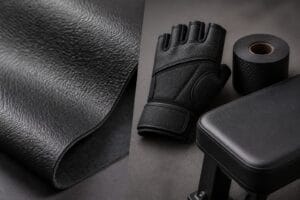
When sourcing PU leather for automotive interiors, furniture upholstery, sports equipment, or footwear, one of the most important durability indicators is hydrolysis resistance PU leather performance.
Hydrolysis is a gradual chemical degradation process that occurs when polyurethane is exposed to heat and moisture over an extended period. Materials with poor hydrolysis resistance may crack, become sticky, lose flexibility, or delaminate long before the end of their expected service life.
For engineers, product developers, and sourcing professionals, laboratory testing provides the most reliable way to evaluate long-term performance before materials enter production.
In this guide, you’ll learn what hydrolysis resistance means, which international standards are commonly used, how accelerated aging tests are performed, and how to interpret the results when selecting high-quality PU leather.
What Is Hydrolysis Resistance PU Leather?
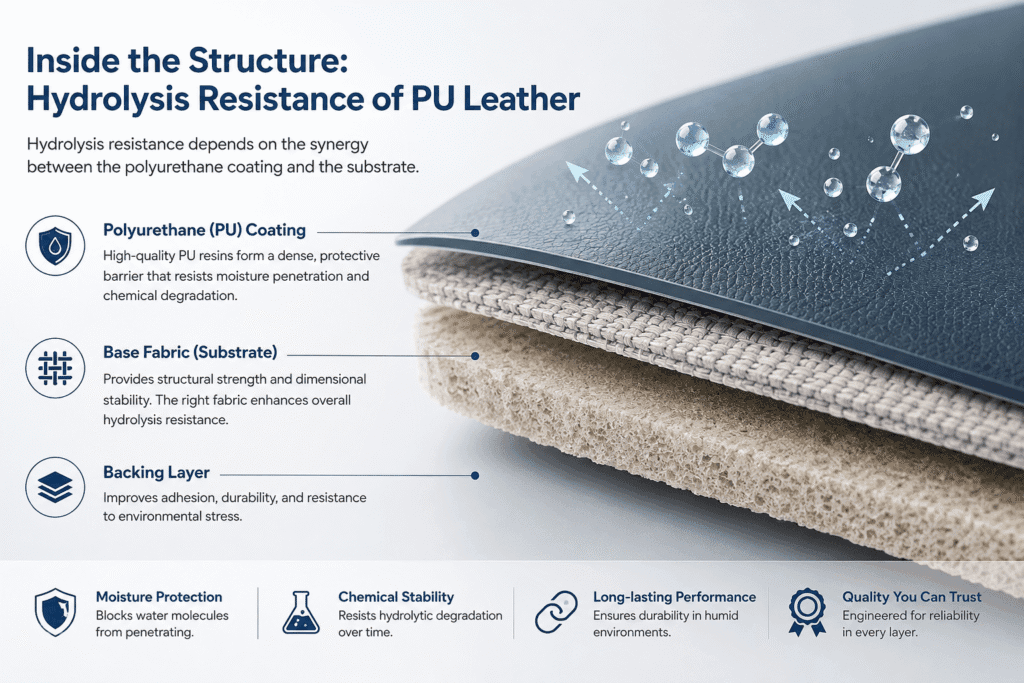
Hydrolysis resistance refers to the ability of polyurethane leather to resist chemical degradation caused by prolonged exposure to moisture and elevated temperatures.
Unlike surface wear or abrasion, hydrolysis occurs within the polymer structure itself. Water molecules gradually break the chemical bonds inside polyurethane, reducing its mechanical strength and changing its physical appearance.
Typical signs of hydrolysis include:
- Agrietamiento superficial
- Sticky or tacky surface
- Delamination
- Loss of elasticity
- Reduced tensile strength
- Color fading
- Surface whitening
The higher the hydrolysis resistance, the longer the material can maintain its original performance in humid environments.
Why Hydrolysis Resistance PU Leather Matters
Hydrolysis resistance directly influences the lifespan of synthetic leather products.
Without sufficient resistance, materials that initially look premium may deteriorate rapidly when exposed to heat and humidity.
Below are some common applications where hydrolysis resistance is particularly important:
| Industry | Performance Requirement |
|---|---|
| Automotive | Long-term resistance to heat and humidity |
| Muebles | Stable appearance during years of indoor use |
| Marine | Continuous moisture resistance |
| Footwear | Sweat and repeated flexing resistance |
| Sports Equipment | Outdoor environmental durability |
| Medical Seating | Resistance to frequent cleaning and humidity |
Selecting the correct PU leather for each application helps reduce warranty claims, improve product reliability, and extend service life.
What Causes Hydrolysis in PU Leather?
Several environmental factors accelerate polyurethane degradation.
High Humidity
Water molecules penetrate the polymer structure and begin breaking chemical bonds.
Elevated Temperature
Higher temperatures significantly accelerate hydrolysis reactions.
Human Sweat
Sweat contains moisture and salts that speed up polyurethane degradation, particularly in footwear and sports equipment.
UV Exposure
Although UV light does not directly cause hydrolysis, it weakens the polymer surface and makes the material more susceptible to moisture-related damage.
Polyurethane Formulation
The chemistry of the polyurethane resin plays a major role in hydrolysis resistance. High-performance formulations generally offer better long-term durability than standard grades.
International Standards for Hydrolysis Resistance PU Leather
To ensure consistent testing and comparable results, laboratories typically follow internationally recognized standards.
| Standard | Typical Application |
|---|---|
| ISO 1419 | Accelerated artificial aging |
| ISO 9142 | Humidity aging of coated materials |
| ASTM D3690 | Durability evaluation of flexible polymers |
| ISO 17704 | Footwear material testing |
| SAE J1960 | Automotive weathering evaluation |
Many automotive manufacturers combine hydrolysis testing with UV aging, abrasion resistance, and flexing tests to simulate real service conditions.
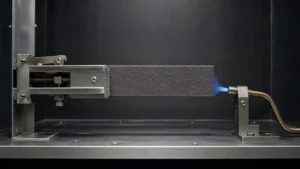
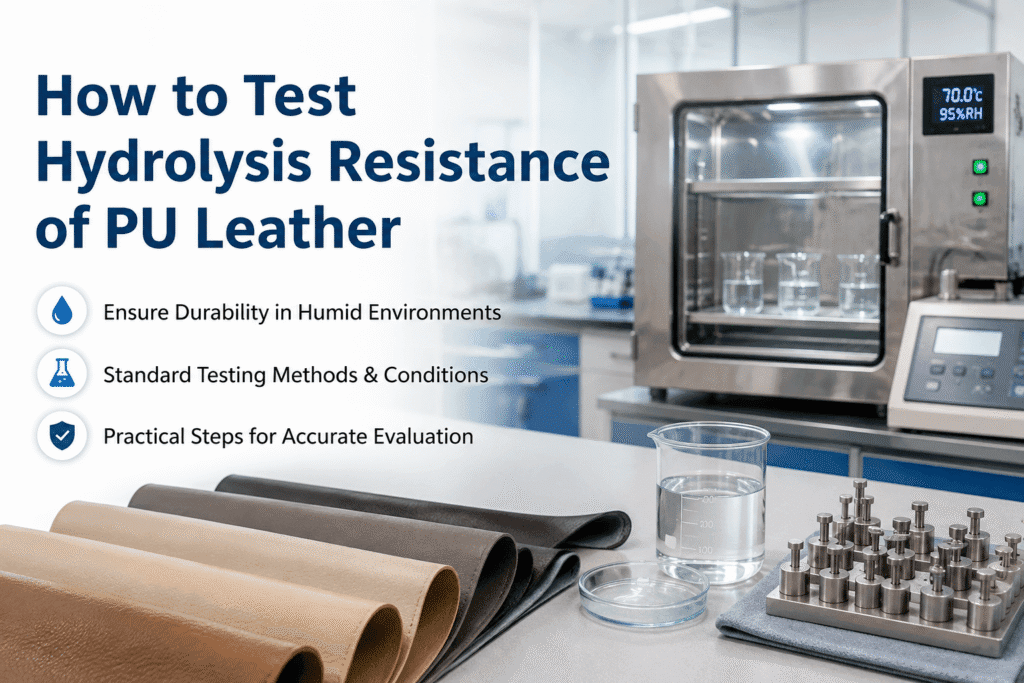
Laboratory Equipment Required
Professional hydrolysis testing normally requires the following equipment:
- Constant temperature and humidity chamber
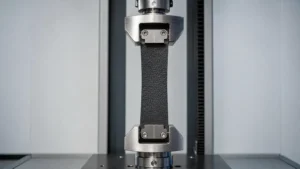
- Universal tensile testing machine
- Peel strength tester
- Flexing tester
- Thickness gauge
- Color spectrophotometer
- Optical microscope
These instruments allow engineers to compare material properties before and after accelerated aging.
How to Test Hydrolysis Resistance PU Leather
Step 1 – Prepare Test Specimens
Cut specimens according to the selected testing standard.
Typical laboratory conditioning:
- Temperature: 23°C
- Relative Humidity: 50% RH
- Conditioning Time: 24 Hours
Proper conditioning ensures every sample starts from the same baseline.
Step 2 – Record Initial Material Properties
Before accelerated aging begins, measure:
- Tensile strength
- Fuerza de pelado
- Elongation
- Espesor
- Surface appearance
- Color difference
These values serve as the reference for evaluating performance retention after aging.
Step 3 – Accelerated Hydrolysis Aging
Place the specimens inside a constant temperature and humidity chamber.
Typical testing conditions include:
- Temperature: 70°C
- Relative Humidity: 95% RH
Common testing durations:
- 7 Days
- 14 Days
- 21 Days
- 28 Days
For automotive-grade materials, longer exposure periods may be specified depending on project requirements.
How to Evaluate Hydrolysis Resistance PU Leather
After accelerated aging, the material should be evaluated by comparing its post-test performance with the initial test results. A complete evaluation should include both mechanical testing and visual inspection.
The following indicators are commonly used by laboratories and manufacturers.
| Evaluation Item | Excellent Performance | Acceptable Performance |
|---|---|---|
| Tensile Strength Retention | ≥85% | ≥80% |
| Peel Strength Retention | ≥90% | ≥85% |
| Surface Cracking | None | Minor |
| Sticky Surface | None | None |
| Delamination | None | None |
| Color Change (ΔE) | <2 | <3 |
A material that maintains high strength retention without visible surface damage generally demonstrates excellent hydrolysis resistance.
Visual Inspection Checklist
In addition to laboratory measurements, engineers should carefully inspect each specimen for visible defects.
Check for:
- Agrietamiento superficial
- Blistering
- Delamination
- Sticky or tacky surface
- Whitening
- Bubbling
- Surface wrinkles
- Edge failure
High-resolution photographs should be taken before and after testing for comparison and quality documentation.
Hydrolysis Resistance Performance Levels
Different PU leather formulations provide different levels of durability.
| Material Grade | Typical Application | Expected Hydrolysis Resistance |
|---|---|---|
| Standard PU Leather | Fashion accessories | 1–2 Years |
| Improved PU Leather | Furniture, handbags | 3–5 Years |
| High Hydrolysis Resistant PU Leather | Automotive, marine, sports equipment | 5–10+ Years |
The actual service life depends on resin formulation, coating structure, environmental conditions, and product design.
How Manufacturers Improve Hydrolysis Resistance PU Leather
High-performance PU leather is not achieved through testing alone. Material formulation and manufacturing processes play an equally important role.
Common engineering approaches include:
High-Quality Polyurethane Resin
Premium polyurethane systems generally provide better long-term stability than lower-grade formulations.
Optimized Coating Structure
Multiple coating layers help reduce moisture penetration and improve durability.
Anti-Hydrolysis Additives
Special stabilizers can slow the degradation of polymer chains under humid conditions.
Strict Production Control
Consistent coating thickness, curing temperature, and production quality all contribute to more stable material performance.
Common Testing Mistakes
Even well-equipped laboratories can produce inconsistent results if testing procedures are not standardized.
Avoid the following mistakes:
- Insufficient specimen conditioning before testing.
- Incorrect humidity chamber calibration.
- Mixing specimens from different production batches.
- Measuring only appearance while ignoring mechanical properties.
- Using testing conditions that do not match the intended application.
Following internationally recognized testing standards helps ensure repeatable and reliable results.
How to Choose Hydrolysis-Resistant PU Leather
If you are evaluating PU leather suppliers, consider asking these technical questions before making a purchasing decision.
- Which hydrolysis testing standard was used?
- What were the testing temperature, humidity, and duration?
- Are complete laboratory test reports available?
- What percentage of tensile strength is retained after testing?
- What percentage of peel strength is retained?
- Has the material been tested for automotive or furniture applications?
- Is long-term durability supported by third-party testing?
These questions provide a better understanding of real material performance than marketing claims alone.
Preguntas frecuentes
What is hydrolysis resistance PU leather?
Hydrolysis resistance PU leather is polyurethane leather engineered to resist degradation caused by prolonged exposure to moisture, heat, and humidity.
How is hydrolysis resistance PU leather tested?
The most common method is accelerated aging in a controlled temperature and humidity chamber, followed by mechanical testing and visual inspection to evaluate property retention.
Which industries require hydrolysis-resistant PU leather?
Automotive interiors, furniture upholstery, marine seating, footwear, sports equipment, and medical seating all require high hydrolysis resistance due to demanding environmental conditions.
Which standards are commonly used?
Common standards include ISO 1419, ISO 9142, ASTM testing methods, and industry-specific automotive specifications.
Does waterproof PU leather always have good hydrolysis resistance?
No. Waterproof performance and hydrolysis resistance are different properties. A waterproof material may still degrade over time if the polyurethane formulation has poor hydrolysis stability.
How long does accelerated hydrolysis testing take?
Depending on the project requirements, testing typically lasts between 7 and 28 days, although longer testing periods may be required for certain automotive specifications.
Conclusión
Hydrolysis resistance is one of the most important indicators of long-term PU leather durability. By following standardized laboratory procedures, manufacturers, engineers, and sourcing professionals can accurately evaluate how a material performs under prolonged exposure to heat and humidity.
A comprehensive hydrolysis resistance test should combine accelerated aging, mechanical property evaluation, and visual inspection. Together, these methods provide valuable information for selecting materials suitable for demanding applications such as automotive interiors, furniture upholstery, sports equipment, footwear, and marine products.
Understanding how hydrolysis resistance is tested not only improves quality control but also helps reduce product failures and supports better material selection during product development.
Need Technical Guidance?
Choosing the right PU leather involves more than comparing specifications. Testing standards, application requirements, and environmental conditions all influence long-term performance.
If you need technical information about PU leather testing methods, performance evaluation, or material selection, the Taite Leather Knowledge Center provides practical resources to help engineers, product developers, and sourcing professionals make informed decisions.
Explore more technical articles to learn about abrasion resistance, flex testing, color fastness, environmental compliance, and other key performance characteristics of synthetic leather.